Est. 1885 · National Register of Historic Places · Comstock Lode Cultural Center · Mark Twain Lecture Site
John Piper arrived in Virginia City during the Comstock Lode silver rush and established himself as the region's most significant theatrical impresario. His first opera house opened in 1863 on imported sandstone and quickly became the cultural anchor of a mining town generating millions in silver annually. Mark Twain delivered a lecture there in 1866; Edwin Booth and other Shakespearean actors performed on its stage.
The Great Fire of October 26, 1875, destroyed Virginia City's downtown, including Piper's first building. He built a second opera house, which opened January 28, 1878, at a cost of $40,000. David Belasco served as stage manager there before relocating to New York and building his national reputation. That building burned on March 13, 1883.
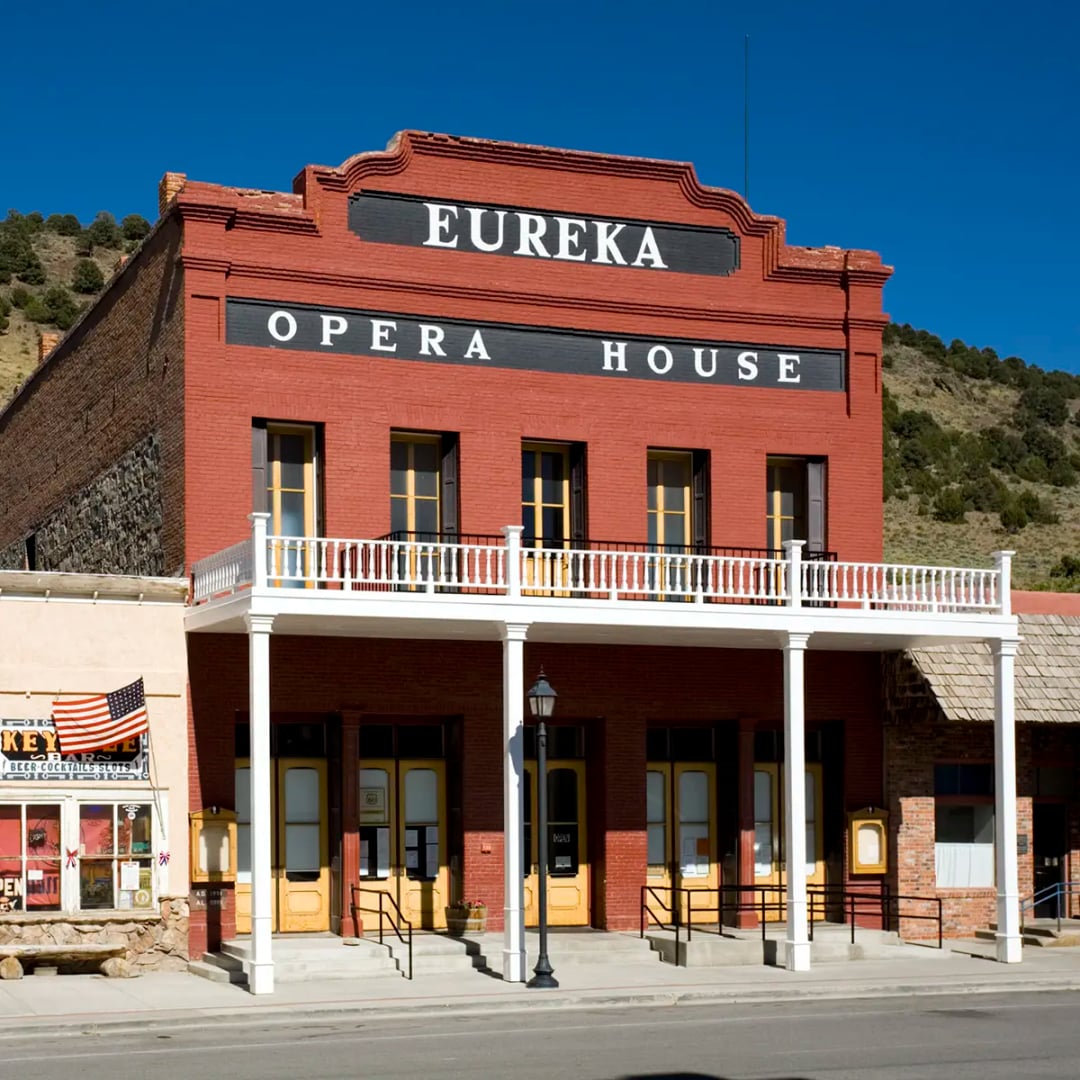
The current structure opened March 6, 1885, with a grand ball. John Piper celebrated with a building that featured a dance floor, carpeted aisles, and hanging balconies — an improvement on his earlier designs. The performers who followed included John Philip Sousa, Lillie Langtry, and Al Jolson. Gentleman Jim Corbett trained in the building in 1897 in preparation for a heavyweight championship bout.
One account in the building's history records a lynching from its rafters in 1871, though Wikipedia's article on Piper's notes that newspaper corroboration is limited. Virginia City's declining fortunes through the early 20th century left the building underused, but successive preservation campaigns and National Park Service funding have kept the structure standing. It was placed on the National Register of Historic Places in 1997.
Sources
- https://en.wikipedia.org/wiki/Piper%27s_Opera_House
- https://pipersoperahouse.com/
- https://travelnevada.com/performing-arts/pipers-opera-house/
Footsteps on empty stageShadow figuresSelf-moving doorsCold spotsEVP
Piper's Opera House has accumulated a paranormal record over more than a century of use, fire, and partial decay. The reports fall into two consistent categories: movement sounds and visual anomalies.
The sound of footsteps crossing the wooden stage is among the most frequently documented experiences at the venue — reported both by daytime visitors and by staff arriving before opening. The steps are described as regular, deliberate, and clearly audible when the building is otherwise empty. There is no obvious structural explanation for the sound, and it has been reported independently across multiple decades.
Visual reports center on the stage and wings: shadow figures that appear at the edge of the stage and step backward into darkness, and figures observed briefly in the hanging balconies. Cleaning staff and volunteers have described doors to dressing rooms and storage closets opening and closing without apparent cause.
The paranormal tour program, offered during October and on select other dates, invites small groups (maximum 20) to explore the first and second floors with ghost-hunting equipment. Tour participants have reported EVP captures and temperature drops during sessions, though the building's age and ventilation mean ambient variation is expected.
Whether any of these reports connect to specific historical events — the disputed 1871 lynching, the multiple deaths and injuries associated with a mining town at its boom — is a question Piper's itself does not claim to answer. The building holds the weight of a place that has seen a great deal and outlasted most of it.
Where this legend is told