Est. 1760 · New Jersey State Register of Historic Places · Revolutionary War era · Georgian architecture · Prohibition history
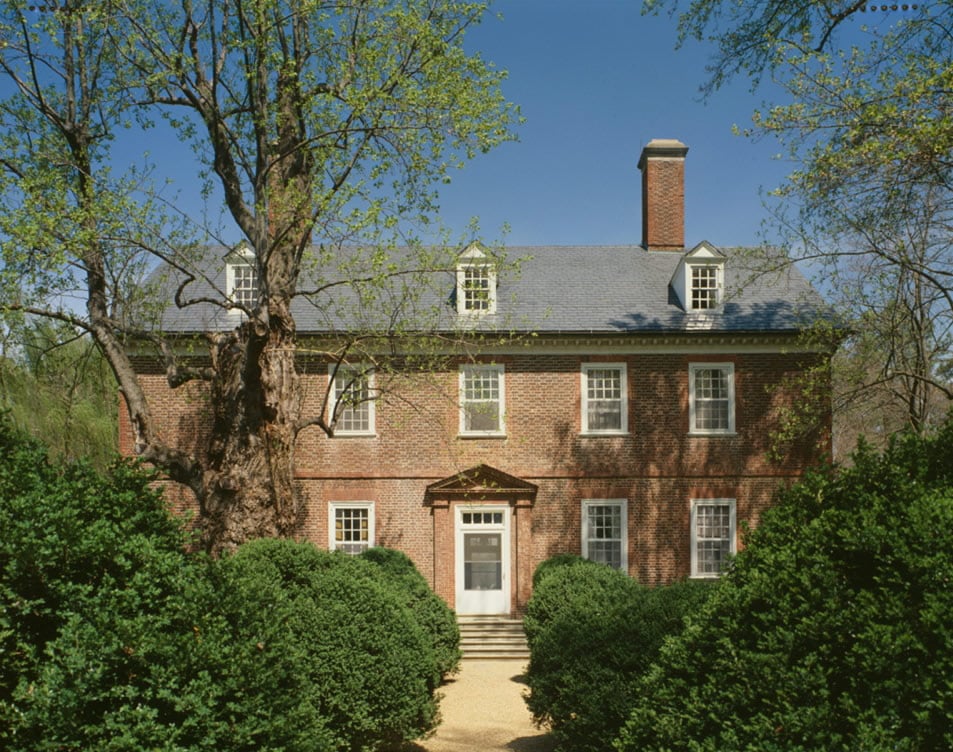
The Field family's connection to this Delaware River bluff began in 1722 when Robert Field purchased roughly 300 acres and erected a modest one-and-a-half-story house. By around 1760, his son had expanded the structure to its current two-story Georgian form — a high-style statement for a Burlington County merchant family of that standing.
Robert Field was well known locally as a supporter of the colonial cause, and his sympathies cost him. In 1775, he drowned in the Delaware River under circumstances that were never publicly resolved. His widow Mary was left to manage the property and raise their three children. During the war, loyalist neighbors accused her of giving dinner to Continental Navy Captain Thomas Houston and his officers, which prompted official scrutiny, though she retained the house.
After the Revolution, the mansion changed hands several times. By 1923 it was purchased by Heinrich Glenk, a bootlegger who used the estate during Prohibition; tunnels reportedly connecting the basement to the Delaware River were said to facilitate the movement of contraband. Glenk operated the space as a restaurant during this period. The property fell into extended decline in the 20th century, and the local community organized to preserve it. In 2012, White Hill Mansion was listed on the New Jersey State Register of Historic Places. It is now managed by the Friends of White Hill Mansion, which offers history tours and paranormal investigations.
Sources
- https://www.whitehillmansion.org/
- https://weirdnj.com/weird-news/the-haunting-of-white-hill-house/
- https://www.thehistorygirl.com/2015/05/white-hill-mansion-fieldsboro-nj.html
- https://www.nj.gov/dep/hpo/1identify/nr_nomntns_10_02_2020/SRB%20DRAFT_White%20Hill%20Mansion%20-REDACTED%20-Web%20versn.pdf
- https://usghostadventures.com/haunted-places/the-spirits-of-white-hill-mansion/
Shadow figureDisembodied voicesUnexplained impactsPhantom footstepsSensation of being touchedAudible names whispered
The first documented public investigation at White Hill Mansion took place in September 2010. Investigators reported hearing a female voice with what sounded like a French accent — with no visible source — while working on an upper floor. Shortly after, a loud impact struck the hallway ceiling beneath one investigator, described as feeling like someone hitting the ceiling with a broom handle; no structural cause was identified.
The basement produces the most consistent reports. Visitors describe a dense black shadow that moves along the far wall and the sensation of being touched on the hair or cheek. Some investigators report hearing their names spoken aloud from an unoccupied part of the room. The attic generates reports of a male voice audible during quiet periods, which local tradition attributes to Glenk, who owned the property from 1923 and may have used it for Prohibition bootlegging operations.
Other accounts include sounds of children playing in upper rooms when no children are present, footsteps on the main staircase during off-hours, and disembodied conversations heard on floors confirmed to be empty. None of these phenomena have been attributed to specific named individuals in documented paranormal records, and the mansion does not make claims about Robert Field or Mary Field as specific haunting sources.
Notable Entities
Heinrich Glenk (attributed male voice, attic)
Where this legend is told