Est. 1735 · Oldest active courthouse in New Jersey · Revolutionary War treason trials · 1778 Salem Raid · Colonial Salem history
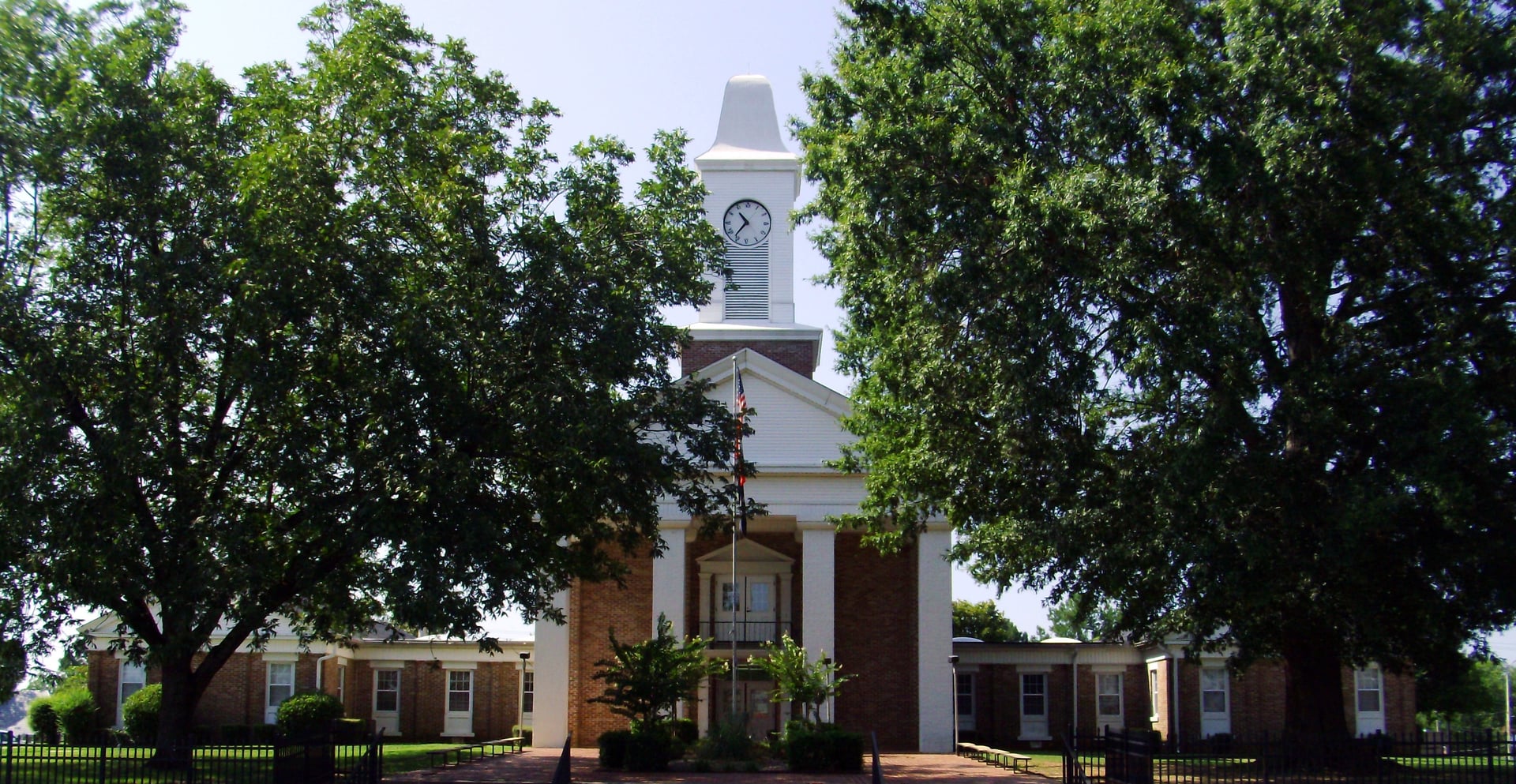
The Salem County Courthouse was erected in 1735, during the reign of King George II, using brick manufactured locally in Salem. It is the oldest active courthouse in New Jersey and, by several accounts, the second-oldest courthouse still in continuous use anywhere in the United States. The building was enlarged in 1818 and again in 1908, but its original 18th-century core remains.
In 1774, the courthouse hosted a county gathering that drafted a petition to King George III over colonial grievances. Judge William Hancock of the King's Court of Common Pleas presided in Salem in this period. During the 1778 Salem Raid, British and Loyalist forces attacked the area; Hancock was killed at the Hancock House at nearby Hancock's Bridge, the site of a notorious bayonet attack on local militia.
After the raid, the courthouse became the venue for treason trials in 1778, in which several local men were charged with aiding the British. Four men were sentenced to death for treason. Governor William Livingston subsequently pardoned them, and they were exiled from New Jersey rather than executed.
The courthouse is also tied to a piece of regional folklore: the story that Colonel Robert Gibbon Johnson ate tomatoes on the courthouse steps in 1820 to demonstrate they were safe, at a time when many believed the fruit poisonous. Historians treat this as legend rather than documented fact.
The building remains a working county courthouse and a landmark of Salem's Market Street historic district.
Sources
- https://en.wikipedia.org/wiki/Old_Salem_County_Courthouse
- https://blogs.loc.gov/law/2020/08/old-salem-county-courthouse-pic-of-the-week/
- https://www.hmdb.org/m.asp?m=153698
EVPPhantom knocksAnomalous orbs
On May 17, 2011, the Jersey Unique Minds Paranormal Society carried out an authorized investigation inside the courthouse at the corner of East Broadway and Market Street. The group reported three pieces of recorded evidence: an electronic voice phenomenon they characterized as an unusual female voice resembling a moan, a knocking sound that investigators said they heard at the same moment, and a bright orb captured on video that appeared to move in a circular pattern before shooting away from the camera.
JUMPS framed the visit around the courthouse's long history of weighty proceedings, suggesting that the experience of people who learned their fate inside the building might account for what they called residual energy. The group was careful in its conclusion: the evidence, they wrote, was not enough to be considered paranormal, though it was, in their words, definitely abnormal. They did not claim the courthouse was haunted.
Reports of executions by hanging and of a witchcraft trial at the courthouse circulate in local paranormal accounts, but they are not supported by the documented histories of the building, which center instead on the Revolutionary-era treason trials. Visitors should treat those darker claims as unverified lore rather than established fact.