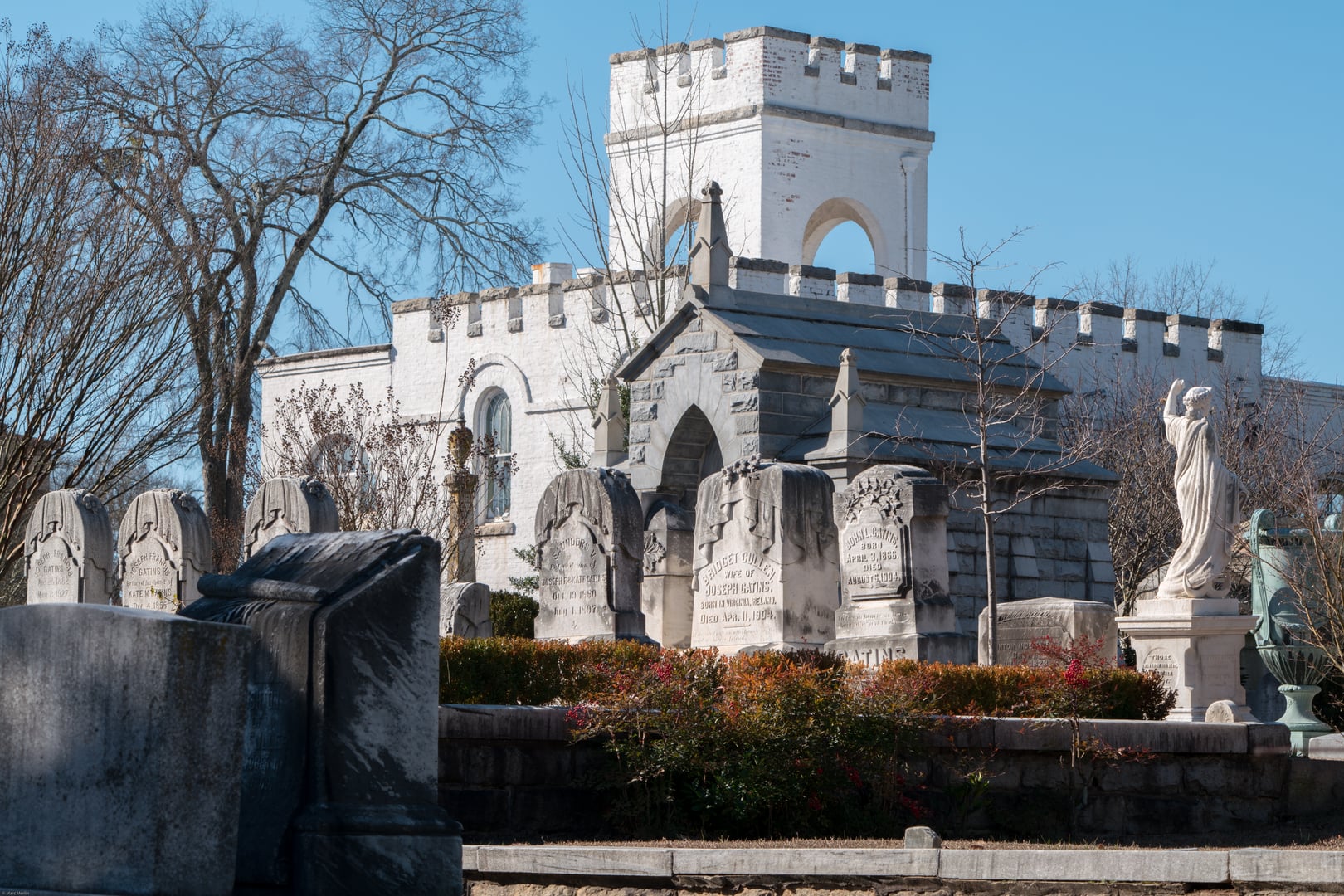
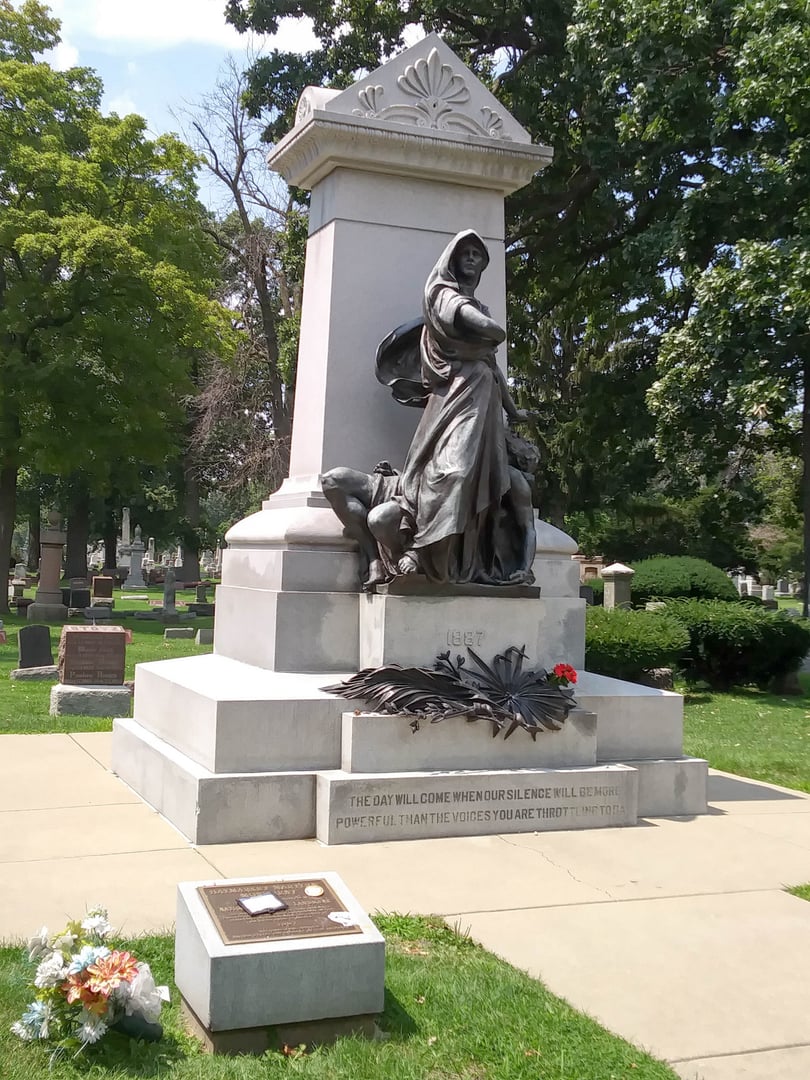
Est. 1844 · Newark's oldest non-sectarian cemetery · Leading example of the New Jersey Rural Cemetery Movement · Listed on the National Register of Historic Places (1988) · Burial place of John F. Dryden, Seth Boyden, Marcus L. Ward, Joseph P. Bradley, and Ray Liotta
Mount Pleasant Cemetery was established in 1844 as Newark's first non-sectarian cemetery and one of the earliest expressions of the rural cemetery movement in New Jersey. Designer Horace E. Baldwin laid out the grounds with curving drives, terraced family plots, and plantings overlooking the Passaic River, deliberately rejecting the cramped colonial churchyards then crowding downtown Newark.
The 40-acre site sits in Newark's North Ward along Broadway. The cemetery incorporates many earlier burials moved from displaced 17th and 18th century graveyards across the city, so individual stones predate the cemetery's formal 1844 opening by nearly two centuries.
Mount Pleasant became a favored final resting place for Newark's industrial and political elite. Prudential founder John F. Dryden, inventor Seth Boyden (patent leather, malleable iron), New Jersey Governor Marcus L. Ward, U.S. Supreme Court Associate Justice Joseph P. Bradley, and multiple congressional representatives are interred here, alongside Thomas Edison's first wife Mary Stillman and, more recently, actor Ray Liotta (1954-2022).
The cemetery was added to the New Jersey Register of Historic Places in 1987 and to the National Register of Historic Places on October 28, 1988. It remains an active burial ground operated by Mount Pleasant Historic Cemetery, and ongoing preservation work focuses on monument conservation and grounds restoration.
Sources
- https://en.wikipedia.org/wiki/Mount_Pleasant_Cemetery_(Newark,_New_Jersey)
- https://www.mtphistoriccemetery.com/
- https://www.nj.gov/dca/njht/funded/sitedetails/mountpleasantcemetery.shtml
- https://newarkcemeteries.com/mtpleasant.php
Apparition of Old Moll DeGrow in burial shroudSilent military figure near former site of Gully Road treeVictorian-dressed woman seen among the gravesCold spots and sense of being watched
The most widely repeated Mount Pleasant story is that of Mary 'Old Moll' DeGrow, a woman who lived on Gully Road (today's Herbert Place) before the cemetery was established. According to accounts collected by the Newark Public Library's Charles Cummings and retold by Jersey Digs and American Folklore, neighbors in the early 1840s blamed Moll for soured milk, vicious dogs, and a stretch of infant deaths, eventually forming a mob intent on burning her at the stake. She reportedly died in her bed before the mob arrived and was buried in the newly opened cemetery. Local lore says she still walks the grounds at night in a black burial shroud, her long white hair covering her face (Jersey Digs; Find a Grave memorial 71198255; americanfolklore.net).
A second legend, recounted by Jersey Digs, involves a Revolutionary War soldier said to have been hanged at a tree near the fork of Gully Road for passing information to the British. Visitors reported a silent figure in military garb appearing beside the tree before vanishing; the hauntings allegedly ended when the tree was removed during the area's urbanization.
Visitor reports collected on ghost-tour blogs describe cold spots near older sections, a sense of being watched, and a Victorian-dressed woman drifting among the headstones. These reports are anecdotal and not tied to a specific historical individual.
Notable Entities
Mary 'Old Moll' DeGrowUnidentified Revolutionary War soldier