Est. 1791 · Congregation organized 1686; present stone church completed 1791 · Colonial churchyard with more than 1,400 burials dating to the late 1600s · Burial place of Continental Army Gen. Enoch Poor (d. 1780) · Church, cemetery and Hackensack Green listed on the National Register of Historic Places (1983)
The First Reformed (Dutch) Church on the Green stands at 42 Court Street in Hackensack, facing one of the oldest public squares in New Jersey. The congregation was organized in 1686, and the present sandstone church — long known as the 'Church on the Green' — was completed in 1791, replacing earlier structures on the same ground.
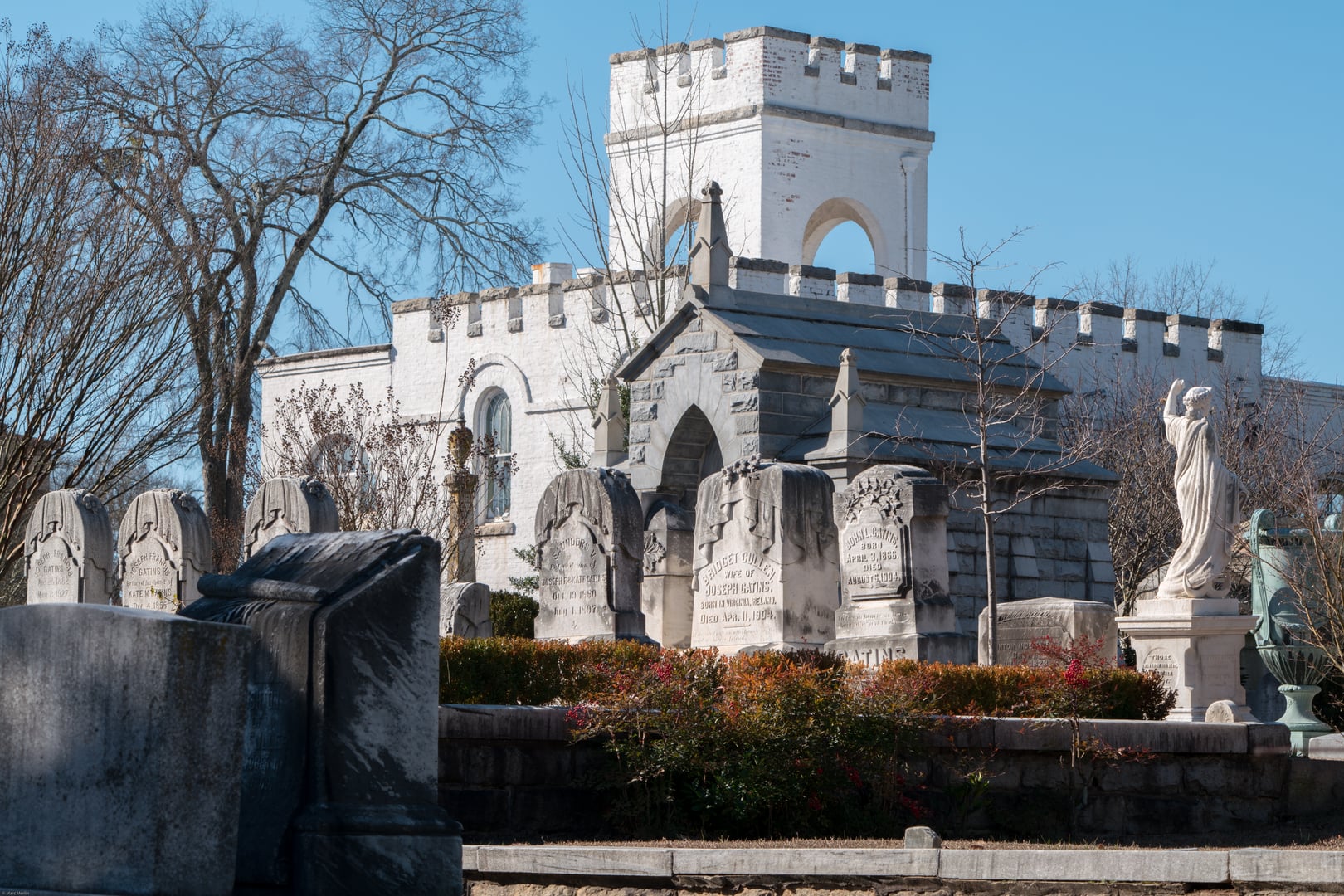
The surrounding churchyard is original to the late 1600s and is one of the most thoroughly documented colonial burial grounds in the state. More than 1,400 people are interred there, their markers recording generations of the Dutch families who settled the Hackensack valley, along with Revolutionary War soldiers and later town residents.
Its best-known grave belongs to Brigadier General Enoch Poor of the Continental Army, who died near Hackensack on September 8, 1780, while encamped with Lafayette's division. George Washington and the Marquis de Lafayette attended his funeral, and a marked monument stands over the grave. The churchyard also holds early Bergen County figures whose names recur in the county's colonial records.
The church, its cemetery and the adjacent Hackensack Green — which sits beside the Bergen County Courthouse — were listed together on the National Register of Historic Places on April 25, 1983. The site is documented in National Park Service nomination materials and in published walking guides to the graveyard.
Sources
- https://en.wikipedia.org/wiki/First_Reformed_Dutch_Church,_Hackensack
- https://www.thehistorygirl.com/2015/01/hackensack-nj-dutch-reformed-church-cemetery.html
- https://theclio.com/entry/19221
Unlike many old churchyards on ghost-tour circuits, the Church on the Green carries little in the way of a specific haunting narrative in the documented record. Its reputation rests on age and atmosphere: a burial ground worked since the late 1600s, set on the historic Hackensack Green beside the county courthouse, where the markers run back through the Dutch families who founded the town.
What draws visitors is the history written on the stones. Walking-tour guides to the graveyard highlight the marked grave of General Enoch Poor — the Continental Army officer buried here in 1780, with Washington and Lafayette present — and the weathered colonial headstones that make the yard a study in early American funerary carving.
HauntBound presents this as a heritage site first. The respect owed a working colonial burial ground means the people interred here are treated as history, not as ghost-tour props; their graves are documented and their stories sourced. For visitors interested in the older, quieter end of dark tourism, the appeal is exactly that restraint: an authentic 1700s churchyard where the weight comes from the recorded dead rather than from invented phenomena.