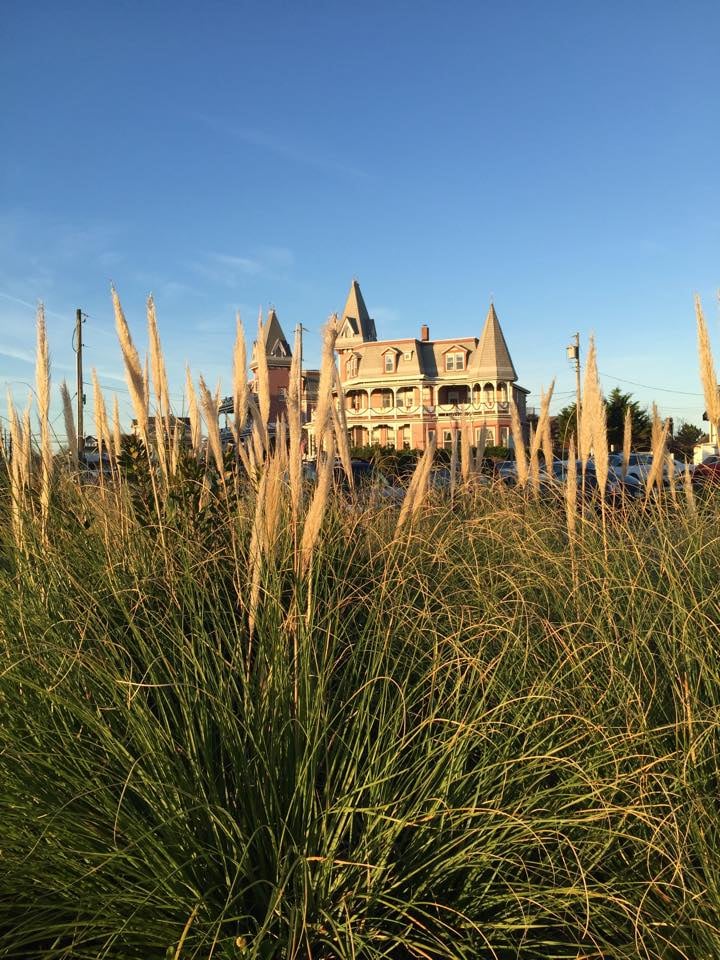
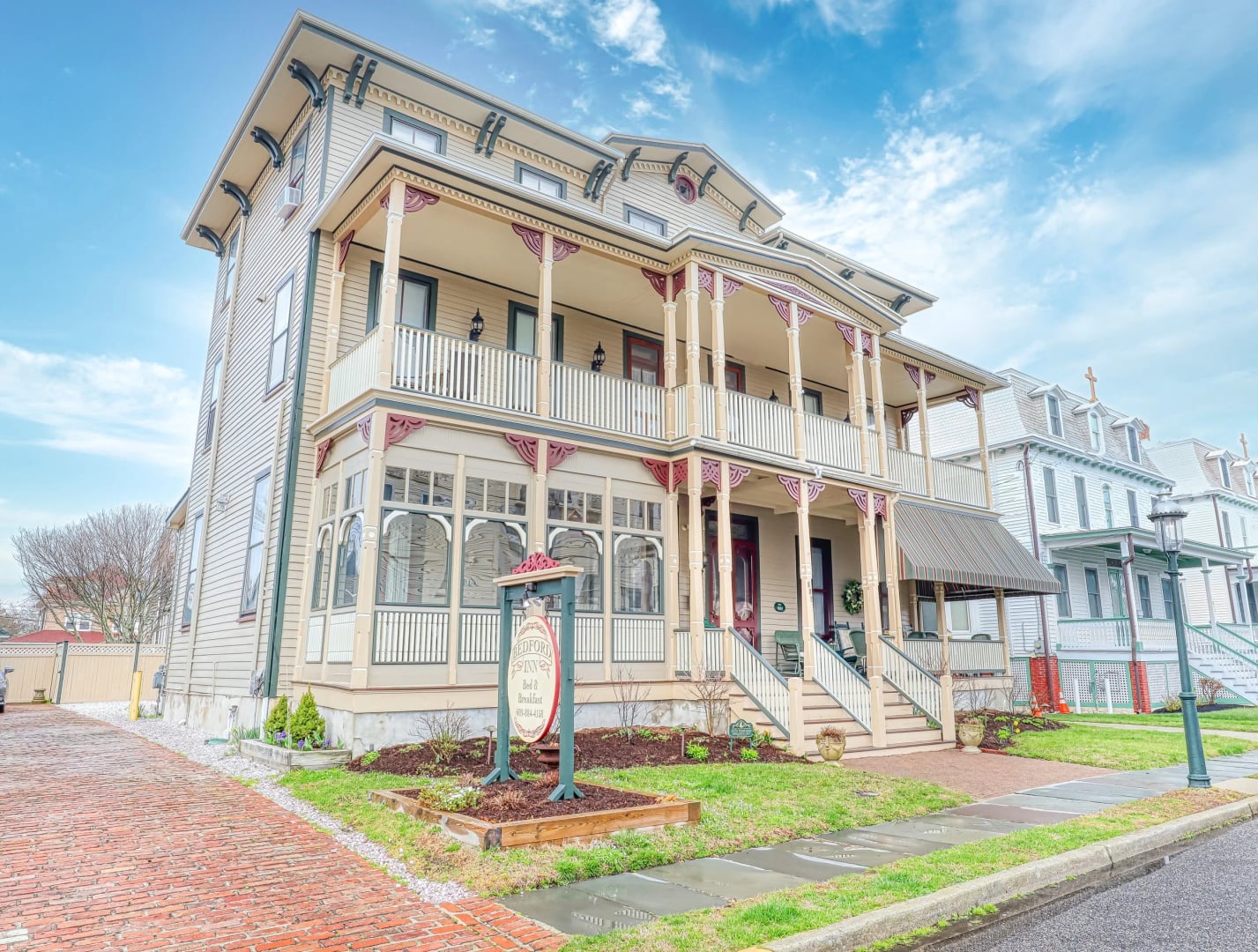
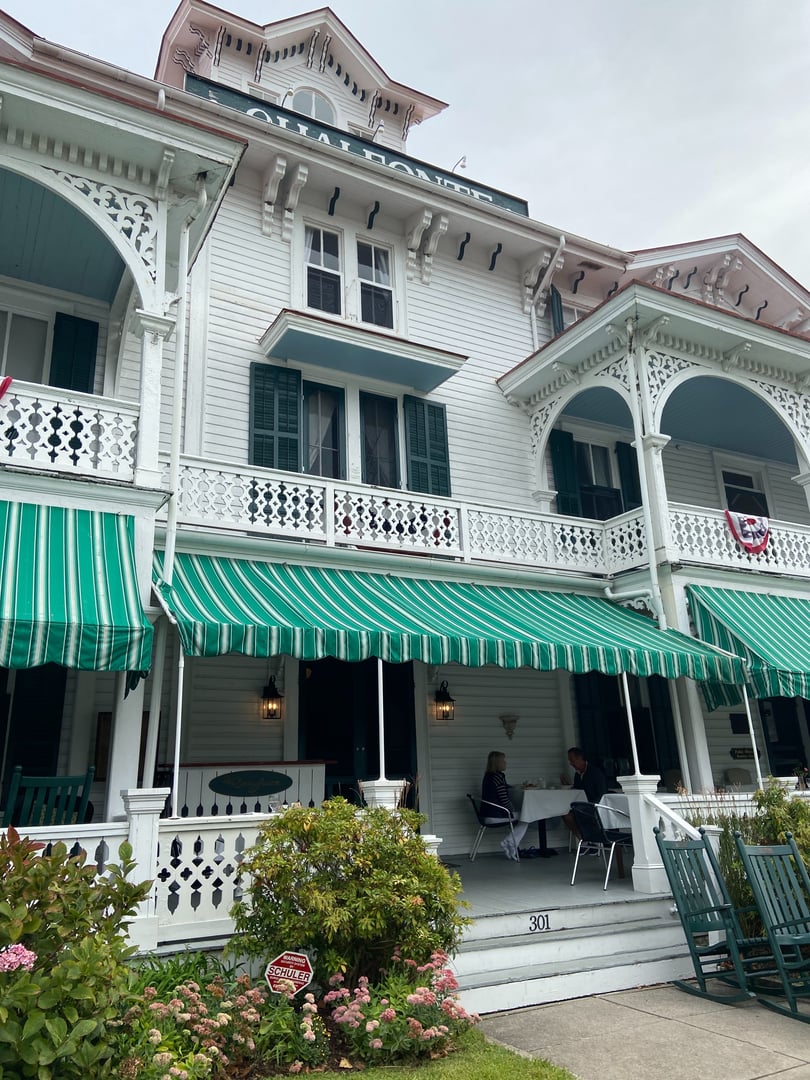
Est. 1816 · America's Oldest Seaside Resort · Presidential Summer White House · National Historic Landmark District · Great Fire of 1878 Survivor
Thomas H. Hughes opened a wooden boarding house on the Cape May beachfront in 1816. Locals called it 'Tommy's Folly,' skeptical that such an ambitious structure would survive. When Hughes won election to the House of Representatives in 1828, he renamed the property Congress Hall, and the hotel's identity as a destination for the politically connected was set early.
By the mid-nineteenth century, Congress Hall was among the most prominent summer resorts on the Eastern Seaboard. Presidents Pierce, Buchanan, and Grant all stayed here during their administrations. Benjamin Harrison made it more than a vacation stop — in 1890 and 1891, with the White House undergoing renovation, Harrison conducted official business from Congress Hall, making it a functioning extension of the executive branch for two summers.
In 1882, John Philip Sousa visited with the U.S. Marine Band and debuted a composition on the hotel's lawn specifically written for the venue — the Congress Hall March. It was a measure of the hotel's cultural standing that a sitting bandmaster would write original music for its grounds.
The Great Fire of November 1878 destroyed the original wooden structure along with more than 40 acres of Cape May. The owners rebuilt in brick, explicitly marketing the new construction as fireproof to reassure guests still wary of fire. The 1879 brick building that stands today is the version that earned National Historic Landmark status as a contributing structure in the Cape May Historic District.
The hotel passed through several owners over the twentieth century, including a period under Rev. Carl McIntire's Bible Conference starting in 1968. It closed in 1992. Curtis Bashaw undertook a $22 million restoration beginning in 1995 that returned it to full operation by 2002 under the Cape Resorts banner.
Sources
- https://en.wikipedia.org/wiki/Congress_Hall_(Cape_May_hotel)
- https://adventuresincapemay.com/congress-hall-cape-may-history/
- https://www.caperesorts.com/magazine/a-resort-as-grand-as-its-heritage
Electronics activating without inputKnocking with no sourceChildren's voices in empty hallwaysApparition in Victorian dressCold spots
The most concentrated reports at Congress Hall cluster on the third floor, where cleaning staff over the years have described entering rooms to find televisions and radios already on, hearing voices on the other side of locked doors, and finding no one inside when they obtained access. Guests report being woken by knocking and finding the hallway empty, and the sound of children at play in corridors where no children are present.
A second recurring figure — a man in Victorian-era dress — has been seen walking the third-floor hallway. Witnesses describe him moving with purpose before stepping through or into a wall. Local historians have connected the child-related phenomena to an 1876 drowning: a ten-year-old boy died in the ocean directly in front of the hotel that summer.
Cape May's ghost tour operators include Congress Hall in their walking routes, citing it as one of the city's most consistently reported locations. The hotel does not advertise or schedule paranormal programming, but the reputation circulates independently through guest reviews, local press, and the Cape May ghost tour community.
Notable Entities
Man in Victorian suit (third floor)Unnamed child (connected to 1876 drowning)
Where this legend is told