Est. 1850 · Victorian Architecture · Historic Preservation Award · William Weightman Sr. Quinine Legacy · 1881 Building Division
William Weightman Sr. was among the wealthiest men in Philadelphia in the mid-nineteenth century, having built the chemical firm Powers & Weightman into the primary American supplier of quinine sulfate — the anti-malarial drug derived from cinchona bark. He built a substantial summer cottage in Cape May around 1850, sited at the corner of Franklin and Washington Streets where the Cape May Post Office now stands.
In 1881, Weightman commissioned a move. He wanted an ocean view from the house's broad porches and arranged to relocate it to a property near Ocean and Beach Avenues. The farmers engaged for the job used rolling tree trunks, mule power, and horse power — standard moving practice for the era. When they discovered the house was too large to move in one piece, they cut it in half and moved the sections separately. Reassembling the two halves proved impossible given the approach of summer and Weightman's anticipated return. The farmers enclosed the cut sides, converted the result into two separate buildings, and left.
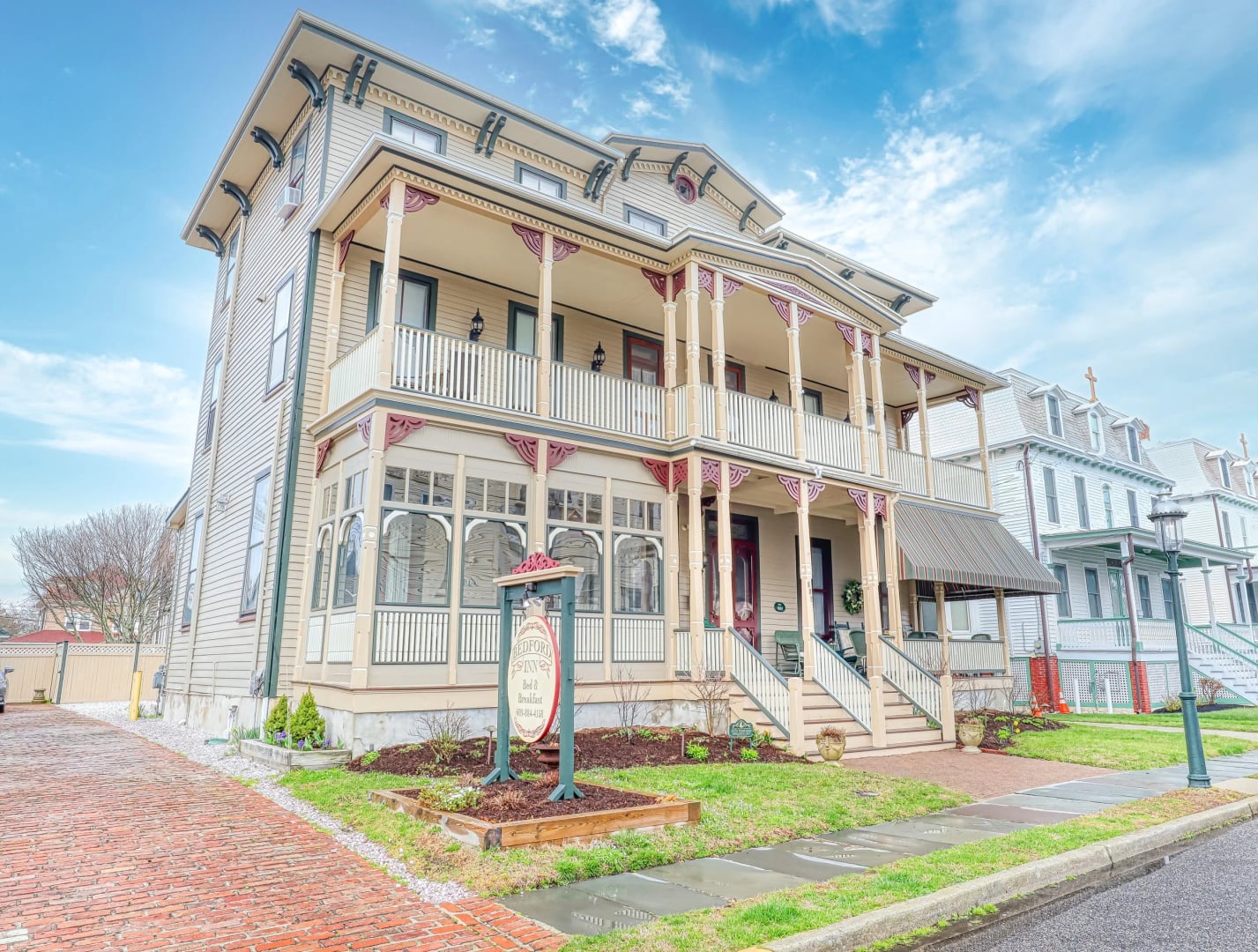
The buildings remained in the Weightman family until his death in 1905, then passed through hotel, guest house, and restaurant uses. The 1962 nor'easter forced them off Beach Avenue; they served as dormitory and boarding housing until 1981, when they were abandoned. A 1989 restoration by John and Barbara Girton required an estimated 103,000 man-hours and $3.5 million and won a Historic Preservation Award from the National Trust. The 27-room bed and breakfast that operates today changed hands in 2015 when Theresa and Ron Stanton purchased it from the Girtons' daughter.
Sources
- https://www.angelofthesea.com/about-us/history
- https://capemaymag.com/feature/the-quinine-king-and-his-house-the-survivor/
Electronics activating without inputObjects moving or disappearingApparitions at windowsItems knocked from surfaces
Staff at the Angel of the Sea have described four distinct reported presences over the years. The most frequently cited involves Sarah Brown, identified as an Irish exchange student who was working at the nearby Christian Admiral Hotel. Returning to the B&B after her shift, she found she had left her room key at work. Rather than retrieve it and be late for church, she climbed out of a second-floor hallway window and attempted to edge along the outside ledge to reach her own room's window. She made it to the window, but when she tried to pull the screen free it released suddenly and she fell, dying from the impact.
Reports associated with Brown involve electronics: lamps, radios, and televisions switching on and off without apparent cause, items disappearing from one location and reappearing elsewhere, and objects falling from flat surfaces as if knocked. Staff and guests attribute these incidents to Brown, though the underlying story of her death has not been independently documented in contemporaneous records.
A second presence is described as a young woman whose father was a sea captain, seen in the building looking out windows toward the water. A third and fourth are referenced more vaguely in staff accounts — a woman connected to earlier caretakers of the property, and an older male presence. The current owners have confirmed that guests and staff report phenomena regularly, centered particularly in the upper floors.
Notable Entities
Sarah Brown (reported Irish exchange student)Sea captain's daughter (unnamed)
Where this legend is told