Est. 1785 · Oldest house in Raleigh on its original foundation · Center of one of Wake County's largest antebellum plantations · Site of enslaved labor (over 200 people across the antebellum period) · National Register of Historic Places · Five generations of single-family occupancy (1785-1967)
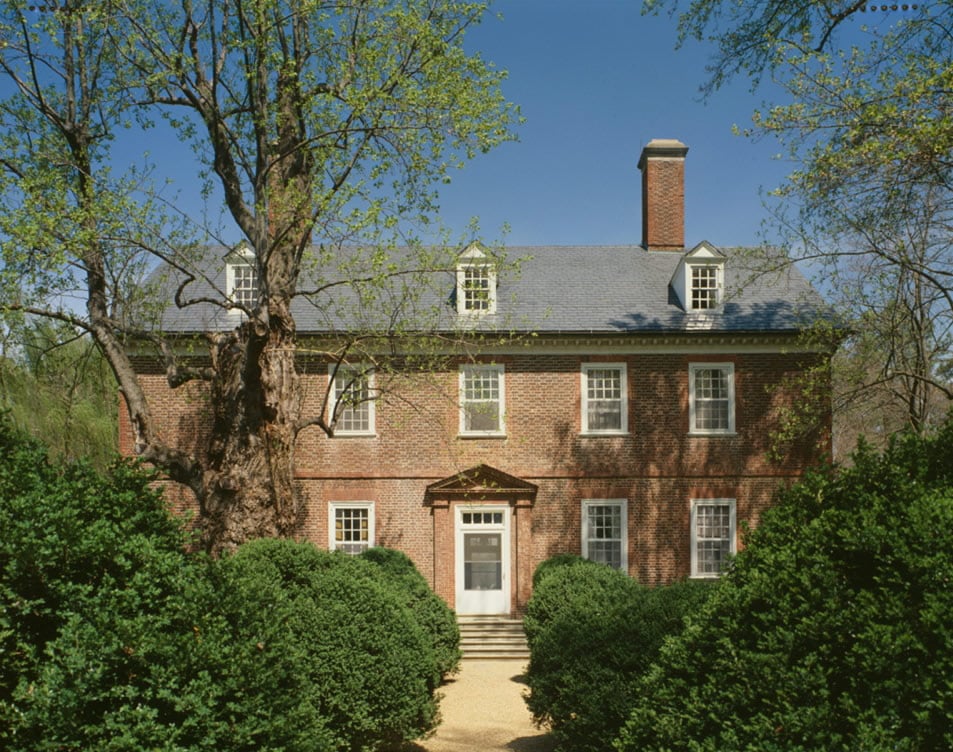
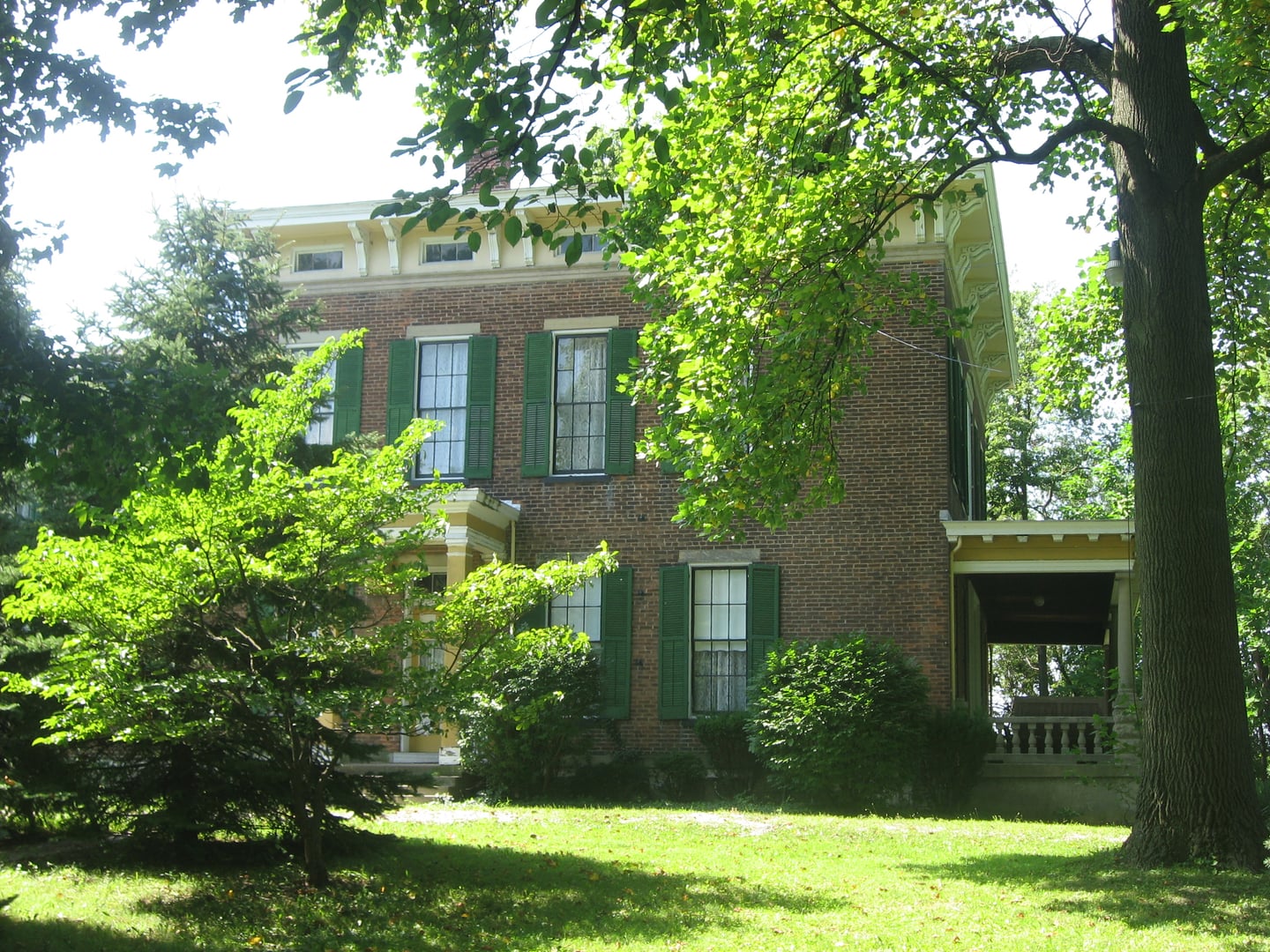
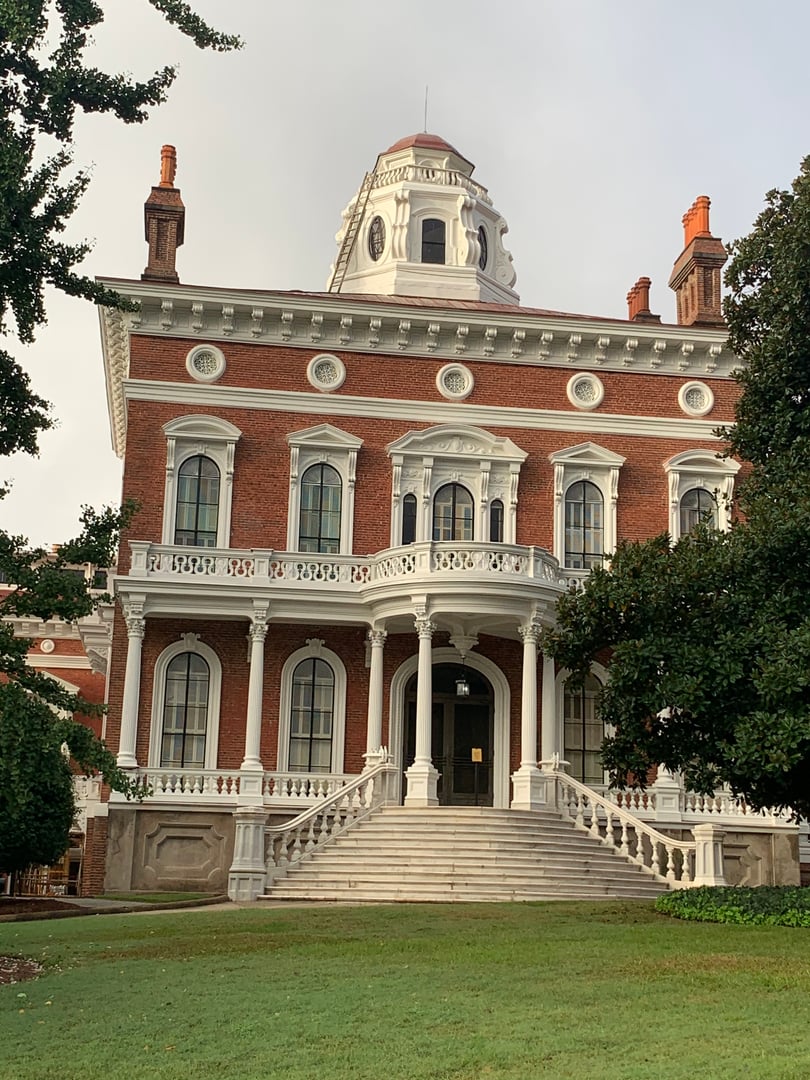
The oldest part of the Mordecai House is a frame hall-and-parlor dwelling that Joel Lane, on whose land the city of Raleigh was laid out in 1792, built about 1785 for his son Henry. Henry Lane's daughter Margaret married Moses Mordecai, a Raleigh attorney and son of Jacob Mordecai, founder of the Warrenton Female Academy. After Margaret's death Moses married her sister Ann, and the property took the Mordecai name. In 1826 the family hired state architect William Nichols to add a Greek Revival block with a two-tier Ionic portico facing south, turning the house around and creating the stair hall that survives today. The National Register nomination, prepared in April 1970, describes the older rooms as Federal in detail and the Nichols addition as restrained Greek Revival. The house was listed on the Register on July 1, 1970.
The Mordecai plantation was the largest in Wake County, at its peak roughly 5,000 acres of cotton and corn worked by enslaved African Americans; the 1,000 acres that became the city of Raleigh came from the same Lane holdings. City of Raleigh research puts the enslaved population on the property at more than 200 people over the antebellum period, and the park's interpretation now includes their lives, along with the freedmen who lived and worked on the site after 1865 into the 1960s.
Five generations of the Lane-Mordecai family lived in the house until 1967, when descendants sold it and the City of Raleigh bought it after a preservation campaign. The city established Mordecai Historic Park on 3.2 acres in the 1970s, moving in the birthplace of President Andrew Johnson, the Badger-Iredell law office, the Allen kitchen, and St. Mark's Chapel. The house is the oldest in Raleigh still on its original foundation and is managed by Raleigh Parks, Recreation and Cultural Resources.
Sources
- https://en.wikipedia.org/wiki/Mordecai_House
- https://raleighnc.gov/parks-and-recreation/places/mordecai-historic-park
- https://raleighhistoric.org/items/show/13
- https://www.wral.com/story/haunted-raleigh-mordecai-house-ghost/20501317/
- https://blogs.lib.unc.edu/ncm/2015/10/28/haunted-north-carolina-triangle/
- https://files.nc.gov/ncdcr/nr/WA0034.pdf
- https://npgallery.nps.gov/AssetDetail/NRIS/70000474
- https://abc11.com/post/haunted-triangle-the-haunting-of-mordecai-house/4475672/
Apparition of a woman in period dress (hallway and balcony)Self-playing pianoMisty or orb-like haze near the parlor pianoUnexplained footstepsApparition on the stairFramed photographs falling or tippingCold spots
Mordecai House is Raleigh's best-known ghost story, and the reports have been consistent for decades. Staff, docents, and visitors describe a woman in a long gray or black skirt and white blouse seen on the upstairs balcony at night, on the stair, and in the hallways. She is identified by tradition as Mary Willis Mordecai Turk, who was born in 1858, lived in the house longer than any other family member, and died in 1937. Nelson Nauss of The Ghost Guild told WRAL in 2022 that Turk ran the household for years and may simply be continuing that duty.
The parlor piano, an instrument from the mid-1800s, is the second focus. Visitors alone in the house have reported a few notes or a slow melody with no one at the keys, and some describe a gray mist over the keyboard. Joshua Ingersoll, the city's director of historic sites, told ABC11 in 2018 that staff had heard the piano themselves. UNC's North Carolina Miscellany blog noted in 2015 the tour-guide claim that family photographs come off the walls when the Mordecais are discussed, and Ghost Guild investigators have described a framed portrait of Mary Willis tipping over.
The house was investigated on the Sci-Fi Channel's Ghost Hunters in a 2005 episode, and the National Society of Paranormal Investigation and Research worked the site from 2008 to 2016. Since 2017 The Ghost Guild, a nonprofit team, has been the park's official investigators, working the buildings at least three times a year and presenting findings at Haunted Mordecai during the park's Spellbound at Mordecai festival on the last Saturday of October. Park staff treat the plantation's enslaved history through archives, not ghost stories.
Notable Entities
Mary Willis Mordecai Turk (informally identified)
Media Appearances
- Syfy / Sci-Fi Channel — Ghost Hunters
- Ghost Hunters (Sci-Fi Channel, season 2, 2005)
- Lady in gray: Raleigh legend says ghostly woman appears on balcony, WRAL (web, 2022)
- Haunted Triangle: The haunting of Mordecai House, ABC11 (TV/web, 2018)