Est. 1840 · William Faulkner Burial Site · Confederate Dead from Civil War Lyceum Hospital · Lafayette County Historic Cemetery · Yellow Fever Epidemic Burials
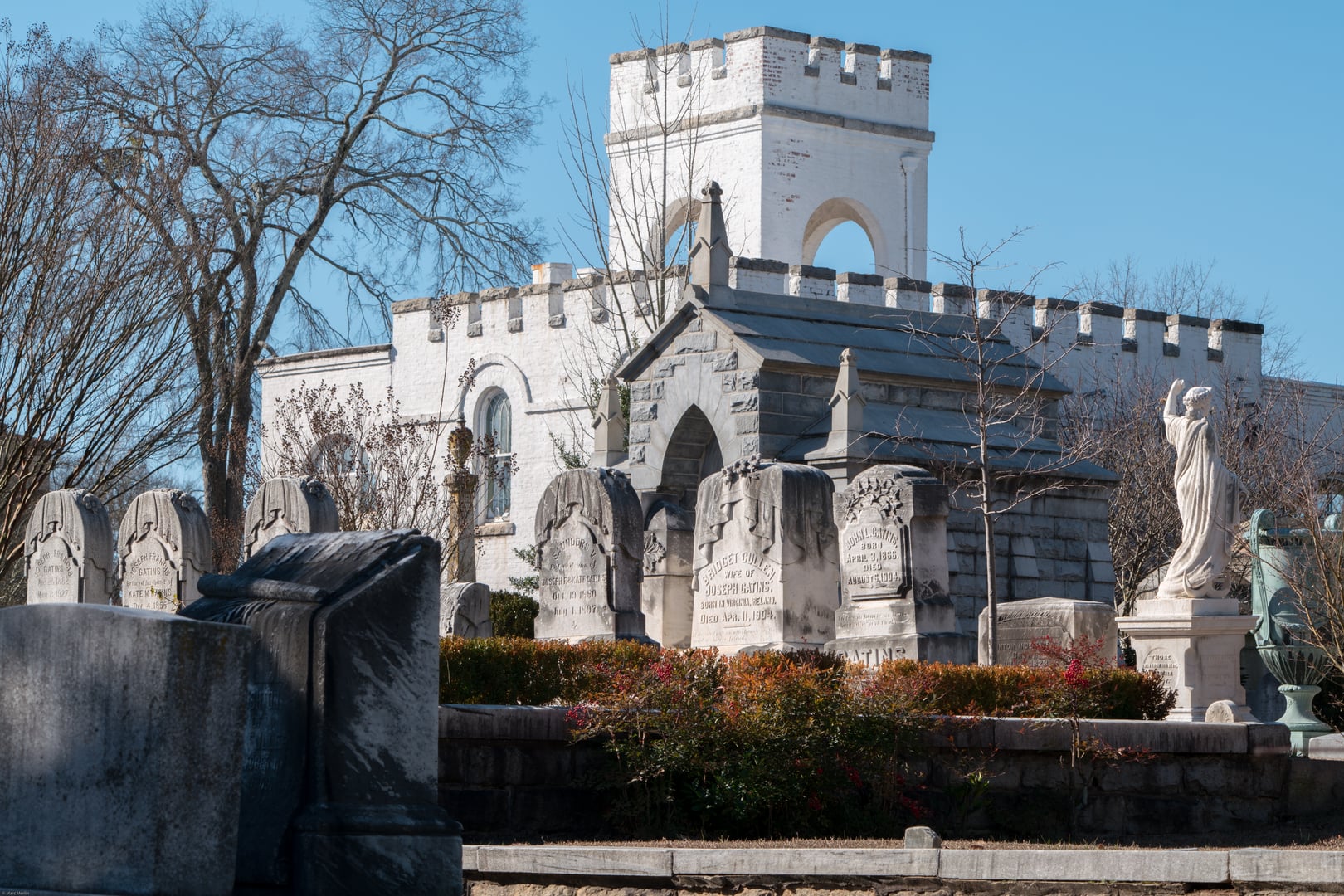
St. Peter's Cemetery sits at the corner of Jefferson Avenue and South 14th Street in Oxford — an established 19th-century burial ground that predates many of the city's surviving institutional buildings. The cemetery's oldest sections date to the antebellum period, with markers for the founding families of Lafayette County and for the waves of yellow fever victims who died in the disease's periodic sweeps through the region.
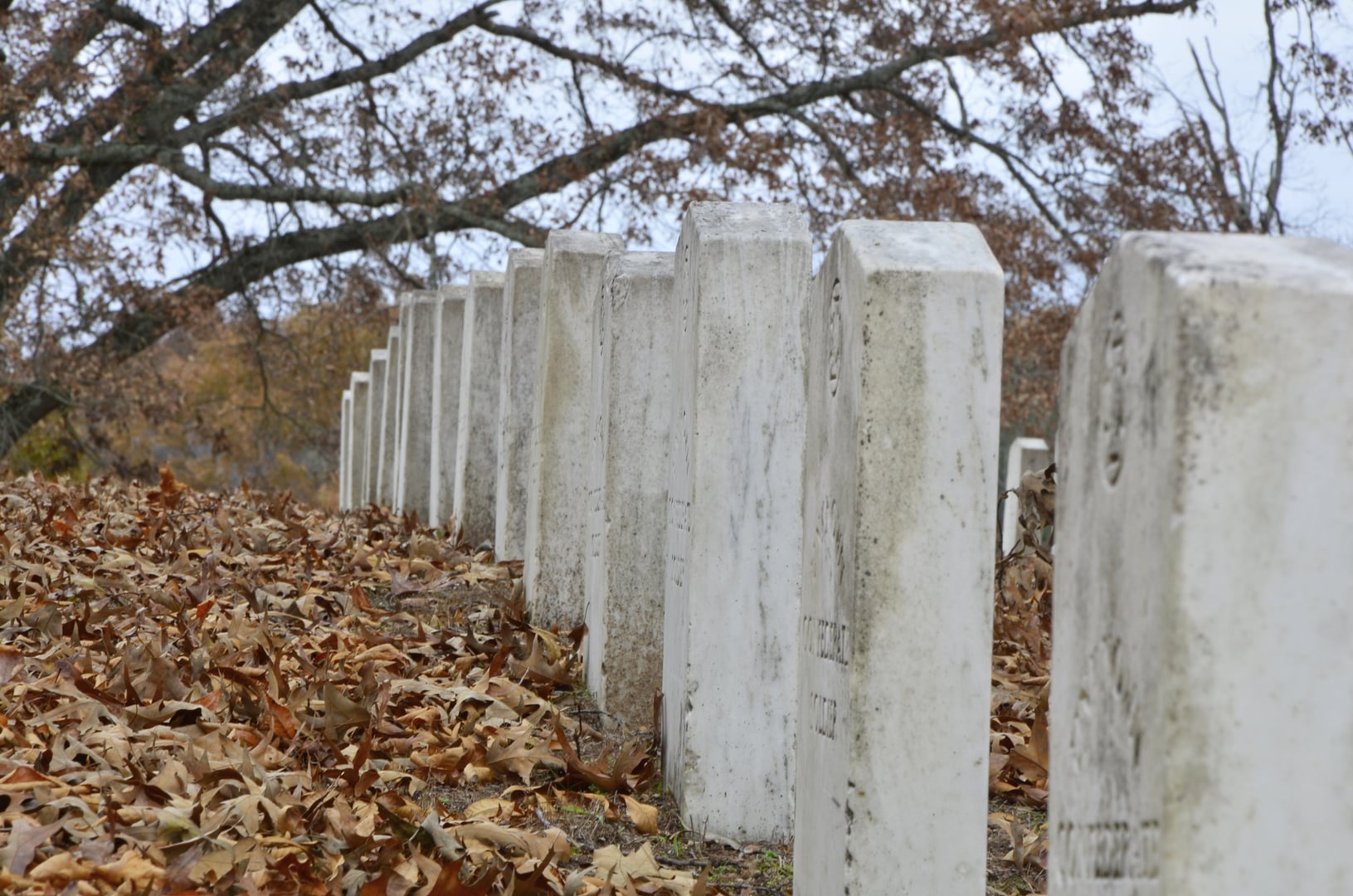
During the Civil War, the University of Mississippi's Lyceum building on the campus several blocks away served as a Confederate hospital. Soldiers who died in that facility were initially interred on campus in what was called the Dead House — a temporary arrangement. Their remains were subsequently transferred to St. Peter's Cemetery, where they rest in the section dedicated to Confederate dead.
William Faulkner, the Nobel Prize-winning novelist whose fiction was rooted in the culture and landscape of Lafayette County — fictionalized as Yoknapatawpha County — died in 1962 and is buried near the cemetery's entrance. His grave has become a consistent destination for literary pilgrims; the stone is typically adorned with empty and half-empty bourbon and whiskey bottles left by visitors, an informal tradition that has accumulated over six decades. The ritual has no single documented origin point — it emerged as a practice among the readers, students, and writers who make the trip to Oxford specifically to visit his grave.
The cemetery continues as an active burial ground and remains publicly accessible during daylight hours.
Sources
- https://theclio.com/entry/5251
- https://www.hottytoddy.com/2014/10/30/haunted-oxford/
- https://oxfordeagle.com/2015/10/18/oxfords-cemeteries-contain-bits-of-history/
Apparition in adjacent alley attributed to FaulknerConfederate soldier figures in older cemetery sectionsRitual whiskey-bottle deposits at Faulkner grave
The ghost lore associated with St. Peter's Cemetery works on two tracks. The Confederate soldiers from the university hospital — men who died in a building several blocks away and were brought here for burial — are cited in regional ghost writing as presences in the cemetery's older sections. The connection to the Lyceum hospital makes these claims consistent with the broader Civil War haunting tradition of Oxford, where multiple sites carry the same narrative thread.
Faulkner's alley — the alleyway adjacent to the cemetery grounds — carries a separate tradition: the Nobel laureate himself, or something resembling him, has been reported moving in that space at night. The specificity of 'Faulkner's alley' as a named location in local ghost lore suggests the story has been in circulation long enough to acquire geographic anchoring.
The whiskey-bottle tradition at the grave is not paranormal in any conventional sense, but it has accumulated a ritual weight that is part of what makes the site strange. The ongoing deposit of offerings at a literary figure's grave, year after year, gives the stone a living social function that most cemetery markers lose quickly. Visitors who arrive expecting a standard historic grave often find something that looks more like an active shrine.
Notable Entities
William Faulkner (1897–1962, buried near entrance)Confederate soldiers from University of Mississippi Lyceum hospital
Where this legend is told