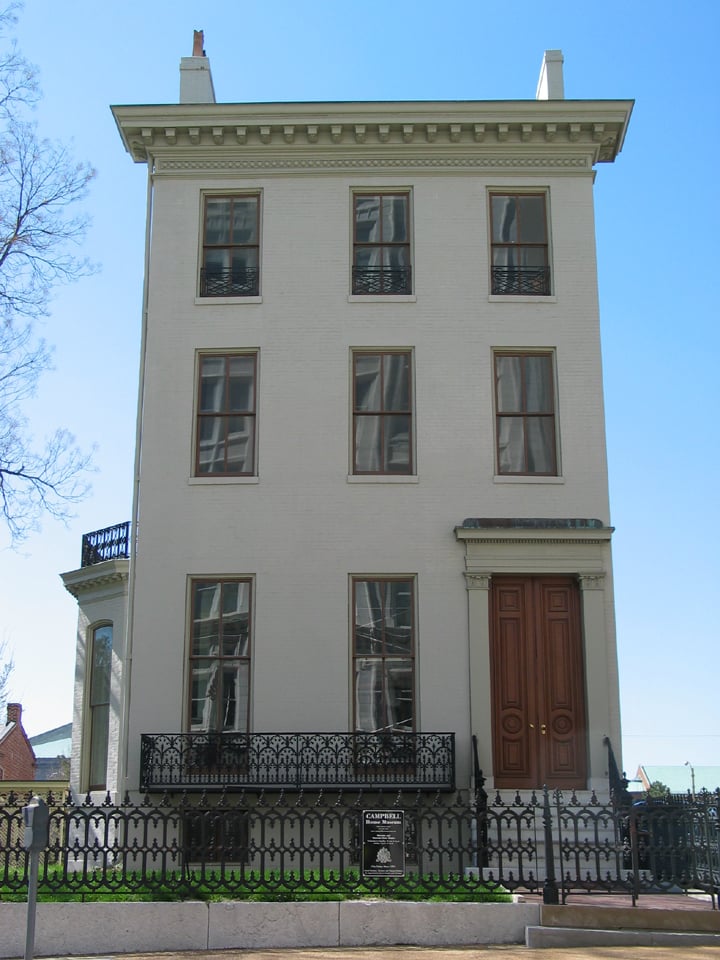
Est. 1849 · Founder's residence of the Missouri Botanical Garden · Designed by architect George I. Barnett · Site of Henry Shaw's death (1889) · National Underground Railroad Network to Freedom listing
Henry Shaw (1800–1889) was an English-born businessman who made his fortune in St. Louis as a hardware merchant before retiring in his early forties to pursue botanical interests. He engaged architect George I. Barnett (also responsible for the Old Courthouse dome) to design Tower Grove House, his Italianate country residence, which was completed in 1849. In 1859 Shaw opened the Missouri Botanical Garden on the surrounding estate grounds, drawing on correspondence and consultation with Sir William Hooker of Kew and Asa Gray at Harvard.
Shaw is also part of a more difficult history. He was a slave owner: by 1828 he had acquired enslaved African Americans to work the estate, and at times he held as many as eleven enslaved people, including individuals named in Garden records as Peach, Juliette, Bridgette, Joseph, Jim, Sarah, Tabitha and her daughter Sarah, and Esther and her children. In 1855 four of Shaw's enslaved workers escaped, attempting to cross the Mississippi to free Illinois; they were captured, and Shaw responded by selling Esther south to Vicksburg, Mississippi, separating her from her children.
Shaw never married and lived at Tower Grove House for the remainder of his life. He died of malaria in the bedroom of Tower Grove House on August 25, 1889, at age 89, attended by doctors and Garden staff. He is interred in a mausoleum a short walk from the house. After his death, the Garden continued to operate under a board of trustees as he had specified.
In recent years the Missouri Botanical Garden has formally engaged the history of slavery on its grounds. The Garden received a National Park Service grant (reported in the press at approximately $99,920) to add interpretive panels and exhibits about Shaw's enslaved workers at Tower Grove House, and Tower Grove House was added to the NPS National Underground Railroad Network to Freedom — one of 23 new listings — in recognition of Esther's documented attempted escape.
Sources
- https://www.missouribotanicalgarden.org/gardens-gardening/our-garden/gardens-conservatories/victorian-district-sachs-museum-tower-grove-house/tower-grove-house
- https://en.wikipedia.org/wiki/Henry_Shaw_(philanthropist)
- https://discoverandshare.org/2024/06/13/missouri-botanical-garden-and-the-underground-railroad/
- https://www.ksdk.com/article/news/local/black-history/missouri-botanical-garden-project-connection-to-slavery/63-1ec6c7ad-85f9-482c-89ff-a8487d5726e6
- https://www.stltoday.com/life-entertainment/local/mobot-gets-grant-to-teach-about-slavery-on-its-grounds/article_d513affa-d1db-11ef-8280-b7c7a4d485e8.html
Phantom footstepsCabinet sounds'Swishing' sweeping soundsDisembodied voice calling staff names
Paranormal accounts at Tower Grove House appear in the Missouri Botanical Garden's own 'Discover + Share' staff publication and in a KSDK Show Me St. Louis segment. Reported phenomena include footsteps moving into Shaw's bedroom, the sound of a cabinet shutting in an unoccupied room, and a 'swishing' sound described as resembling an old broom sweeping. Garden staff have separately described hearing a woman's voice calling their name during work hours on the estate.
The phenomena are presented in those sources as part of the wider 'haunted history' of the Garden rather than tied to a specific named decedent on the property. Shaw himself died at home in 1889, but the woman's-voice accounts are not connected to a documented identity. We treat the lore as folkloric staff narrative rather than verified paranormal investigation.
The site requires careful editorial framing. Tower Grove House is now formally recognized within the National Underground Railroad Network to Freedom because of the documented histories of the people Shaw enslaved — including Esther, sold south to Vicksburg in 1855 in retaliation for her family's escape attempt. Any paranormal narrative at this site must sit alongside, and never displace, those documented histories. We present staff and investigator accounts here without anchoring them to enslaved individuals and without sensationalizing the slavery history.
Notable Entities
Henry Shaw (died in bedroom 1889)
Media Appearances
- KSDK 'Show Me St. Louis' Missouri Botanical Garden haunted-history segment
- Discover + Share Garden publication