Est. 1750 · St. Charles Founding Burial Ground (c. 1750–1863) · French Canadian Colonial Cemetery · 1982 Coffin Discovery During Retaining Wall Construction · Estimated 50–200 Unexhumed Burials Remaining
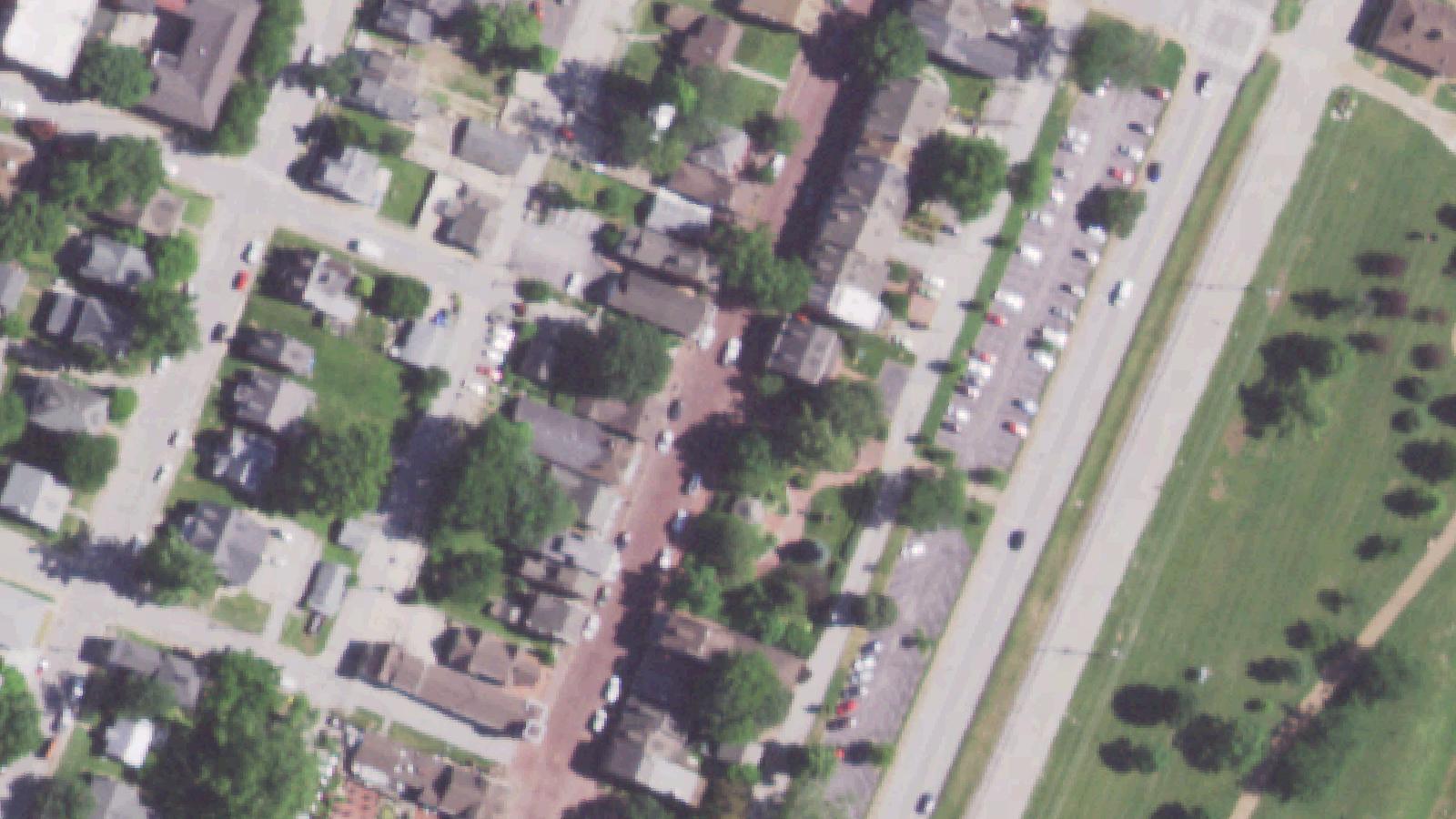
St. Charles was founded as a French Canadian settlement in the mid-eighteenth century, and its first burial ground occupied the land near what is now the south end of Main Street. The log church that served the founding community anchored the site, and the dead were interred there from roughly 1750 through 1863 — a span covering the colonial French period, the American territorial era, and the first decades of Missouri statehood.
Estimates put the total number of interments at around 320. The cemetery was officially relocated during the 1850s as the city expanded and the land became valuable for other uses, but the transfer was incomplete. Not all of the burials were moved. Fifty to two hundred bodies — the range reflects the genuine uncertainty — are believed to remain in the soil beneath the surrounding neighborhood.
The incompleteness of the 1850s relocation was confirmed in a specific and unsettling way in 1982, when workers excavating for a retaining wall broke into four intact coffins. The discovery prompted local historical discussion but no comprehensive excavation followed. The coffins were reinterred and the construction proceeded.
Sources
- https://agraveinterest.blogspot.com/2013/10/haunted-towns-of-midwest-st-charles.html?m=1
- https://www.passingdownthelove.com/st-charles-is-haunted/
Apparition of woman in white moving along Main Street blockFigure vanishing without entering a building or turning a cornerCold spots near approximate cemetery footprint
The Lady in White is the dominant figure in St. Charles ghost tradition, and her story is connected to this stretch of Main Street through the lost cemetery. Local accounts describe her as a woman who died of cholera during one of the epidemic waves that swept Missouri river towns in the nineteenth century — likely the 1849 or 1850s outbreaks. She died shortly after giving birth, and according to the tradition, she was buried in the white dress she had worn at her wedding.
Her apparition is described as a figure in white moving along the sidewalk in the vicinity of 400 S. Main, sometimes appearing to enter the area and then vanishing without turning a corner or entering a building. The wedding-dress detail is what gives the sighting its identification — white funeral dress on a woman was uncommon enough that the description has stuck as a distinguishing marker across multiple independent accounts.
The 1982 coffin discovery gave the oral tradition a physical anchor. When construction workers actually broke into intact nineteenth-century burials beneath the neighborhood, the claim that the dead were still here became difficult to dispute on a purely factual level, whatever one makes of the paranormal reports layered on top.
Notable Entities
The Lady in White (unidentified woman, died of cholera post-childbirth, buried in wedding dress)