Outdoor Exploration
Campus Self-Guided Walk
Visitors can view Grim Hall's exterior from the public campus grounds. The building is a working university facility; interior access is restricted to students and staff.
- Duration:
- 20 min
HauntBound archive · catalog record
Reported phenomena, as catalogued
A former nurses' dormitory where a student's 1930 winter death left a ghost that refuses to check out
100 E Normal Ave, Kirksville, MO 63501
Research updated September 2026
Age
All Ages
Cost
Free
Public campus grounds; no admission charge
Access
Accessibility not stated
Campus sidewalks; building interior restricted to university personnel
Equipment
Photos OK
Est. 1910 · Former Grim-Smith Hospital Nurses' Dormitory · Truman State University Historic Campus Building · Site of Charlotte Burkholter's 1930-1931 Winter Death
Grim Hall takes its name from the Grim-Smith Hospital that once operated next door, a medical facility that served Kirksville residents through the early twentieth century. When the university absorbed the nurses' dormitory in the 1930s, it became standard student housing — room assignments handed out each fall with no particular ceremony.
The building's dark chapter centers on Charlotte Burkholter, a student who remained on campus during the winter break of 1930–1931 when a severe storm cut Kirksville off from the outside world. According to campus oral tradition, Burkholter was diabetic and ran out of insulin during the isolation; without access to medication or medical help, she died — from diabetic shock, exposure, or some combination of the two. The exact cause was never settled officially, but the circumstances were grim by any account.
After the university took full control of the building, Burkholter's story circulated quietly among students who noticed unexplained sounds and cold drafts in the lower level. The episode that crystallized the haunting legend: maintenance workers discovered a radio playing in the former pool-storage area with no power source connected — a detail that lodged in campus memory and has been repeated ever since.
Sources
Charlotte Burkholter's story has persisted on campus for nearly a century, passed from one class of students to the next. The core of the legend is factual enough — a young woman did die in the building during an isolating winter storm — and that documented tragedy gives the haunting reports more traction than most campus ghost stories carry.
The most-cited paranormal incident involves a radio discovered running in the lower-level area once used for pool storage: the device had no working power connection, yet it played as if nothing were wrong. Maintenance and student witnesses have described the moment as deeply unsettling rather than dramatic.
Cold spots in the building's lower hallways, footsteps with no visible source, and a general unease in the former storage areas have been reported by residents over the decades. Burkholter is named as the presence behind all of it — a student who could not leave when she needed to, and who some believe never left at all.
Notable Entities
Visitors can view Grim Hall's exterior from the public campus grounds. The building is a working university facility; interior access is restricted to students and staff.
Some links on this page may earn HauntBound a small commission when you book, at no extra cost to you. Our editorial picks are independent. Full disclosure
Every HauntBound history is researched from documented sources. We clearly separate verified historical fact from paranormal folklore.
Free Guide
11 verified stops, rated for families, mapped in order. Free.
One email to confirm, then the guide link. Unsubscribe anytime.
Hot Springs, AR
The United States Army-Navy General Hospital at Hot Springs opened in 1887 as the nation's first joint Army-Navy medical facility, built to take advantage of the city's therapeutic mineral springs. Rebuilt as a 412-bed brick complex in the early 1930s, it treated more than 100,000 veterans during World War II before closing permanently in 2019.
Newtown, CT
Fairfield Hills Hospital opened in 1931 in Newtown as Connecticut's second state psychiatric hospital, built in a Georgian Colonial style across 16 interconnected brick buildings. At its peak, the campus held approximately 4,000 patients. The facility was known for its use of psychosurgery — over 100 lobotomies performed in the first year after lobotomy was introduced — as well as electroconvulsive therapy and insulin shock therapy. The hospital closed in 1995; the campus was listed on the National Register of Historic Places in September 2024.
Denver, CO
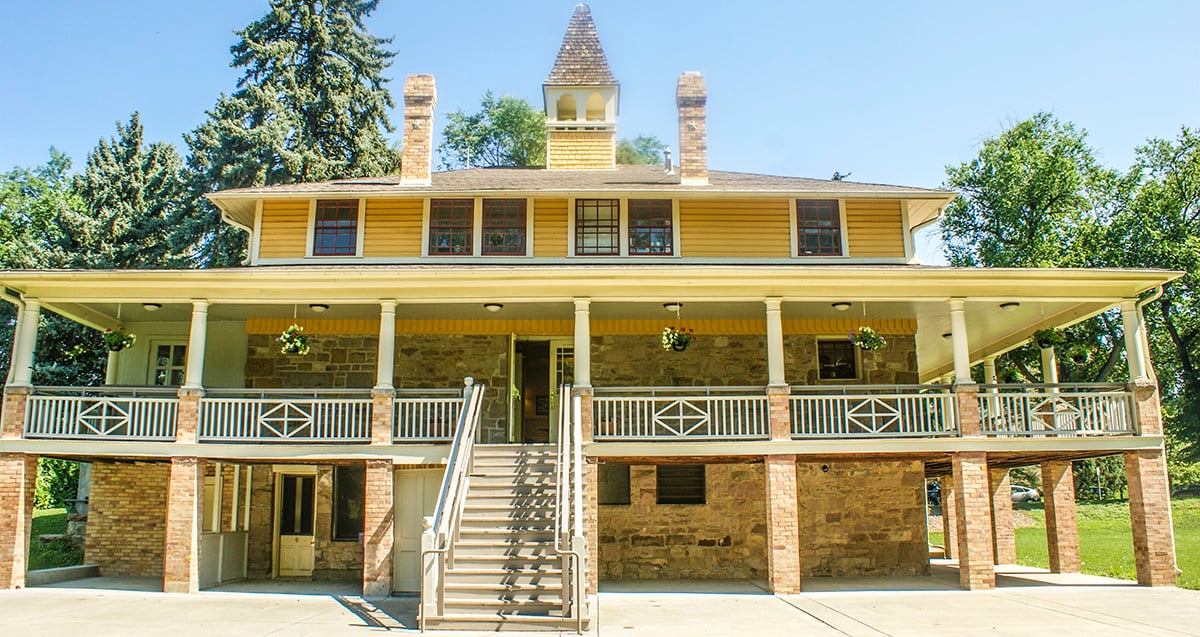
Baron Walter von Richthofen built the Molkerei in 1888 as a tuberculosis sanitarium offering his 'Swiss milk cure'—patients drank fresh unpasteurized milk and inhaled barn effluvium through floor grates above the stables. After the milk cure fell from favor, the building converted to asylum use, and in 1908 Denver acquired the property as Montclair Park's community anchor. It is now a designated Denver Landmark and NRHP-listed property, completely restored in 2003–2004.