Outdoor Exploration
Montclair Park Self-Guided Visit
Explore the grounds of Montclair Park, view the historic Molkerei building, and walk the neighborhood where von Richthofen's sanitarium and castle once defined east Denver.
- Duration:
- 45 min
HauntBound archive · catalog record
Reported phenomena, as catalogued
An 1888 Denver Landmark built by Baron von Richthofen as a tuberculosis milk-cure sanitarium, later an asylum, now a community center with reports of flickering lights and masked figures on the grounds.
729 Ulster Way, Denver, CO 80230
Research updated June 2026
Age
All Ages
Cost
Free
Free access to surrounding Montclair Park; community center may require event booking
Access
Wheelchair OK
Park grounds flat and paved; building accessible
Equipment
Photos OK
Est. 1888 · Denver Landmark and National Register of Historic Places listing · Denver's first community center (1908) · One of the first tuberculosis sanitariums in Colorado · Built by Baron Walter von Richthofen, uncle of the Red Baron
Baron Walter von Richthofen—uncle of World War I flying ace Manfred von Richthofen—arrived in Denver in the 1870s and became one of Montclair's principal land developers. In 1888 he constructed the Molkerei (German: 'milkhouse' or 'dairy') at East 12th Avenue, promoting what he called the 'Swiss milk cure' for tuberculosis: patients would drink fresh, unpasteurized milk directly from cows stabled on the building's lower level, while inhaling barn vapors through floor grates on the upper dining and sleeping levels. Von Richthofen unveiled this treatment on September 15, 1888.
The milk cure's scientific basis was dubious, and when effective antitubercular treatments emerged, the Molkerei's medical mission ended. The structure subsequently operated as an asylum for a period roughly between 1902 and 1906, representing early and controversial psychiatric practices of the era. Walter von Richthofen died in 1898, before the asylum phase.
In 1908, the City of Denver acquired the property as an addition to Montclair Park, turning it over to the Montclair Improvement Association as Denver's first community center. After Montclair's annexation to Denver, the city remodeled the building in 1909, designating it the Montclair Civic Building. A complete restoration and rehabilitation was completed in 2003–2004.
The building is designated a Denver Landmark and is listed on the National Register of Historic Places as part of Montclair Park. Von Richthofen's nearby castle—built 1887 at 7020 E 12th Avenue—still stands as a private residence, and local legend holds that underground tunnels once connected the two properties, though this has not been archaeologically confirmed.
Sources
The paranormal tradition at the Molkerei draws on the building's documented history of medical experimentation and asylum operations. According to Denver Westword's editorial survey of haunted Denver sites (published September 13, 2013, by staff writer Michael Roberts), visitors to Montclair Park have reported lights flickering repeatedly inside the Civic Building, figures visible moving through windows of the apparently empty structure, and one instance of a man leaving the building wearing a white surgical mask and walking through the surrounding park before disappearing. Westword's second annual haunted Denver roundup (October 31, 2013) also lists the Molkerei among the city's top haunted sites.
A persistent legend holds that underground tunnels once connected the Molkerei to Baron von Richthofen's castle at 7020 E 12th Avenue, just down the block. While the castle itself (built 1887) is well-documented and still standing, no archaeological evidence of connecting tunnels has been publicly reported. The tunnel legend may reflect the theatrical nature of the Molkerei's original design, in which patients sat above hidden stables, breathing air that rose through floor grates from below—a real architectural feature that could inspire tunnel stories.
The asylum period (approximately 1902–1906) represents the darkest chapter in the building's documented history, with early psychological practices of the era raising legitimate concerns about patient welfare. These historical facts—while real—should be understood in their documented context rather than sensationalized.
Media Appearances
Explore the grounds of Montclair Park, view the historic Molkerei building, and walk the neighborhood where von Richthofen's sanitarium and castle once defined east Denver.
Some links on this page may earn HauntBound a small commission when you book, at no extra cost to you. Our editorial picks are independent. Full disclosure
Every HauntBound history is researched from documented sources. We clearly separate verified historical fact from paranormal folklore.
Free Guide
11 verified stops, rated for families, mapped in order. Free.
One email to confirm, then the guide link. Unsubscribe anytime.
Fairfax, CA
Camp Bothin in Fairfax occupies the grounds of the former Arequipa Sanatorium, a tuberculosis treatment home for working-class women opened in 1911 by Dr. Philip King Brown. The property had earlier served as Henry E. Bothin's Hill Farm convalescent home for women and children. After Arequipa closed in the 1950s, the Girl Scouts took over the buildings, which they still use today.
Marquette, MI
Morgan Heights Sanatorium opened in 1911 as the Upper Peninsula's first tuberculosis sanatorium, treating patients during an era when TB was the leading cause of death in Michigan. Patients received treatments that included electric-shock therapy and excess morphine dosing — approaches now understood to have hastened premature deaths. The Marquette Mining Journal documented the facility's role in the region's TB epidemic in a 2021 retrospective. The main building was demolished in 2002; two original brick structures remain on the CR 492 corridor.
Lima, OH
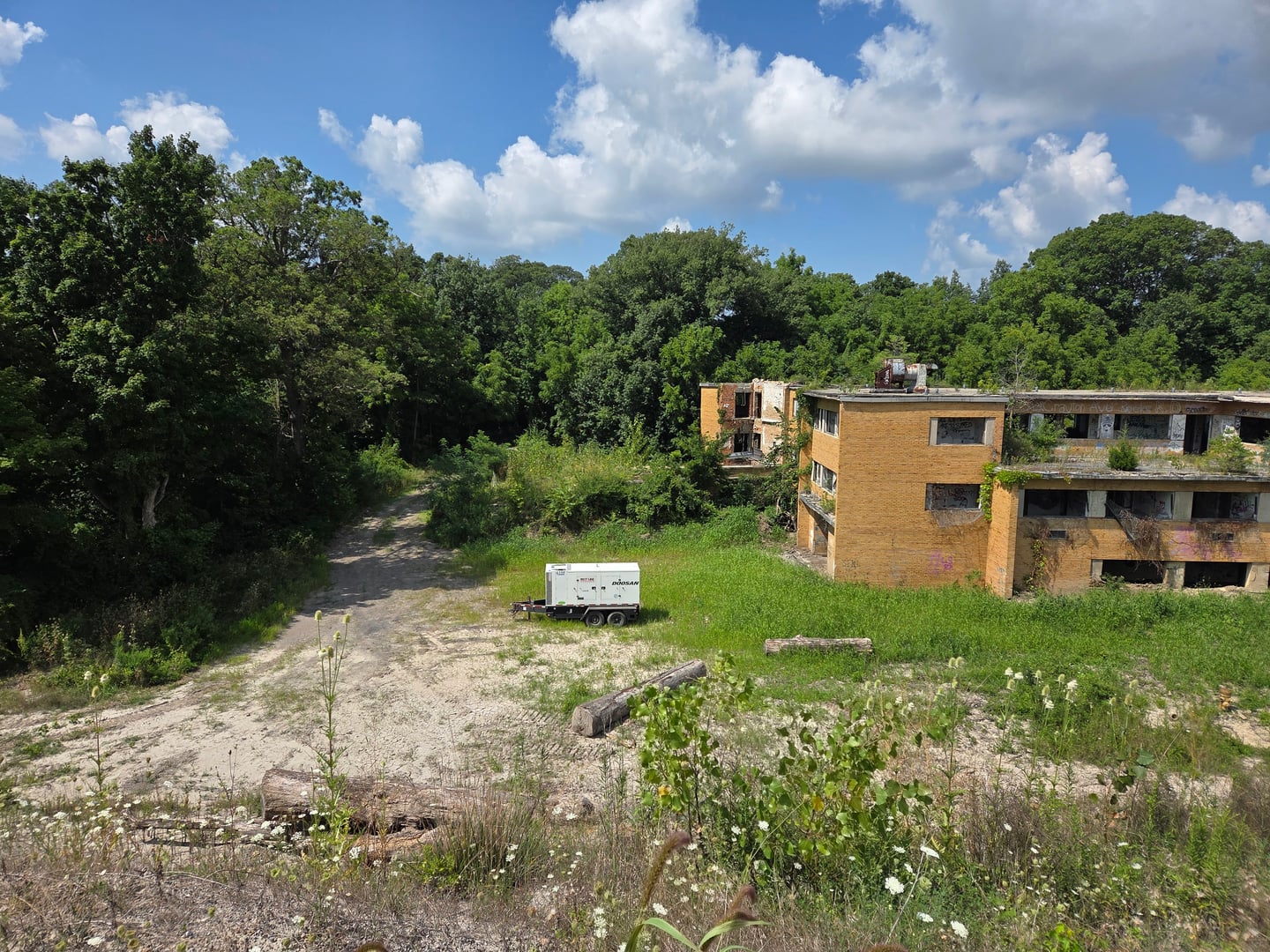
The Lima Tuberculosis Hospital opened in 1911 as the first state-supported TB facility in Ohio, grew from 24 to 158 beds, and operated through 1973, accumulating hundreds of patient deaths during the height of Ohio's tuberculosis epidemic.