Est. 1868 · Italianate Architecture · University of Missouri Campus Heritage · 19th Century Columbia Residential History
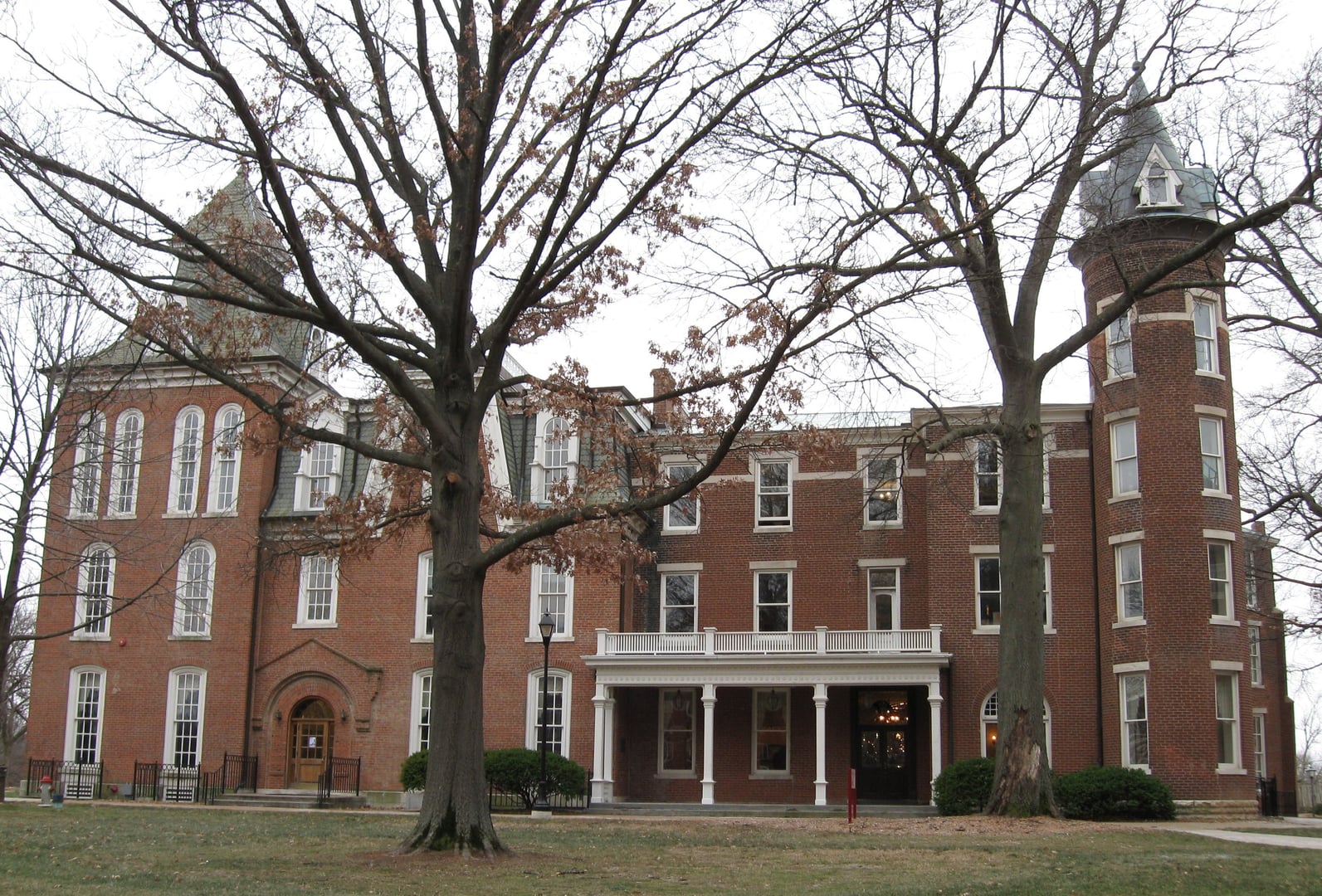
Sanford F. Conley constructed the house at 602 Sanford Place in Columbia in 1868–69, producing one of the finest surviving examples of Italianate residential architecture on the current University of Missouri campus. The two-story frame structure features bracketed cornices and decorative window hoods characteristic of the style's mid-century peak.
The Conley family occupied the house through the late nineteenth and early twentieth centuries. Among its residents was a woman known in family tradition as Aunt Sally Conley, whose reputation as a difficult personality outlasted her life by some margin. The University of Missouri purchased the property in 1980 and adapted it for academic use. It has housed the Campus Writing Program, Provost offices, and the Office of Research at various points.
The house stands today in an alcove of mature shrubs and trees on the southeast corner of Conley Avenue and Sanford Place, across from the Conley Avenue Parking Garage and Mark Twain Residence Hall. The MU Archives maintain detailed records on the building's construction and ownership history.
Sources
- https://muarchives.missouri.edu/historic/buildings/conley/
- https://en.wikipedia.org/wiki/Sanford_F._Conley_House
- http://explorecomohistory.com/education/mu/sanford-conley-mu-campus-602-sanford-place/
ApparitionNocturnal DisturbancesActivity Near Attic Door
The Conley House haunting rests on a single, well-documented family tradition: Aunt Sally Conley reportedly made the unusual request to be buried within the north wall of the residence upon her death. Whether that request was honored is unclear from the historical record, but the belief that it was has fueled the haunting narrative for generations.
Descendants and campus lore agree that Sally's apparition is most active at night and that her activity intensifies when the attic door is left ajar — a detail specific enough to have persisted across multiple oral tradition sources and been documented by MU Archives staff and local journalists. The Columbia Missourian and Inside Columbia magazine have both reported on the legend, citing MU Archives as a corroborating institutional source.
The house functions as an active office building, which means firsthand accounts from the past several decades come primarily from staff and writing program faculty rather than overnight guests. The specific attic-door trigger element is the kind of locally generated detail that typically survives only when something keeps reinforcing it.
Notable Entities
Aunt Sally Conley