Est. 1859 · Imprisonment of civilian women and children, Civil War 1863 · Partial collapse August 13, 1863 — five women killed · Lawrence Massacre connection — deaths cited by Quantrill · Frank James imprisonment — six months, 1880s · National Register of Historic Places
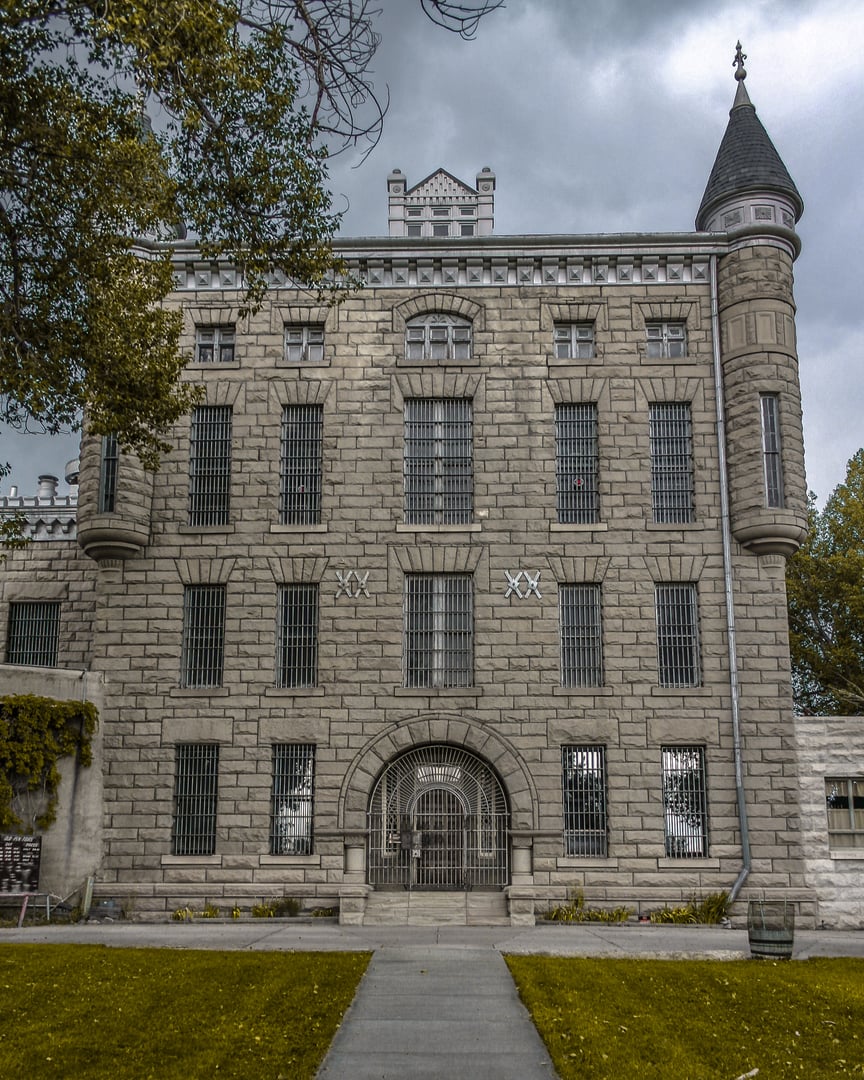
The 1859 Jail in Independence was built to replace an earlier county lockup, with two-foot-thick limestone walls intended to make escape difficult. It served routine county functions through the antebellum period before the Civil War transformed its use.
In the summer of 1863, Union military authorities in the Kansas City district imprisoned women and children they believed were providing support to Confederate guerrilla fighters, including members of the Quantrill Raiders who operated throughout western Missouri. These civilians were confined in the limestone jail. On August 13, 1863, the building partially collapsed — a disaster whose cause has been disputed: engineering failure, neglect, or deliberate sabotage have all been argued. Five women died in the collapse: Josephine Anderson, Mary Anderson, Susan Crawford, Armenia Selvey, and Charity Kerr. Several others were injured. The deaths enraged Confederate guerrillas in the region; William Quantrill used them as justification for the Lawrence, Kansas, Massacre on August 21, 1863, which killed approximately 150 civilians.
After the war, the jail returned to civilian use. Frank James, older brother of Jesse James and a participant in the James-Younger gang's bank and train robberies, was held here for approximately six months while awaiting trial on robbery charges in the 1880s. James was ultimately acquitted, but his time in the Independence jail made the building a notable site in Missouri outlaw history. His furnished cell, including period furniture, is preserved and interpreted on guided tours.
The Jackson County Historical Society has operated the building as a museum since the mid-twentieth century. The structure is one of the more intact examples of antebellum Missouri jail construction, and the society maintains interpretation of both the Civil War period and the James-era history.
Sources
- https://www.jchs.org/1859jailmuseum
- https://en.wikipedia.org/wiki/1859_Jail,_Marshal%27s_Home_%26_Museum
- https://kxkx.com/ixp/999/p/jackson-county-jail/
Apparitions of Civil War-era women and childrenNausea and disorientation in cell blockPhantom footstepsGrowling soundsEVP
The 1859 Jail's paranormal accounts center on the August 1863 tragedy. The women and children imprisoned here before the collapse are the most frequently invoked presences in documented visitor reports.
The cell block area produces the most concentrated activity. Visitors and paranormal investigators describe a sudden onset of nausea and dizziness — specifically in the area associated with the women's confinement — along with a visual sense of movement at the edge of perception. Some investigators report seeing figures in period dress: women in long skirts, children near the lower tier of cells. These reports are consistent across groups that have investigated the building without prior knowledge of the historical events.
Auditory phenomena are also documented. Growling or low vocal sounds have been recorded by investigators in the lower cell area. Footsteps on the stairs between floors occur when the building is otherwise empty. Paranormal research groups have shared audio recordings attributed to the jail through regional documentation networks, though the Jackson County Historical Society does not promote the paranormal angle in its primary museum interpretation.
American Hauntings Ink (Bump in the Night Productions) offers private investigations. Their publicly available reports on the site document EVP captures, temperature anomalies, and witness accounts from multiple investigation sessions.
Notable Entities
Civil War women prisoners (1863)Frank James
Where this legend is told