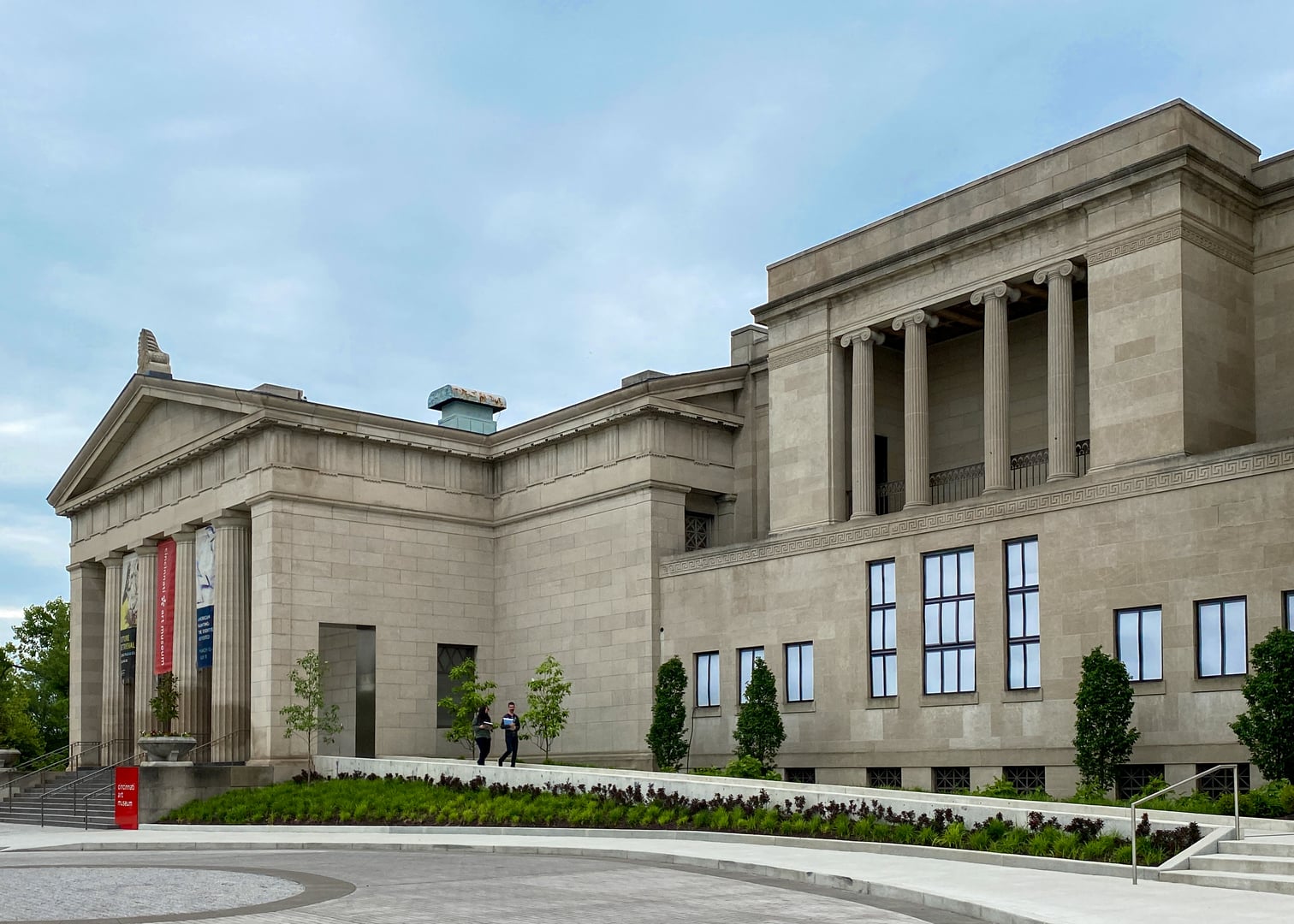
Est. 1915 · Opened January 7, 1915 as the Minneapolis Society of Fine Arts' public museum · Original Beaux-Arts building designed by McKim, Mead & White · Encyclopedic collection of 100,000+ works spanning 5,000 years · Tudor Room (1923) is the museum's first period room, with paneling ca. 1600 from an English manor · Connecticut Room incorporates one original wall ca. 1740 from a farmhouse near New Haven, CT · Mounted 'Supernatural America' exhibition 2022 highlighting the museum's documented staff ghost accounts
The Minneapolis Society of Fine Arts was founded in 1883 by 25 civic leaders including lumber tycoon and eventual chairman Eugene Carpenter (of nearby 300 Clifton). The Society's collection grew through the late 19th and early 20th centuries until a permanent home was constructed at 2400 Third Avenue South, on a parcel donated by Clinton Morrison in memory of his father. The Minneapolis Institute of Art opened to the public on January 7, 1915 in a Beaux-Arts building designed by the New York firm McKim, Mead & White.
The museum's encyclopedic collecting strategy emphasized acquiring and reassembling complete historic interiors — period rooms — as immersive contexts for furniture, decorative arts, and architectural detail. The Tudor Room, installed in 1923, was Mia's first period room: its oak paneling dates to approximately 1600 and is believed to have come from a private chamber in an English manor used for eating, sitting, and entertaining. The Connecticut Room was assembled around one original interior wall from a Connecticut farmhouse built circa 1740 near New Haven; its ornate paneling around the fireplace is the most significant architectural element. Additional rooms over the decades have included English drawing rooms, Asian interiors, and American Colonial parlors.
The museum has been expanded multiple times: a 1974 addition by Kenzo Tange brought a brutalist west wing, and a 2006 Michael Graves expansion added the Target Wing. Mia's collection currently includes more than 100,000 works across all eras and continents. The museum maintains free general admission, supported by endowment and member contributions.
In 2021-2022 Mia mounted 'Supernatural America: The Paranormal in American Art,' an exhibition that drew direct attention to the museum's own staff ghost reports. Mia security guards and gallery staff have long maintained an unofficial collection of anomalous accounts focused on the period rooms; the museum publishes a curated subset of these on its own website under the title 'Haunted Mia.'
Sources
- https://en.wikipedia.org/wiki/Minneapolis_Institute_of_Art
- https://new.artsmia.org/period-rooms
- https://new.artsmia.org/period-rooms/haunted-mia-explore-the-museums-spooky-tales
- https://www.startribune.com/minneapolis-institute-of-art-investigates-the-paranormal-in-supernatural-america/600059721
- https://www.minneapolis.org/blog/haunted-places/
- https://www.startribune.com/a-tale-of-two-haunted-twin-cities-museums/601165616
- https://hauntedus.com/minnesota/haunted-minneapolis-institute-of-art/
Door opening and footsteps in the empty Tudor Room (spring 2009)Small tugs on visitors' coats in the Connecticut RoomSensation of a hand grasping the visitor's own in the Connecticut RoomBed coverlet found on the floor in the Connecticut RoomCurtains opening or closing on their own in the Connecticut Room
Mia is unusual among major American art museums in officially curating and publishing its own staff ghost reports. Mia's 'Haunted Mia: Explore the Museum's Spooky Tales' page, maintained on the museum's website, names the Tudor Room and the Connecticut Room as the two most actively reported period rooms. A Haunted Mia audio tour, developed by staff member Lori Erickson, draws on accounts from security guards on the museum's graveyard shift.
In the Tudor Room, the central incident dates to spring 2009: a janitorial staff member reported hearing a door open and the unmistakable tread of footsteps moving through the room when the gallery was confirmed empty. Mia's published account positions the room — installed in 1923 around oak paneling that dates to roughly 1600 from an English manor — as the museum's longest-running site of unexplained reports, dating back essentially to its installation.
In the Connecticut Room, visitors over many years have reported small physical sensations: gentle tugs on coats while passing through the room, and on multiple occasions the distinct feeling of a hand grasping the visitor's own. A former curatorial assistant working in the room reported finding the bed coverlet pulled off the bed onto the floor, and the curtains independently opening or closing while the room was empty. The Connecticut Room was assembled around an original wall of a 1740 Connecticut farmhouse near New Haven.
Because the lore is published by the museum itself and corroborated by the Star Tribune's 2022 Supernatural America feature, the documentation here is unusually clean for a paranormal entry: every claim traces to either Mia's own institutional voice or a peer-reviewed local newspaper feature.
Notable Entities
Unnamed presences associated with the ca. 1600 English Tudor Room panelingUnnamed presences associated with the ca. 1740 Connecticut farmhouse wall
Media Appearances
- Haunted Mia audio tour (museum-produced)
- Supernatural America: The Paranormal in American Art (Mia exhibition, 2022)