Est. 1883 · Summit Avenue Victorian Architecture · Clarence Johnston Design · St. Paul Arts and Science Center History
Chauncey Wright Griggs was born in Connecticut in 1832 and built a successful business career in St. Paul in wholesale groceries, lumber, coal, and banking. In 1882 he commissioned architect Clarence Johnston to design a residence on Summit Avenue, then emerging as the city's prestige address. The carriage house was built in 1882 at a cost of $12,000; the main house was completed in 1883 at a reported cost of $35,000.
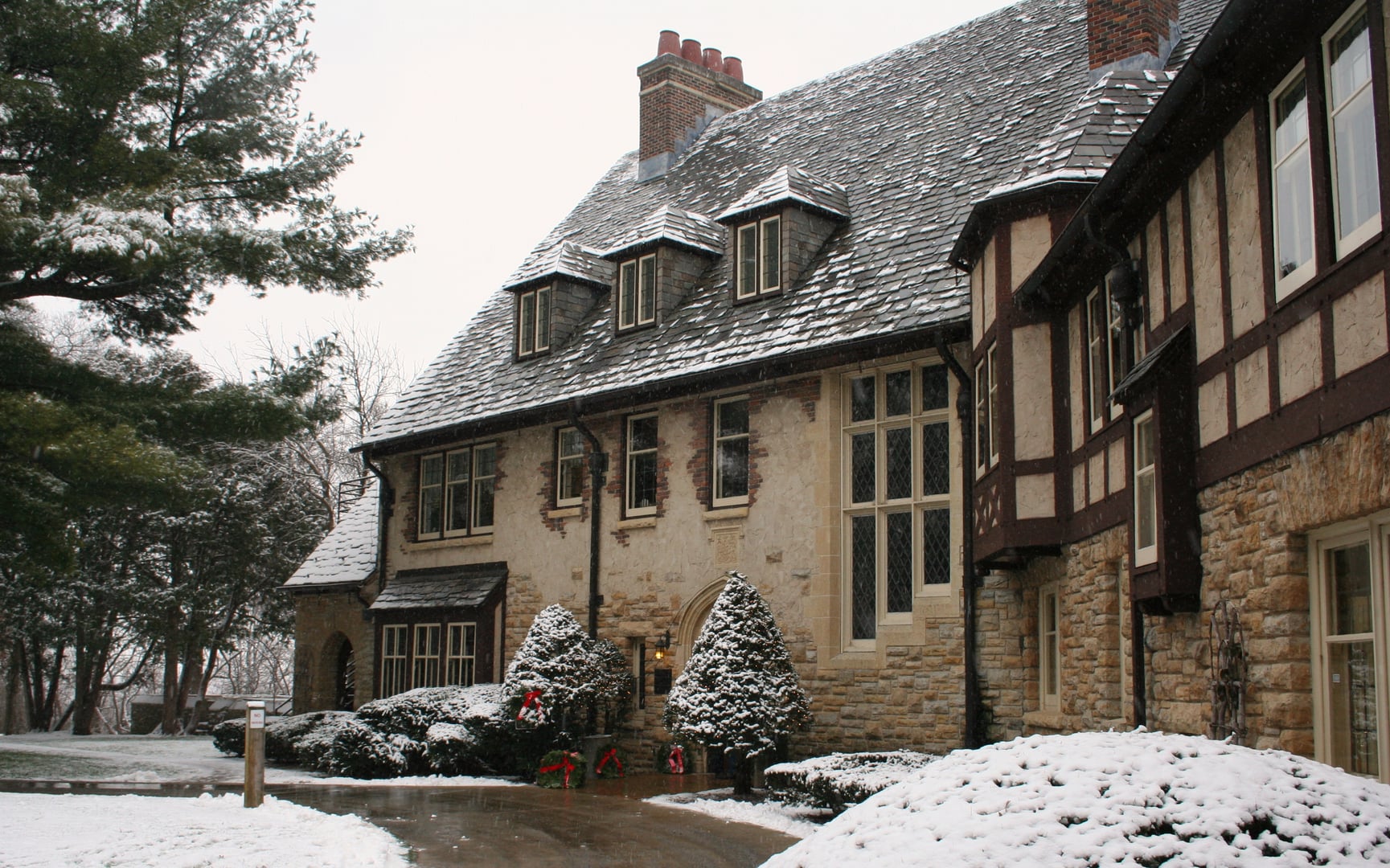
Johnston designed the mansion in Romanesque style, using Bayfield brownstone from Wisconsin as the primary exterior material. The structure has 24 rooms across four floors, with a top-floor landing that figures prominently in the building's paranormal reputation. Chauncey Griggs had served in the Civil War before settling in St. Paul; his neighbor on Summit Avenue was his business partner Addison Foster.
The Griggs family occupied the house from 1883 to approximately 1887 before relocating to Tacoma, Washington, where Chauncey had new business interests. In 1910, the year Chauncey died, a fire gutted much of the building. A subsequent restoration costing $6,000 stabilized the structure. In 1939 it was donated to the St. Paul Arts and Science Center. During the 1950s the upper floors were used as studio space for a School of Art. Subsequent owners include Carl Weschcke, founder of Llewellyn Publications, who purchased the property in 1964 and was among the first modern occupants to document the building's paranormal reputation. The mansion has been a private residence since Weschcke's era and is not open to the public.
Sources
- https://saintpaulhistorical.com/items/show/349
- https://www.americanghostwalks.com/articles/griggs-mansion-st-paul-haunted
- https://en.wikipedia.org/wiki/Burbank%E2%80%93Livingston%E2%80%93Griggs_House
ApparitionsPhantom footstepsCold spotsWhite mist on staircase
The Griggs Mansion's haunting reputation accumulated across several ownership periods beginning in the early twentieth century. The most repeated legend involves a young maid who is said to have hanged herself on the fourth-floor landing around 1915, reportedly after a failed love affair. She is described by witnesses as appearing as a white mist near the staircase; no documentary record of the death has been identified in public accounts.
A second figure, described as a thin man wearing a top hat, was reported by Delmar Kolb, an art instructor who lived in the basement during the 1950s when the house was a School of Art. Kolb described seeing the figure standing at the foot of his bed before it faded. In 1967, owner Carl Weschcke saw what he described as a surprised man in a dark suit standing in the library doorway — an apparition he and subsequent accounts associated with Charles Wade, a former caretaker of the property.
The most widely cited incident occurred in 1969. Weschcke invited a team of St. Paul Pioneer Press reporters and a photographer to spend the night in the mansion to document its reputation. According to Weschcke's account, the journalists departed before dawn after hearing the sound of heavy footsteps climbing toward the top-floor landing — the same location associated with the maid's alleged death. The newspaper's coverage and Weschcke's account of the incident have been repeated in regional ghost literature for decades.
Subsequent accounts describe a teenage girl named Amy reported in the parlor, and a general pattern of cold spots and inexplicable sounds on the upper floors. The house is a stop on the US Ghost Adventures St. Paul walking tour, which narrates the history from the public sidewalk. Interior investigations are not permitted.
Notable Entities
Unnamed maid (hanged, circa 1915)Charles Wade (former caretaker apparition)Amy (teenage girl apparition)