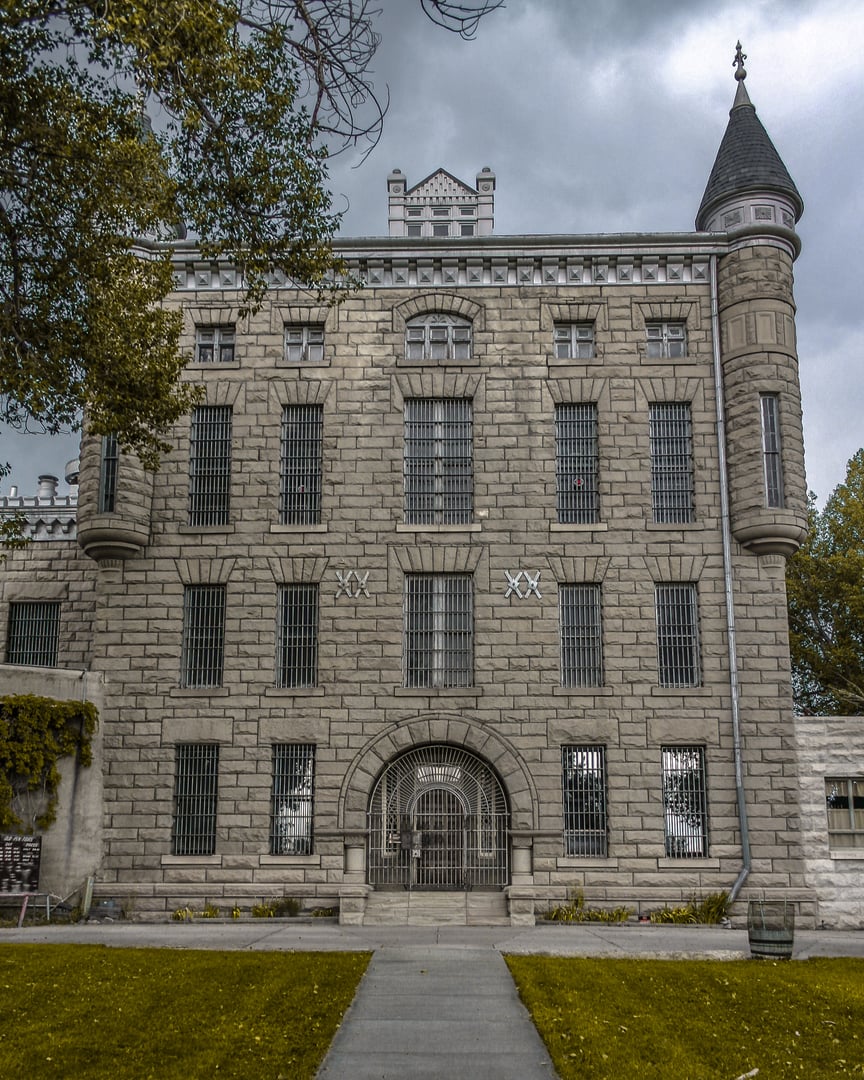
Est. 1839 · Michigan's first state prison, established 1839 · World's largest walled prison by 1882 · Executions conducted — Elias Friske, 1893 · Underground tunnel system intact · Now Armory Arts Village, a community of apartments and lofts
Michigan's first state prison was established by the territorial government in 1839 in Jackson. The site was chosen for its proximity to stone quarries and the labor potential of an inmate workforce — prisoners quarried the limestone used in the prison's own construction, a practice documented across several American penitentiaries of the period.
Through the second half of the nineteenth century, the Jackson facility expanded substantially. By 1882, with a population exceeding 1,500 inmates, it was documented as the largest walled prison in the world at that time. The infrastructure included cell houses arranged around a central yard, administrative buildings, workshops where inmates performed manufacturing labor, and an underground tunnel system connecting major structures — a design feature that became central to the facility's operational security and later to its paranormal reputation.
The prison conducted executions during its operating years. Elias Friske was executed here in 1893, convicted of murder. His name attaches to the most specific apparition reported by investigators in subsequent years. The facility also housed prisoners through the Prohibition era, and documented accounts from that period include corruption among guards and staff — aspects of institutional history that the tours once covered.
Michigan abolished the death penalty in 1846, making it among the first states to do so; the executions conducted at Jackson predated that abolition or were conducted under different jurisdictional authority. The prison closed in 1934 when Michigan opened the newer Southern Michigan Prison on Cooper Street.
The old facility was repurposed over subsequent decades. The current incarnation as Armory Arts Village combines residential lofts and commercial space with the preserved historic core. The building served as a National Guard armory until 2007. The Jackson Historic Prison Tours that once led visitors through the tunnels, the solitary confinement block and the Grand Gallery are no longer available.
Sources
- https://www.michigan.org/property/jackson-historic-prison-tours
- https://99wfmk.com/jacksonprisonoct2017/
- https://en.wikipedia.org/wiki/Southern_Michigan_Prison
- https://paranormalunknown.com/michigans-first-state-prison-a-haunted-penitentiary/
- https://beyondhaunted.com/michigan/michigans-first-state-prison
- https://sites.google.com/view/ghostfilesfromthemitten/jackson-state-prison
- https://www.youtube.com/watch?v=1YSNdFYXdaA
- https://crimecapsule.com/the-ghost-whisperer-of-jacktown-michigan/
Disembodied voices in tunnelsPhantom screamsApparition in solitary confinementCold spotsPhantom footsteps
The paranormal accounts associated with Michigan's first state prison center on two areas: the underground tunnel system and the solitary confinement block. Both are intact, and they were once open to visitors on guided tours, which may explain why visitor reports from these spaces are more consistent and detailed than those from higher-traffic areas of the repurposed complex.
The tunnels produce the most frequently documented phenomena. Investigators and tour visitors report hearing voices when no one else is present in the tunnel — both conversational registers and what several accounts describe as screaming from further in the passage. The acoustics of the underground space make origin-point difficult to verify, but the reports are consistent across groups with no prior knowledge of the building's history.
The solitary confinement block is associated with the specific apparition of Elias Friske. Friske was convicted of murder and executed at the Jackson prison in 1893. His name attaches to a figure reported by investigators and occasional tour visitors: a male form seen near the solitary cells, described as stationary and non-interactive. The specificity of the attribution to Friske comes from paranormal investigation accounts that circulated in the regional community and have been cited in features by local media outlets including 99WFMK.
The broader paranormal reputation of the site is covered in regional haunted-location directories and has brought multiple investigative groups to the building since the tours began. The tours are no longer available.
Notable Entities
Elias Friske
Where this legend is told