Est. 1950 · Cold War Radar Installation · 1953 Kinross Incident — Undocumented Military Disappearance · F-89 Scorpion and Crew Lost Over Lake Superior · Air Defense Command Northern Network
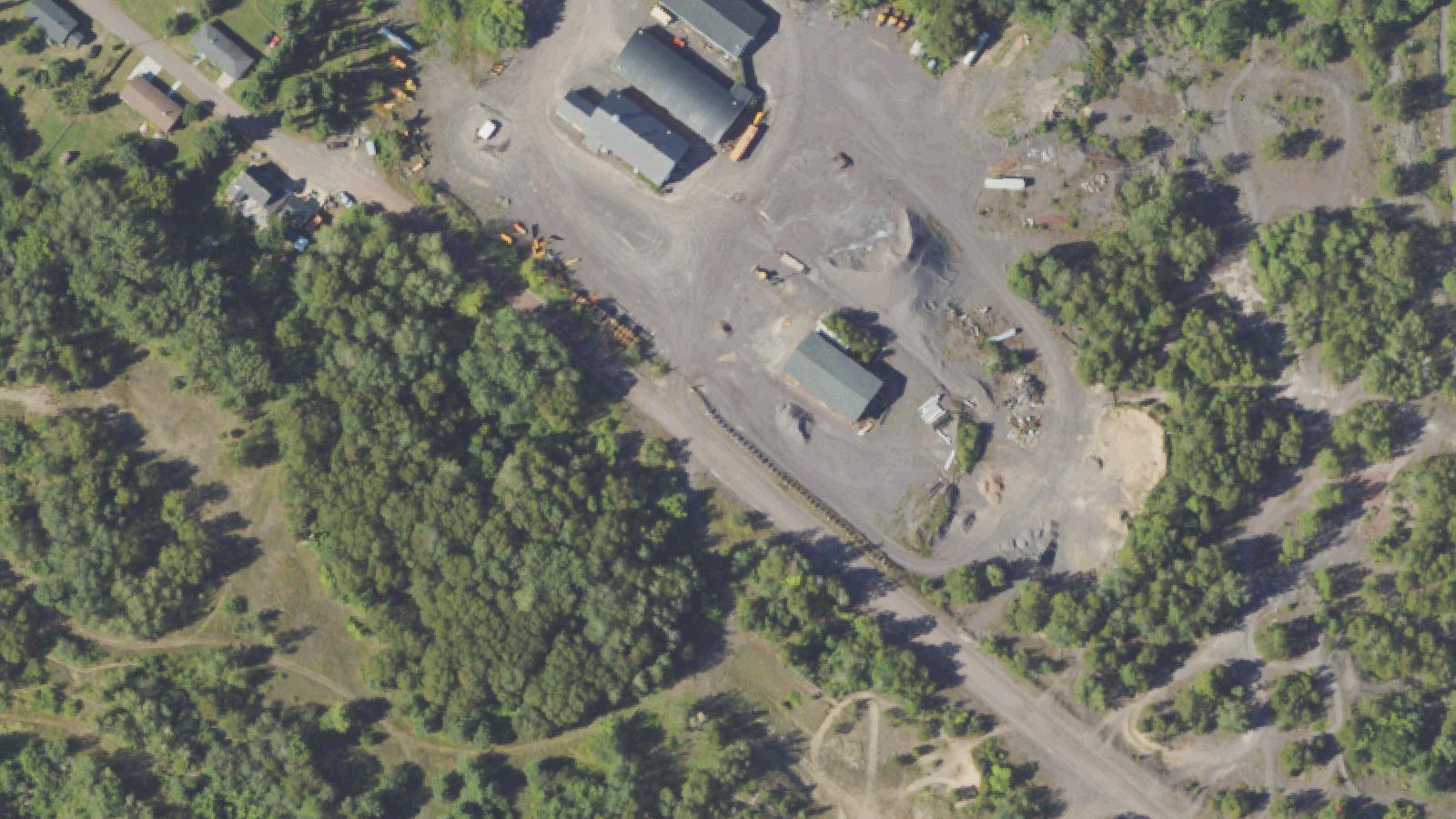
The Calumet Air Force Station was built as part of the Air Defense Command's network of radar installations that ringed the northern United States during the early Cold War. Its job was to track aircraft over Lake Superior — the open-water corridor between the U.S. and Canada that represented a potential route for Soviet long-range bombers. The station monitored traffic along this corridor continuously.
On the night of November 23, 1953, radar operators at Kinross Air Force Base near Sault Ste. Marie tracked an unidentified object over the Soo Locks. An F-89C Scorpion jet interceptor was scrambled with pilot First Lieutenant Felix Moncla Jr. and radar operator Second Lieutenant Robert L. Wilson aboard. Controllers tracked both the F-89 and the unknown object as the interceptor approached. On radar, the two returns merged into one. The merged return flew on for a moment, then disappeared. Neither the F-89, the crew, nor any wreckage was ever found.
The incident — known as the Kinross Incident — remains one of the most documented unexplained military aviation disappearances in American history. The Air Force initially attributed it to the intercept of a Royal Canadian Air Force transport, but Canadian records showed no such aircraft in the area. The two men — Moncla and Wilson — are officially listed as missing in action. The Calumet station's radar records from that night are not publicly available. The site itself has been abandoned since the Cold War-era radar network was modernized.
Sources
- https://en.wikipedia.org/wiki/Kinross_Incident
- https://www.visitkeweenaw.com/blog/post/spooky-keweenaw-lore-to-explore-legends-and-locations/
Unexplained military aviation disappearance with no wreckage recoveredRadar return showing merger of interceptor and unknown objectDecades of unresolved federal investigation
The Kinross Incident sits at the intersection of Cold War paranoia, military secrecy, and unexplained aviation mystery. Felix Moncla Jr. and Robert Wilson were real men — their families received no bodies, no wreckage, no explanation from the Air Force beyond a series of evolving and contradictory official statements. The Canadian transport explanation was publicly contradicted by Canadian records. The radar merge — two objects becoming one — has no consensus explanation in aviation terms.
UFO researchers have included the Kinross Incident in the canonical literature since the 1950s, pointing to the radar merge as evidence of a mid-air docking or collision with a non-human craft. Military aviation historians have proposed mechanical failure followed by lake impact and rapid sinking — Lake Superior's cold water and depth preserve wreckage almost indefinitely, making its absence significant. No search recovered anything.
The Calumet station site itself holds no ghost stories in the traditional sense. What it holds is absence: two men who flew north and never came back, a radar record that stopped mid-intercept, and a Cold War classification system that ensured any documentation of that night stayed out of public hands for decades. Visit Keweenaw documents the site as part of the peninsula's dark history.
Notable Entities
First Lieutenant Felix Moncla Jr. (pilot, declared MIA)Second Lieutenant Robert L. Wilson (radar operator, declared MIA)