Est. 1915 · Opened in 1915 as a Hagerstown vaudeville and movie house · Survived a 1970s fire that destroyed the adjoining lobby and apartment building · Restored as the anchor of Hagerstown's Arts and Entertainment District · Working performing-arts theatre seating about 1,300
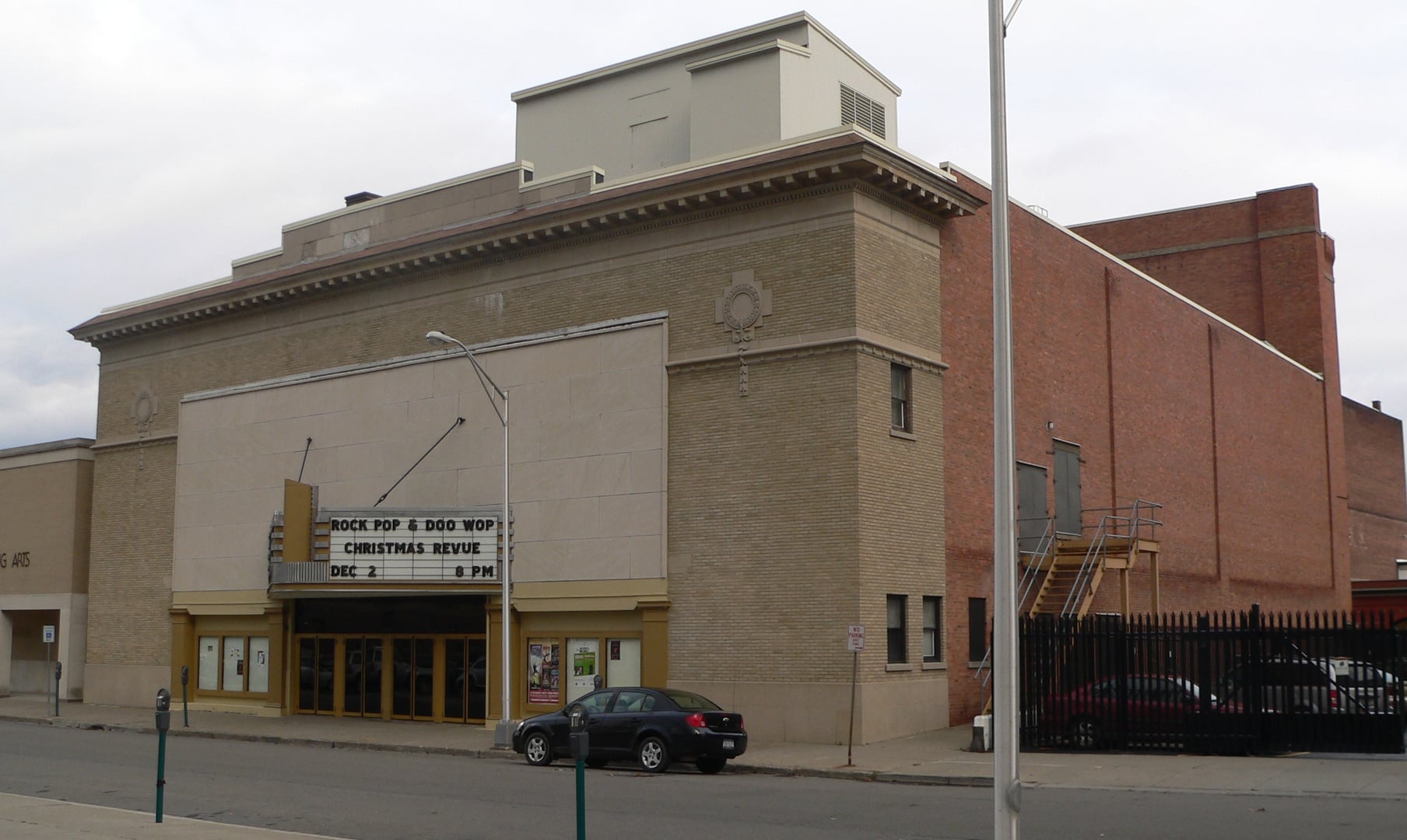
The Maryland Theatre opened in 1915 on South Potomac Street in downtown Hagerstown, built as a vaudeville and motion-picture house. Its interior was finished in a Neoclassical style with decorative plasterwork, and it became one of the anchors of the city's downtown.
The theatre closed in 1974. In the period that followed, a fire broke out that destroyed the adjoining apartment building and the theatre's lobby, and one person was killed in the blaze. Firefighters were able to save the main theatre structure, but the damaged lobby and building remains had to be razed. A smaller lobby was reconstructed afterward, and the auditorium was preserved.
Since its restoration the building has operated as a performing-arts venue, hosting concerts, films, comedians, dance recitals, orchestral programs, and plays. Today the auditorium accommodates roughly 1,300 guests and serves as the anchor of Hagerstown's Arts and Entertainment District.
The theatre's official website and box office handle ticketing for its calendar of events; it is a working venue rather than a museum or a dedicated paranormal attraction, and the haunting stories are encountered alongside its ordinary operation rather than on any ghost tour of the building.
Sources
- https://www.southernspiritguide.org/the-phantom-of-the-opera-and-friends-maryland-theatre/
- https://www.mdtheatre.org/
- https://www.visithagerstown.com/groups/performance-venues
Apparition of an early managerFeeling of not being aloneDisembodied voicesEVP recordings during investigation
The most-repeated story at The Maryland Theatre centers on one of its early managers. According to regional paranormal coverage, his daughter worked at the theatre across the middle decades of the twentieth century, and she reported seeing her father's apparition still moving through the building as if attending to his daily work. Neither the manager nor his daughter is named in the available sources, so the account stands as reported lore rather than a documented identification.
Beyond that, staff have described a general sense of not being alone in the building and have reported hearing voices in rooms they believed were empty. The Mason-Dixon Paranormal Society conducted an investigation and said it captured a number of electronic voice phenomena, or EVPs, inside the theatre.
The reports are unverified and are not tied to the one death recorded in the 1970s fire, which involved the adjoining building rather than the theatre proper. They circulate through paranormal listings and a regional ghost-history writer rather than through any organized tour, and a visitor's most likely encounter with the building is simply a show in its restored auditorium.