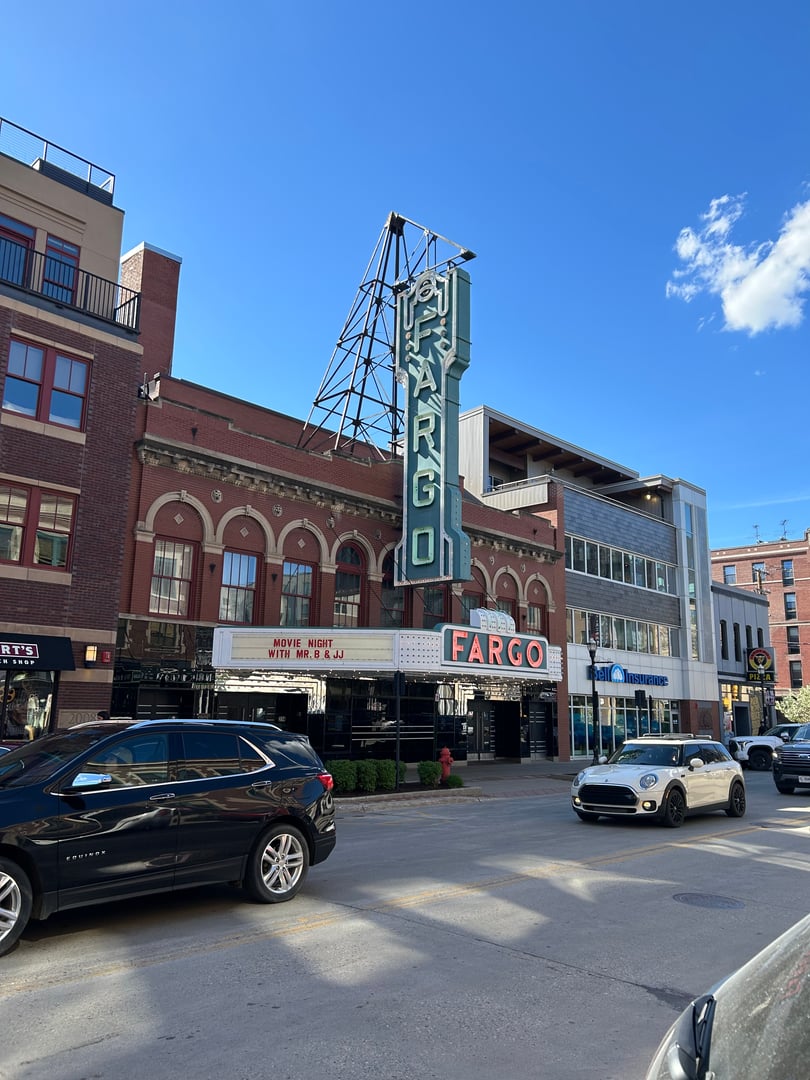
Est. 1919 · 1919 Vaudeville and Movie Palace · National Register of Historic Places (2008) · Home of the Binghamton Philharmonic · Home of Tri-Cities Opera · Herbert Brewster Architecture
The theater at 236 Washington Street opened in 1919 as the Binghamton Theatre, built to architect Herbert Brewster's design during the boom years of vaudeville and silent film. Its brick and cast-stone hall sat at the center of downtown Binghamton's entertainment district, presenting live acts and motion pictures to an audience drawn from across the Southern Tier.
Like many single-screen movie palaces, the building struggled through the mid-twentieth century. It operated for a stretch as the Capri Theatre before falling into decline. Rather than demolish it, Broome County acquired the property and reopened it as a public performing-arts center, adding a new primary entrance and lobby in 1981 while preserving the original 1919 auditorium.
Today the venue is known as the Broome County Forum Theatre and serves as the resident home of the Binghamton Philharmonic and Tri-Cities Opera, alongside touring concerts, comedy, and Broadway tours. Depending on the orchestra-pit configuration, the hall seats between roughly 1,520 and 1,550 people.
The building was listed on the National Register of Historic Places on January 23, 2008, recognized as a surviving example of the early-twentieth-century theater palaces that once anchored American downtowns. It remains one of the larger historic theaters in the region and a fixture of Binghamton's cultural calendar.
Sources
- https://en.wikipedia.org/wiki/Broome_County_Forum_Theatre
- https://www.theenvironmentalblog.org/2025/03/top-5-ghost-stories-and-paranormal-hotspots-in-binghamton/
Flickering lightsSelf-opening and closing doorsPhantom music in the empty hall
The Forum's reputation among performers and crew is built less on a single dramatic sighting than on a pattern of small disturbances repeated over the years. Staff and actors have described lights flickering on and off with no electrical cause found, and doors that open or close by themselves in a building locked up for the night.
The most often-repeated claim is auditory: the faint sound of music drifting through the empty hall when no one is performing and the house is dark. In a 1919 theater that has hosted thousands of vaudeville turns, concerts, and film screenings, the phantom music has become the building's signature story.
Local coverage of haunted Binghamton regularly includes the Forum among downtown's notable sites, alongside other historic theaters and public buildings. None of the accounts attach the activity to a specific named person or documented tragedy; the stories stay anecdotal, reported by the people who work in and visit the building. As with most historic theaters, the lore is best treated as part of the venue's atmosphere rather than verified fact.