Drive-By
Bridge Crossing & Photo Stop
Drive through or photograph the historic 1865 Jericho Covered Bridge near Jerusalem Mill in Gunpowder Falls State Park.
- Duration:
- 20 min
HauntBound archive · catalog record
Reported phenomena, as catalogued
+ 1 further entry on record
An 1865 Burr-truss covered bridge over the Little Gunpowder Falls near Kingsville, Maryland, the last of its kind in the area and one of the state's most famous haunted bridges, ringed by grim lynching and apparition legends.
12228 Jericho Road, Kingsville, MD 21087
Research updated June 2026
Age
All Ages
Cost
Free
A public one-lane covered bridge open to traffic, near Jerusalem Mill in Gunpowder Falls State Park. Free to cross or view.
Access
Limited Access
Narrow single-lane wooden covered bridge over a creek; nearby trails
Equipment
Photos OK
Est. 1865 · The last covered bridge in Harford/Baltimore Counties (built 1865) · Burr-truss span built by Baltimore machinist Thomas F. Forsyth · Listed on the National Register of Historic Places (1978) · Located near the historic Jerusalem Mill in Gunpowder Falls State Park
Following petitions from residents of Harford and Baltimore Counties in early 1864, the Maryland legislature authorized a bridge across the Little Gunpowder Falls, and on July 5, 1865, the contract was awarded to a Baltimore machinist named Thomas F. Forsyth for $3,125. The resulting Jericho Covered Bridge is a Burr-truss structure about 88 feet long and roughly 15 feet wide, carrying Jericho Road across the creek about 300 yards downstream from the historic Jerusalem Mill.
The bridge is the last remaining covered bridge in Harford or Baltimore Counties and one of only a small number left in Maryland. It was added to the National Register of Historic Places on September 13, 1978, and remains open to one-lane vehicle traffic within Gunpowder Falls State Park.
Its narrow wooden interior, creekside setting, and surrounding woods give the bridge a striking, atmospheric character that has made it a magnet for local legend. Note that the bridge's 1865 construction date postdates both the Civil War and the abolition of slavery in Maryland, a fact relevant to evaluating the historical accuracy of some legends attached to it.
Sources
The bridge's haunted reputation is documented across many regional sources, from Preservation Maryland and Atlas Obscura to local paranormal sites and student journalism. The darkest and most repeated legend holds that lynchings took place at the bridge during and after the Civil War, with victims said to have been hanged from the upper rafters; the signature manifestation is the reflection of a swinging body seen in a rear-view mirror by those who stop their car on the span late at night.
It is important to treat this lynching legend with care and honesty. There is no documented historical record of lynchings at the Jericho bridge, and the structure was not built until 1865, after the end of slavery in Maryland, which is inconsistent with the common framing of the story. The legend appears to be folklore that draws on the real and painful history of racial violence in America rather than a recorded event at this site; it is presented here as an uncorroborated legend, not as fact, and without sensationalizing the suffering it invokes.
Other, lighter strands of the bridge's lore describe a girl seen carrying a basket of flowers, a woman with a badly burned face, stalled cars that will not restart for several minutes, and an animal-like guardian creature said to protect the bridge from unwanted visitors. These too are folkloric and unverified, offered as the bridge's well-known oral tradition.
Notable Entities
Media Appearances
Drive through or photograph the historic 1865 Jericho Covered Bridge near Jerusalem Mill in Gunpowder Falls State Park.
Some links on this page may earn HauntBound a small commission when you book, at no extra cost to you. Our editorial picks are independent. Full disclosure
Every HauntBound history is researched from documented sources. We clearly separate verified historical fact from paranormal folklore.
Free Guide
9 verified stops, rated for families, mapped in order. Free.
One email to confirm, then the guide link. Unsubscribe anytime.
Milford, OH
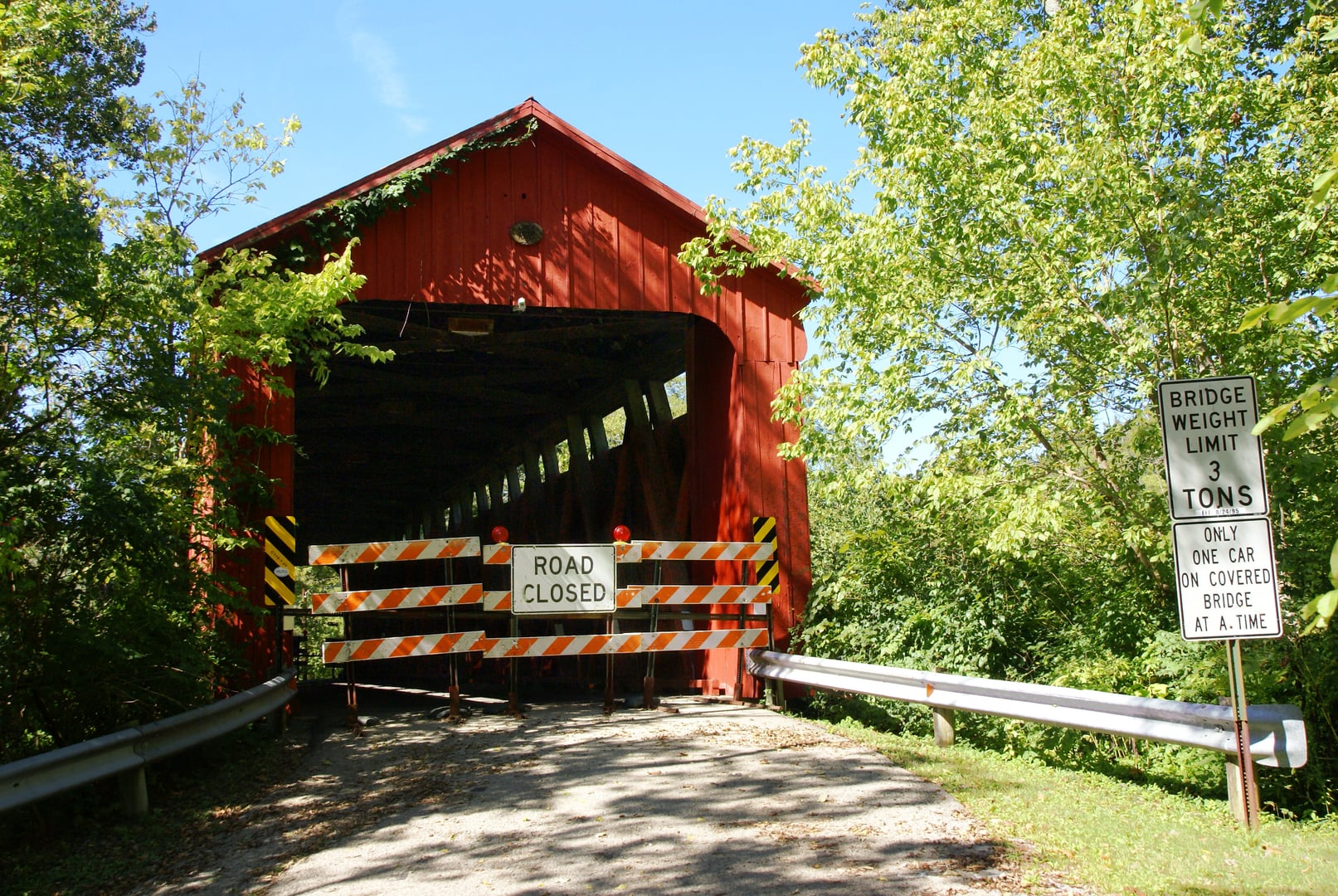
The Stonelick (Perintown) Covered Bridge was built in 1878 as a 140-foot Howe through-truss span carrying Stonelick-Williams Corner Road over Stonelick Creek in Clermont County, Ohio, near Milford and Owensville. It is the county's last surviving covered bridge and was listed on the National Register of Historic Places on September 10, 1974. It remains an active single-lane bridge after a 2014 collapse-and-rebuild.
 Aerial survey · USDA NAIP
Burkittsville, MD
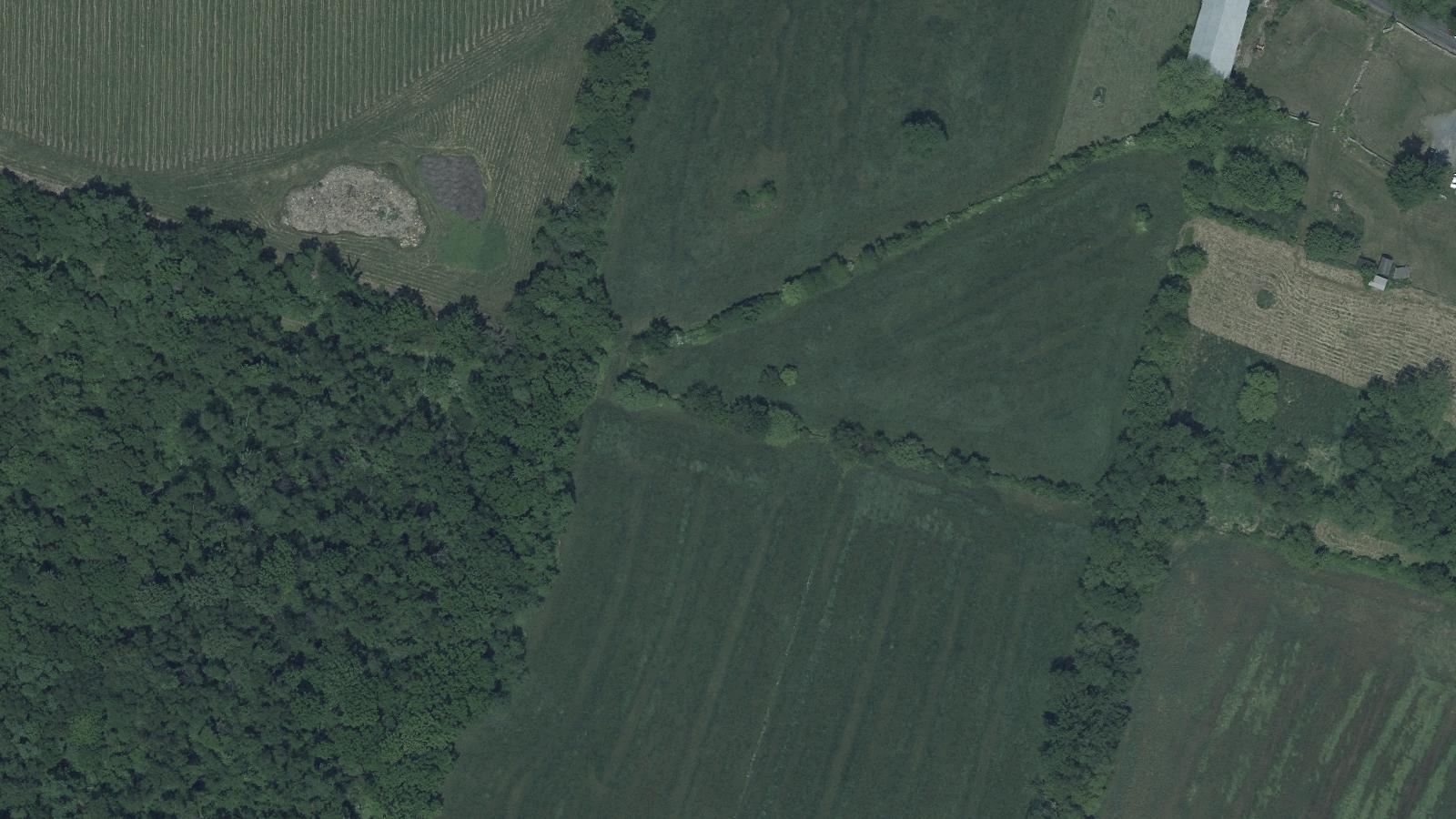
Spook Hill sits on Gapland Road near the Burkittsville Historic District in Frederick County, Maryland. The area saw Civil War action during the Battle of South Mountain (September 14, 1862), and Burkittsville itself gained wider cultural recognition as the setting for the 1999 film The Blair Witch Project.
 Aerial survey · USDA NAIP
Caldwell, ID
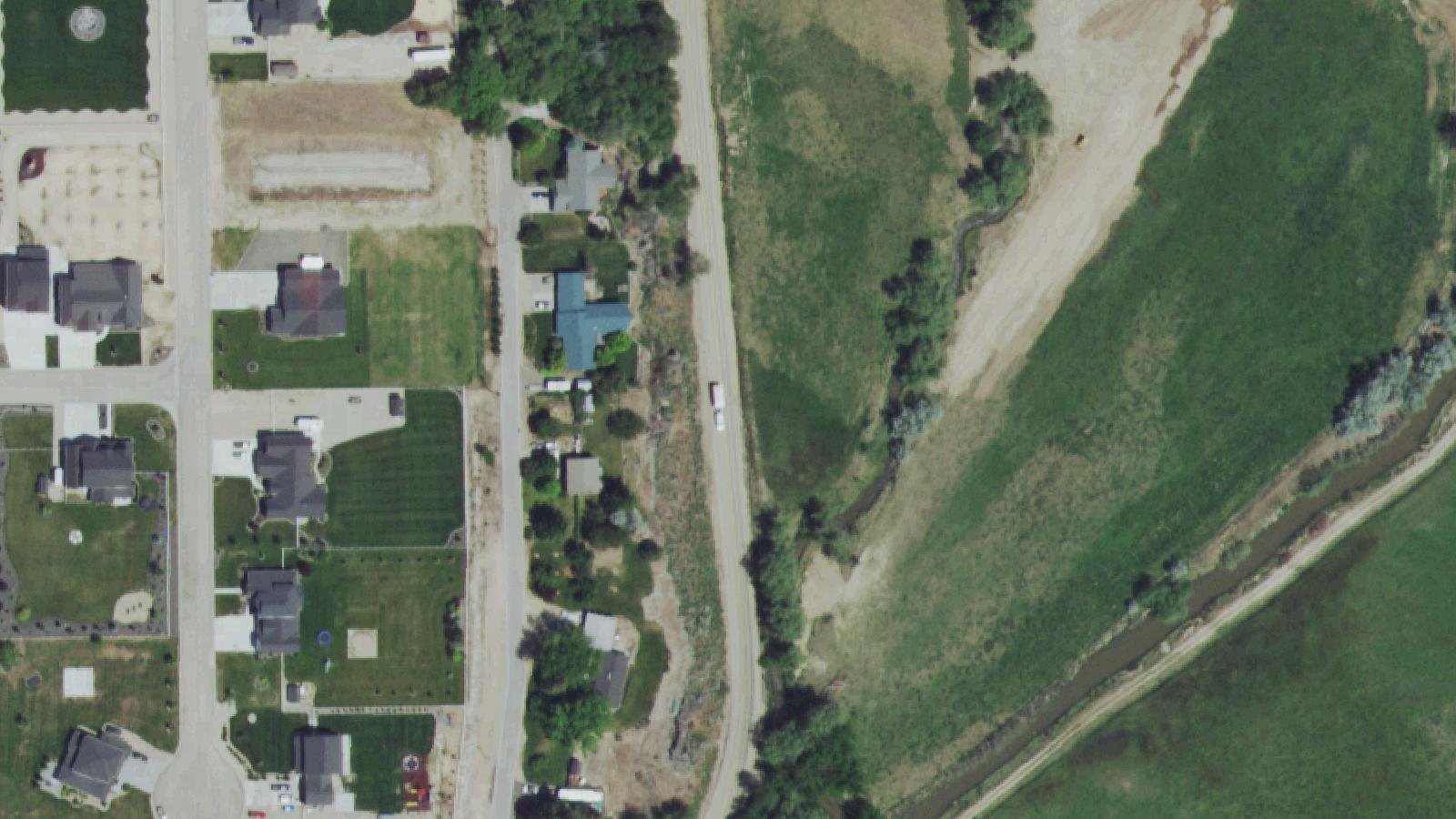
The River Road Bridge, originally known as the Silver Bay Bridge, was built in 1922 over the Boise River near Caldwell in Canyon County, Idaho. It was listed on the National Register of Historic Places in 2007 as a notable early-20th-century crossing in the Treasure Valley.