Est. 1834 · Fortified since 1634 — Oldest in New England · Edgar Allan Poe Stationed Here 1827 · Massie-Drane Duel and Entombment Legend · 1905 Skeleton Discovery · Possible Inspiration for The Cask of Amontillado
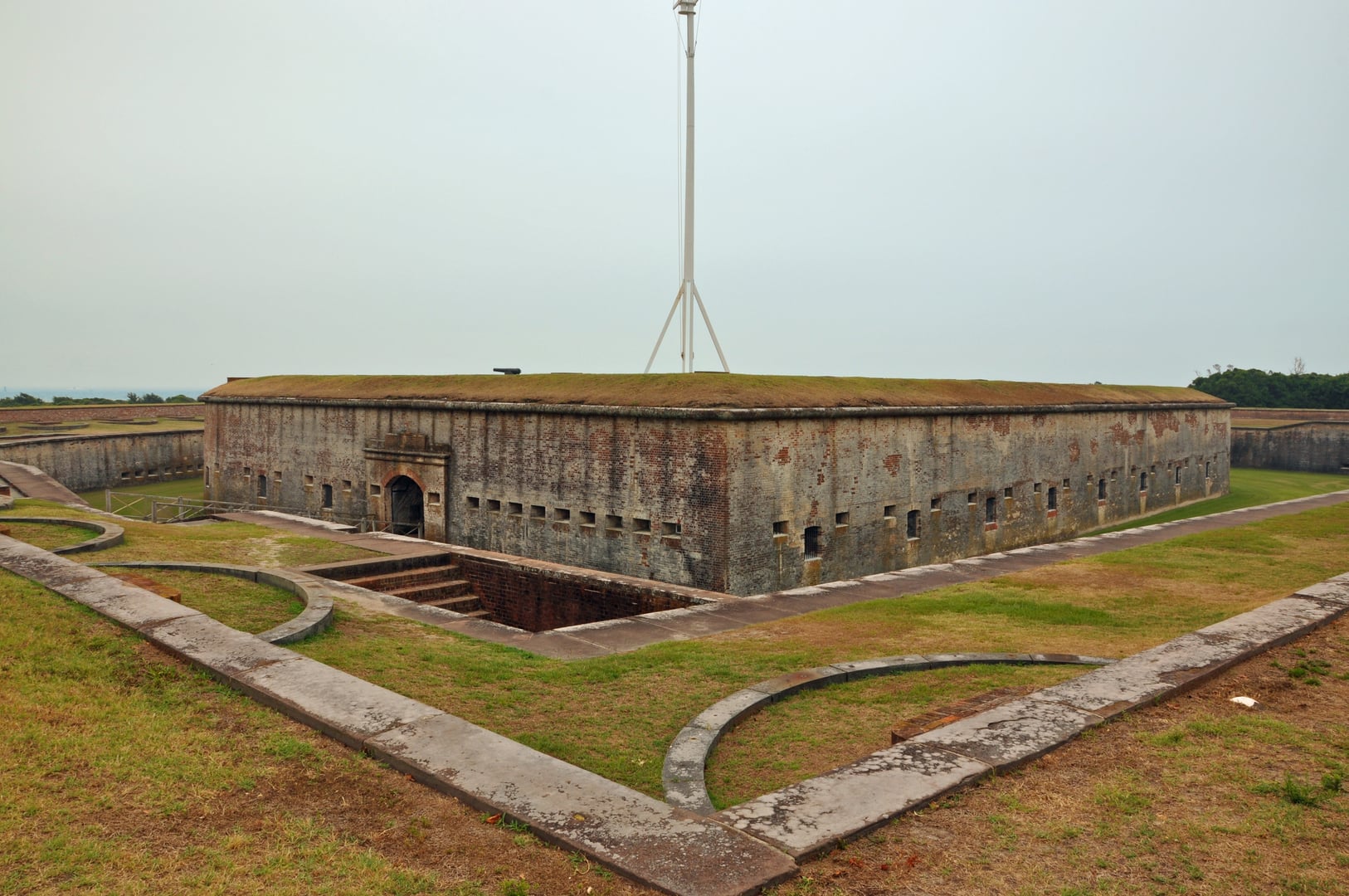
Castle Island in Boston Harbor has been fortified without interruption since 1634, when the Massachusetts Bay Colony constructed the first works to control access to the harbor. The site has hosted at least six distinct fortifications over four centuries. The current masonry structure — a five-bastioned granite fort — was built between 1834 and 1851 and represents the final iteration of this long defensive history.
On Christmas Day 1817, two officers stationed at the then-existing fort fought a duel on the grounds. Lieutenant Robert Massie and Lieutenant John Drane settled a dispute over a card game by meeting at dawn; Massie fell from Drane's shot and died of his wounds. In the weeks following Massie's death, legend recorded that fellow soldiers had their revenge by luring Drane to an isolated casemate, rendering him unconscious, and bricking him alive into the wall. The story circulated in Boston Harbor for decades without physical corroboration.
Edgar Allan Poe was stationed at Castle Island between 1827 and 1828 as a private under the name Edgar A. Perry, having enlisted in the Army. He heard the local Massie-Drane entombment story during his posting. Scholars have long argued that the tale directly influenced his 1846 short story The Cask of Amontillado.
In 1905, workers conducting renovations of the fort discovered a skeleton in military dress, chained to the wall of an abandoned casemate. The discovery was widely reported at the time and entered the fort's official history. The Castle Island Association, which manages and staffs the fort, presents the skeleton discovery as factual while noting that the Drane identification remains a matter of tradition rather than confirmed documentation. The fort was transferred from federal to Massachusetts state ownership in 1890 and is now a Metropolitan District Commission park open year-round.
Sources
- https://en.wikipedia.org/wiki/Fort_Independence_(Massachusetts)
- https://fortindependence.org/forts-history/
- https://wheninyourstate.com/massachusetts/poes-eerie-muse-the-haunted-island-fort-of-boston-harbor/
Apparition in military dressFigure challenging visitors to duelUnexplained cold near casemate wallsWinter apparitions on drawbridge approach
Fort Independence carries one of the best-documented entombment legends in American military history, grounded in a chain of verifiable historical events. The Christmas Day 1817 duel between Lieutenants Massie and Drane is documented in period records; Massie's death is confirmed. The subsequent folk narrative — that Drane was lured to a casemate, rendered unconscious with alcohol, and sealed inside a stone wall — circulated locally for nearly 90 years without physical evidence.
In 1905, workmen renovating an abandoned section of the fort discovered a skeleton inside a sealed casemate wall, dressed in the remnants of military uniform and secured to the masonry with iron chains. The discovery was documented in contemporary newspaper accounts and entered the fort's official narrative. The Castle Island Association acknowledges the find while noting that documentation linking the skeleton definitively to Drane does not exist. The Drane identification is part of fort tradition.
The haunting associated with the entombed figure is described in Boston Harbor folklore as a man in military dress, visible near the fort in winter months, who approaches visitors and challenges them to duels — sometimes silently raising a sword. The ghost is reported most often on the landside approach to the drawbridge, near where the duel between Massie and Drane is said to have occurred.
Edgar Allan Poe's connection to the site is documented: he was stationed at Fort Independence from 1827 to 1828 under his enlistment alias. The entombment story he heard during that posting is cited by Poe scholars as a direct source for The Cask of Amontillado, published in 1846. The literary connection makes Fort Independence one of the few sites where a paranormal legend has a verifiable relationship to a canonical American short story.
Notable Entities
Lieutenant Robert Massie (died 1817 in duel)Lieutenant John Drane (alleged entombed soldier)
Where this legend is told