Est. 1831 · Antebellum Sugar Plantation History · Greek Revival Architecture Along Bayou Teche · Enslaved Labor Documentation · Civil War — Union Occupation · National Historic Landmark · National Trust for Historic Preservation — Early Acquisition
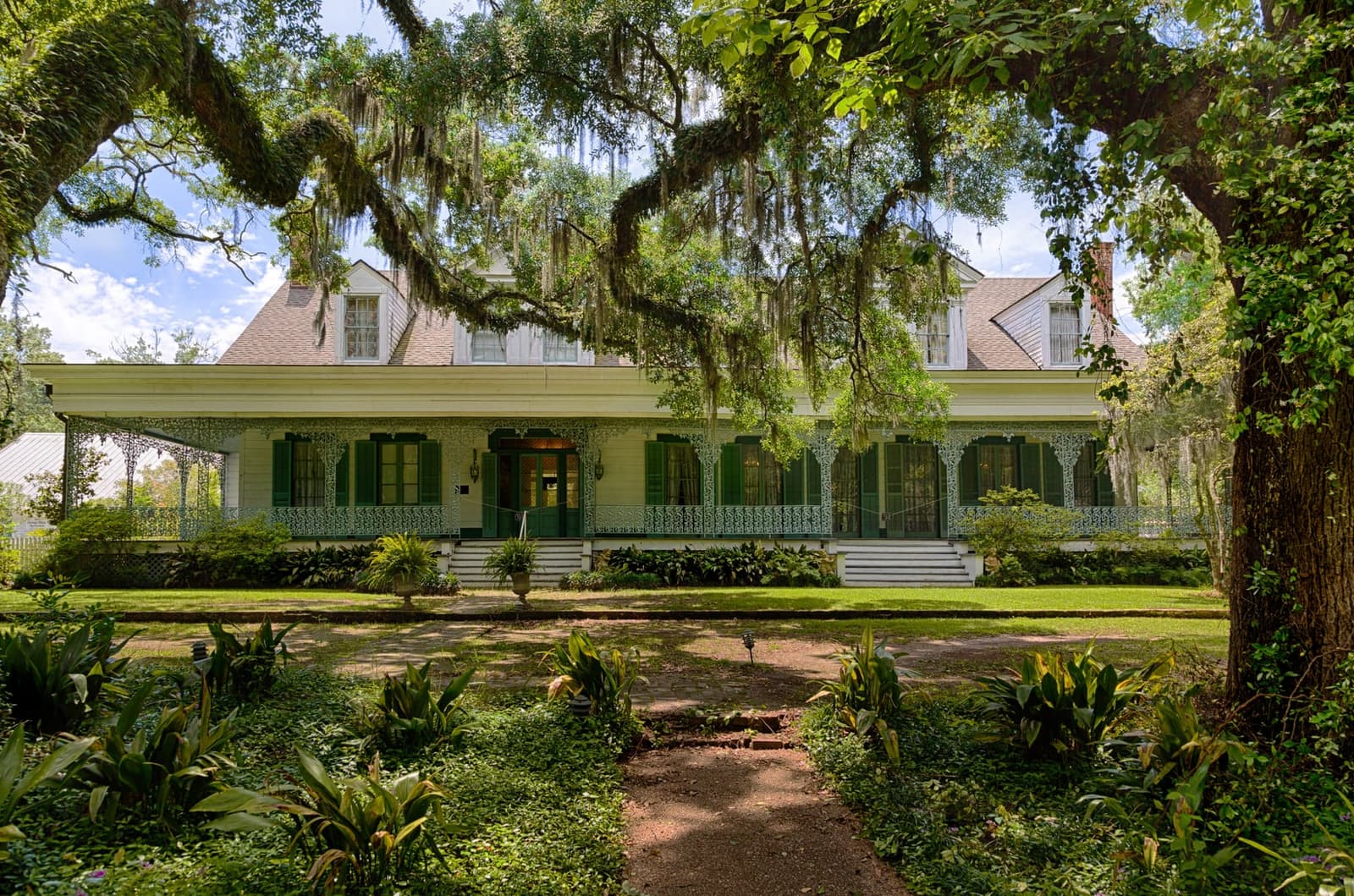
Shadows-on-the-Teche was constructed between 1831 and 1834 as the main house of a 2,000-acre sugar plantation on the banks of Bayou Teche in New Iberia, Louisiana. David Weeks, the planter who commissioned the house, died in New Haven, Connecticut in 1834 before he could take up residence — leaving the property to his widow, Mary Clara Moore Weeks, who managed the plantation and its enslaved workforce through the antebellum decades.
The Greek Revival house takes its name from the deep shadows cast by its cypress trees onto the bayou, a feature noted by contemporaries and visitors across its nearly two centuries. The enslaved people who built the house and worked the plantation — at one point numbering several hundred — are documented in estate records that the National Trust has incorporated into its interpretive programs. In 2023 the site expanded its guided tour to explicitly center the enslaved experience alongside the Weeks family history.
On December 29, 1863, Mary Clara Moore Weeks died inside the house while Union troops occupied the property during the Red River Campaign. She was buried in the garden, as was customary for the period, rather than in a formal cemetery. The garden burial and the circumstances of her death — confined to her house by advancing Union forces — became the foundation of the property's haunting reputation.
The National Trust for Historic Preservation acquired Shadows-on-the-Teche in 1958, making it one of the earliest properties in the Trust's portfolio. The house is listed on the National Register of Historic Places and designated a National Historic Landmark.
Sources
- https://en.wikipedia.org/wiki/Shadows-on-the-Teche
- https://shadowsontheteche.org/
- https://savingplaces.org/stories/five-things-you-might-not-know-about-the-shadows-on-the-teche
Shadowy apparition of a woman in period dressFootsteps in upstairs roomsSense of presence near the bedroom
The primary ghost story at Shadows-on-the-Teche centers on Mary Clara Moore Weeks, whose death inside the house during Union occupation in December 1863 and whose burial in the garden have made her the property's most persistent reported presence. Staff who work in the house regularly have described footsteps in the upstairs rooms when the house is otherwise empty, and a shadowy figure — described in multiple accounts as a woman in period dress — has been reported near the bedroom area.
The haunting's credibility is strengthened by the documented historical specificity of the claims: the reports consistently cluster around the parts of the house associated with Mary's final months, and the accounts come primarily from staff with regular access rather than from occasional visitors with an incentive to dramatize. The National Trust does not market Shadows-on-the-Teche primarily as a haunted destination, which means the staff accounts carry a different weight than paranormal claims at venues that actively solicit them.
Mary's garden burial — on the grounds rather than in a formal cemetery — is a detail that appears across independent accounts of the site's atmosphere and is consistent with documented historical practice for the period.
Notable Entities
Mary Clara Moore Weeks
Where this legend is told