Drive-By
Sexton House Exterior View
View the historic Sexton House and its famous tower window from the public grounds of Maple Grove Cemetery. The house is a private residence; admire it from outside only.
- Duration:
- 20 min
HauntBound archive · catalog record
Reported phenomena, as catalogued
A c.1870 mansard-roofed house at the edge of Maple Grove Cemetery in Russellville, Kentucky, famous for a legend that a girl killed by lightning left her image burned into a tower window — a face that allegedly returned no matter how often the glass was replaced or painted over.
Maple Grove Cemetery (515 W 9th Street vicinity), Russellville, KY 42276
Research updated September 2026
Age
All Ages
Cost
Free
The house is a private residence; there is no admission or tour. It can be viewed from the public cemetery grounds.
Access
Accessibility not stated
Cemetery grounds with paved drives; the house itself is private and not enterable.
Equipment
Photos OK
Est. 1870 · c.1870 Second Empire sexton's residence at Maple Grove Cemetery, Russellville · Built by/for cemetery sexton Owen Mosely; never occupied by anyone named Sexton · Long-documented Kentucky folklore landmark profiled by regional news and Roadside America
The Sexton House sits at the edge of Maple Grove Cemetery in Russellville, the seat of Logan County in south-central Kentucky. A 'sexton' is the old term for a cemetery caretaker, and the house was built around 1870 to serve as the sexton's residence on the cemetery grounds. Local history attributes its construction to Owen Mosely, who served as sexton of Maple Grove; despite the building's nickname, no family named Sexton ever lived there.
Architecturally the house is notable for its Second Empire style and the mansard-roofed tower that figures in its famous legend. The National Register description of the Russellville historic district calls it a one-story brick house with a square one-and-a-half-story tower centered in the facade and holding the front entrance, a bay window to the left of the tower and a recessed porch to the right, with a picturesque character. Maple Grove Cemetery itself is a historic burial ground located at 515 W 9th Street, about two and a half miles from downtown Russellville, and the Sexton House stands at its margin.
The building has been a fixture of regional folklore and architectural interest for well over a century, drawing curiosity-seekers to its tower window. It has been documented by regional news outlets, including a 2025 WBKO television feature and the Bowling Green Daily News, as well as by Roadside America and numerous Kentucky history writers. The house remains in private hands and is not open for tours.
Importantly, the regional coverage that documents the legend also documents its limits: a local library genealogist has stated there is no record of the girl in the story, no documented date for the event, and that the tower room described in the tale does not match the actual structure — markers that the lightning legend is folklore rather than recorded history.
Sources
The Sexton House owes its fame to the 'face in the window.' In the most common telling, a teenage girl living in the house was forbidden by her parents from attending a dance because of a severe thunderstorm. Furious, she ran up to her room in the tower, threw open the window, and shouted something to the effect of 'I hate you, God!' — whereupon a bolt of lightning struck her dead. According to the legend, the strike seared the image of her body, or her face, permanently into the windowpane.
The story continues that the imprint could not be removed: when the family replaced the glass, the image reappeared in the new pane. So many onlookers came to gawk at the haunted window that, by some accounts around 1920, the family finally had it painted over — yet, in the lore, even paint could not keep the girl's shadow from reappearing on stormy nights when lightning lit the tower. Variant tellings tie her death to a forbidden romance rather than a dance, but all converge on the lightning-struck window.
This tradition is well documented as folklore. It has been featured by Dread Central's 'America's Most Haunted Places' series, a 2025 WBKO television report, the Bowling Green Daily News, and Roadside America, among others — which is what distinguishes it from one-source rumor. At the same time, the same regional reporting is candid about the story's unreliability: a Russellville library genealogist has said there is no record of any girl who died this way, no documented date, no evidence the family existed, and that the tower room in the legend does not correspond to the building's actual layout. Some accounts even suggest the story was transferred to the Sexton House from another house simply because of its eerie proximity to the cemetery.
HauntBound presents the lightning-window legend as exactly that — a widely told and well-documented piece of Kentucky folklore, not a verified historical event.
Notable Entities
Media Appearances
View the historic Sexton House and its famous tower window from the public grounds of Maple Grove Cemetery. The house is a private residence; admire it from outside only.
Some links on this page may earn HauntBound a small commission when you book, at no extra cost to you. Our editorial picks are independent. Full disclosure
Every HauntBound history is researched from documented sources. We clearly separate verified historical fact from paranormal folklore.
Free Guide
11 verified stops, rated for families, mapped in order. Free.
One email to confirm, then the guide link. Unsubscribe anytime.
Bull Valley, IL
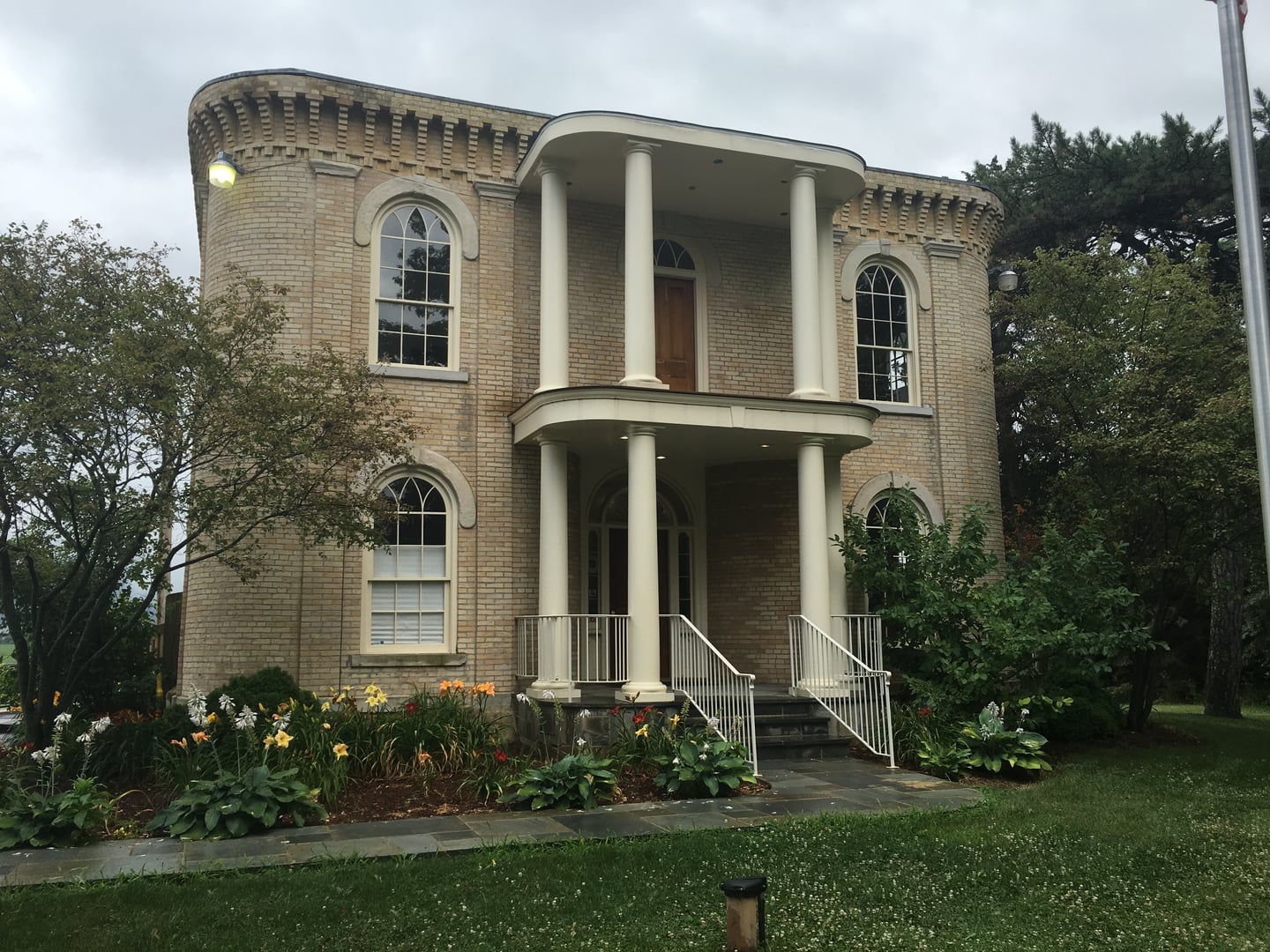
The George Stickney House is an 1865 stucco-over-frame mansion in Bull Valley, Illinois, built for spiritualists George and Sylvia Stickney. The Stickneys, both practicing mediums, are said to have designed the interior without right angles to ease the movement of spirits during seances. The building has served as the Bull Valley Police Department since 1985 and has been listed on the National Register of Historic Places since 1979.
Boulder, CO
The Arnett-Montgomery House was built in 1880 and designated a City of Boulder historic landmark in 1979. The house is associated with the Montgomery family, including Walter Montgomery, a 10-year-old who died in 1902 after falling ill during a trip to a mountain mining camp with his father.
Washington, DC
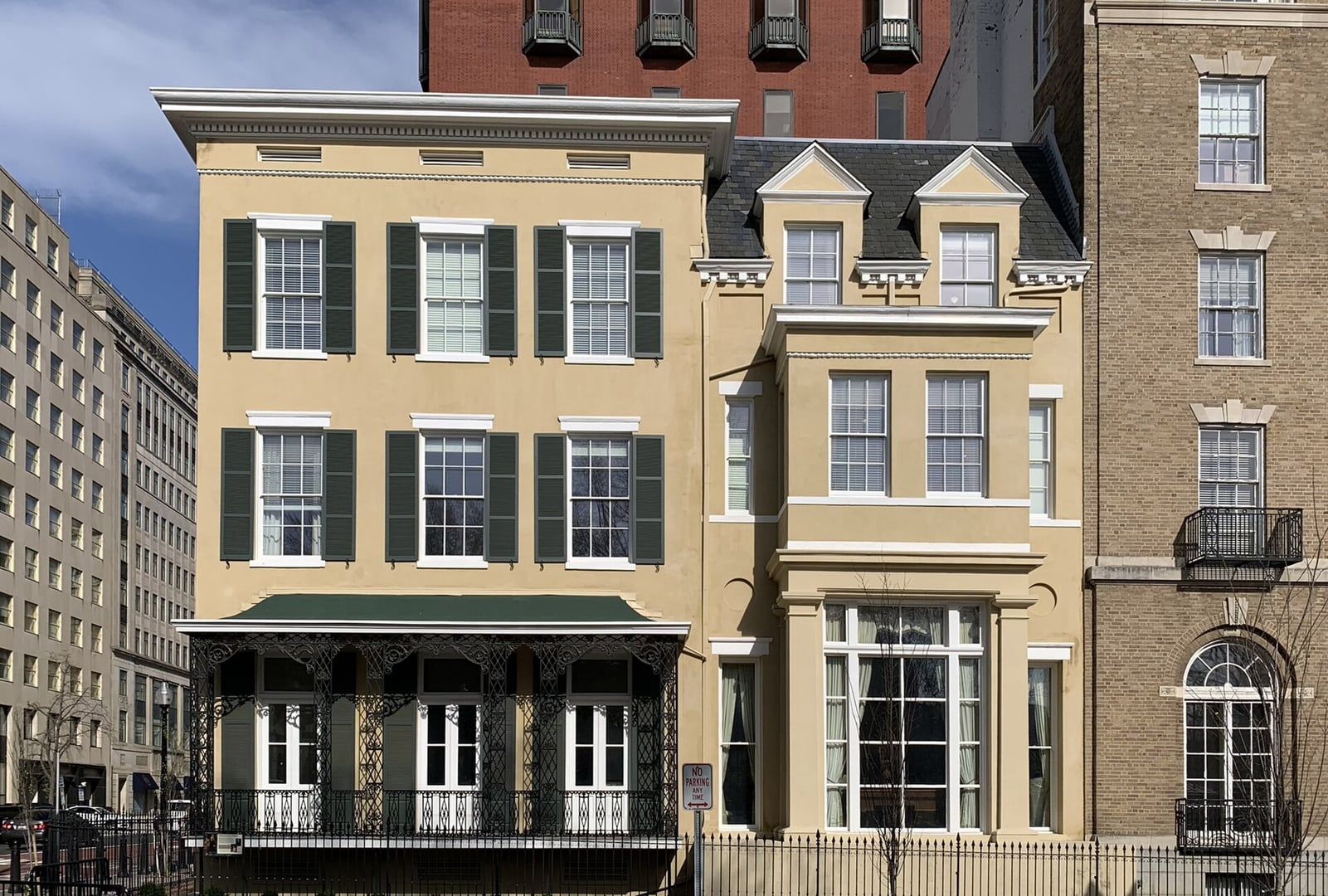
Built in 1818-1819 by Richard Cutts for his wife Anna Payne Cutts (Dolley Madison's sister), the Federal-style townhouse on Lafayette Square was acquired by former President James Madison in 1828. After Madison's death in 1836, Dolley Madison lived there until her own death on July 12, 1849. The house was later home to the Cosmos Club and is now part of a federal courts complex housing chambers of the U.S. Court of Appeals for the Federal Circuit and the U.S. Court of Federal Claims.