Est. 1813 · Federal Architecture · Gratz Park Historic District · Civil War Medical History · Transylvania University Connection
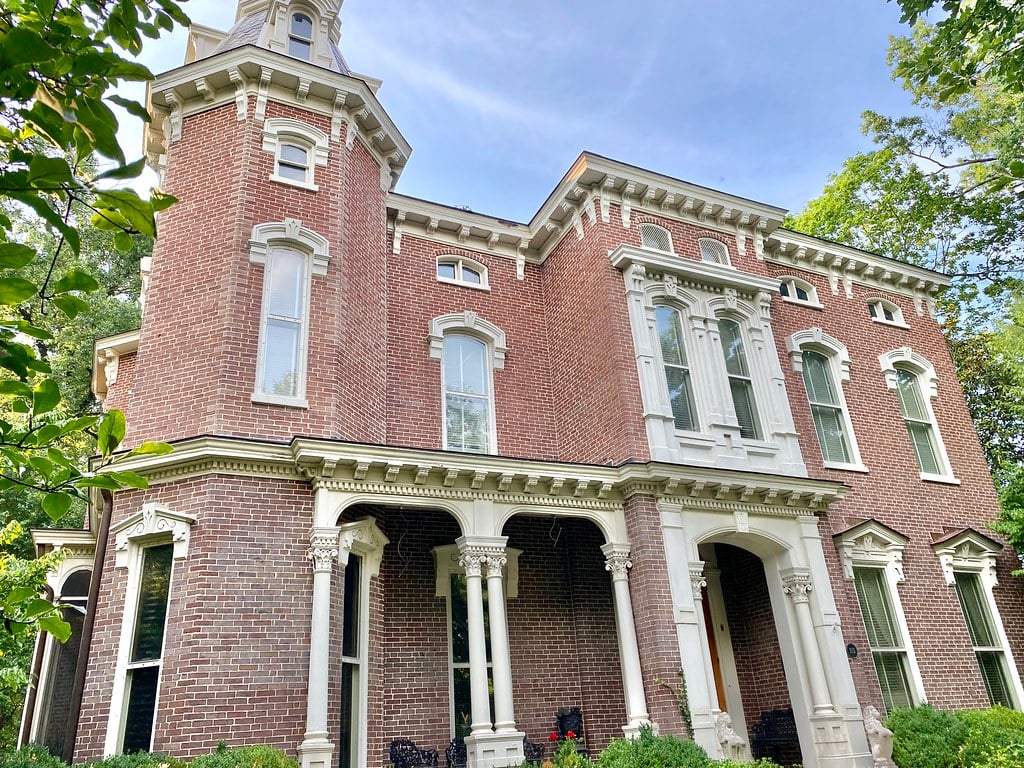
Robert Grinstead, a Lexington bricklayer, built the Federal townhouse at 228 Market Street in 1813 and sold it to John Stark, a farmer. The house's modest Federal facade — symmetrical, brick, with a centered doorway — was characteristic of early-19th-century Lexington domestic architecture and remains substantially intact.
Transylvania University, which had no formal president's residence, rented the property in 1820 to house its newly arrived president, Horace Holley. Holley lived in the John Stark House during his most consequential years at the university — the same period in which Constantine Rafinesque taught there and during which Holley would eventually dismiss Rafinesque in 1826, generating the curse legend now attached to Old Morrison. Architect Gideon Shryock also lived in the John Stark House in 1832, the year he was designing and supervising construction of Old Morrison less than a block away.
The house's most consequential resident, in terms of its later ghost lore, was Dr. Robert Peter, a Transylvania medical school professor who lived in the home during the Civil War. Peter served as a Union surgeon during the war, working with the wounded and dying brought through Lexington as the city changed hands repeatedly. His diary entries from those years, along with his daughter Frances Peter's published wartime diary, document a household at the working edge of medical care for both Union soldiers and civilians.
The John Stark House remains a private residence today and is a contributing structure to the Gratz Park Historic District, listed on the National Register of Historic Places. Its layering of Federal architecture, university connections, and Civil War medical history makes it one of the more historically dense addresses in central Lexington.
Sources
- https://www.gratzpark.org/?page_id=114
- https://www.gratzpark.org/john_stark.html
- https://www.southernspiritguide.org/old-morrison-and-the-gratz-park-historic-district/
Apparition
The John Stark House lore is concentrated on a single reported figure: the apparition of a Union soldier observed on the property. According to the Smiley Pete Publishing 2012 Gratz Park feature and Southern Spirit Guide's coverage of the historic district, the figure's identification as a Union soldier flows from the building's documented role as the home of Dr. Robert Peter, a Union surgeon who treated wounded soldiers during Lexington's contested Civil War years.
The lore's interpretive framing is that the figure may be a patient who died in Dr. Peter's care, returning to the place where he received his last treatment. The reading is satisfying as folklore — it ties the apparition directly to the documented historical use of the building — but it is not anchored to a named witness, a specific incident, or a date in any published source we located. The story circulates as oral tradition within the Gratz Park cluster of haunted-house writeups.
The house is a private residence today, and there is no public-access path to verify the lore. The site is included on US Ghost Adventures' Haunted Lexington walking tour as part of the Gratz Park stops; visitors taking that tour or doing a self-directed walking visit can see the building from the Market Street sidewalk but should respect the privacy of current occupants. The paranormal documentation is thin, and the property is a private residence.
A later search for independent reports beyond the Gratz Park Neighborhood Association and Southern Spirit Guide profiles did not turn up a second specific witness account for the Union-soldier apparition. The house remains a private residence and the witness pool stays thin.
This venue is privately owned and not open to the public — appreciate from the public sidewalk on Market Street only.
Notable Entities
Unnamed Union soldier