Drive-By
Sidewalk Viewing of the Widmer House
View the Chateauesque facade from the public sidewalk on S. 3rd Street, opposite side of the street. The house sits in the heart of Old Louisville's haunted-tour corridor.
- Duration:
- 10 min
HauntBound archive · catalog record
Reported phenomena — as catalogued
1895 Chateauesque-style Old Louisville residence — the home that drove author David Domine into the night in 1999 and the opening chapter of his bestselling 'Ghosts of Old Louisville,' all attributed to a poltergeist named Lucy.
1228 South 3rd Street, Louisville, KY 40203
Research updated May 2026
Age
All Ages
Cost
Free
Private residence. Exterior viewable from S. 3rd Street sidewalk; featured nightly as a Louisville Historic Tours ghost-tour stop with ticketed walking tour.
Access
Limited Access
S. 3rd Street sidewalk along Old Louisville's Millionaires Row corridor.
Equipment
Photos OK
Est. 1895 · Chateauesque architecture on Old Louisville's Millionaires Row · Opening chapter of David Domine's 'Ghosts of Old Louisville' (University Press of Kentucky) · Featured nightly stop on Old Louisville Ghost Tour
The Widmer House at 1228 South 3rd Street is a Chateauesque-style residence built in 1895 in what was then the city's most fashionable new neighborhood. Old Louisville — the area bounded roughly by Broadway on the north and the University of Louisville on the south — grew rapidly between the 1870s and 1900s as Louisville's industrial elite built large single-family homes along streets like S. 3rd, S. 4th, and St. James Court. By the 1890s the corridor was nicknamed Millionaires Row.
The house is named for the Jacob Widmer family, who occupied it for many decades after construction. The Old Louisville House-by-House documentary project records 1228 S. 3rd Street as a four-bed Chateauesque residence with the distinctive steeply pitched roof, decorative dormers, and asymmetrical massing characteristic of the style, which drew on French Renaissance precedent and was popularized by Richard Morris Hunt in the 1880s.
The house gained literary and tourism prominence in 1999, when then-new resident David Domine moved in and was warned by the prior owner about an in-house presence nicknamed 'Lucy.' His subsequent experiences led him to write 'Ghosts of Old Louisville,' published by the University Press of Kentucky, in which the Widmer House serves as the book's opening chapter. The book launched Domine's broader Old Louisville haunted-tourism program, which now includes multiple book titles and Louisville Historic Tours' nightly Old Louisville Ghost Tour.
The property remains a private residence and is included as a regularly featured stop on the walking ghost tour, viewed from the public sidewalk.
Sources
Per the Louisville Tourism account of the Jacob Widmer House and David Domine's published memoir-style 'Ghosts of Old Louisville,' the poltergeist nicknamed 'Lucy' has been reported by multiple residents and guests. Domine moved into the house in 1999 and was warned about Lucy by the previous owner, but initially dismissed the legend. According to his account and Smiley Pete's interview with him, he was driven from the home one night by disembodied footsteps and unexplained smells; the Kentucky Monthly feature 'Frighteningly Fun' summarizes the same incident.
The reported phenomena include pictures repeatedly knocked off walls — particularly in the butler's pantry, where Domine and other witnesses say the activity is concentrated — doors slamming when no one is near them, and the distinct smell of fresh-brewed coffee in rooms where no coffee is being made. Domine's 'Ghosts of Old Louisville' devotes its opening chapter to the Widmer House, and the property remains the most-told stop on Louisville Historic Tours' Old Louisville Ghost Tour.
The Widmer House's lore is unusual in that the primary witness — Domine himself — is a public, published author who has been interviewed about the experiences on PBS's 'Inside Louisville' and on local KET and Spectrum News programs. The 'Lucy' identification is folkloric and is not tied to a confirmed historical person at the address.
Notable Entities
Media Appearances
View the Chateauesque facade from the public sidewalk on S. 3rd Street, opposite side of the street. The house sits in the heart of Old Louisville's haunted-tour corridor.
Some links on this page may earn HauntBound a small commission when you book, at no extra cost to you. Our editorial picks are independent. Full disclosure
This Louisville tour includes Widmer House (Jacob Widmer House) on its route.
Book this tourEvery HauntBound history is researched from documented sources. We clearly separate verified historical fact from paranormal folklore.
Free Guide
11 verified stops, rated for families, mapped in order. Free.
One email to confirm, then the guide link. Unsubscribe anytime.
Louisville, KY
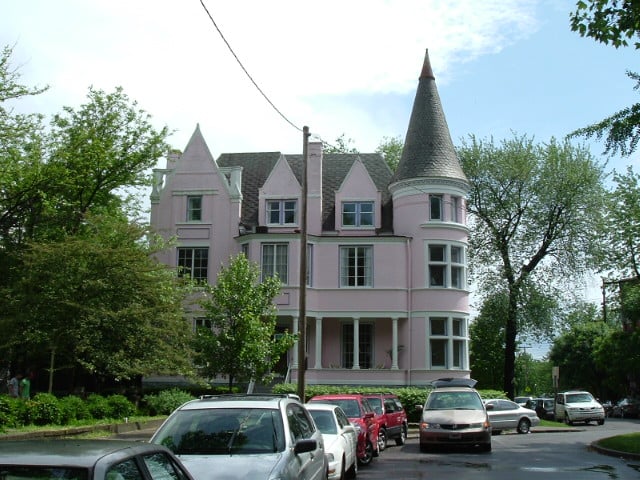
The Pink Palace is a three-story Victorian mansion with a French chateau-style turret at 1473 St. James Court in Old Louisville. Built around 1891, it operated initially as the St. James Court Gentlemen's Club and Casino and was acquired in the 1910s by the Woman's Christian Temperance Union, which painted the red brick exterior pink. It is a private residence and a fixture of Old Louisville ghost walks.
Bull Valley, IL
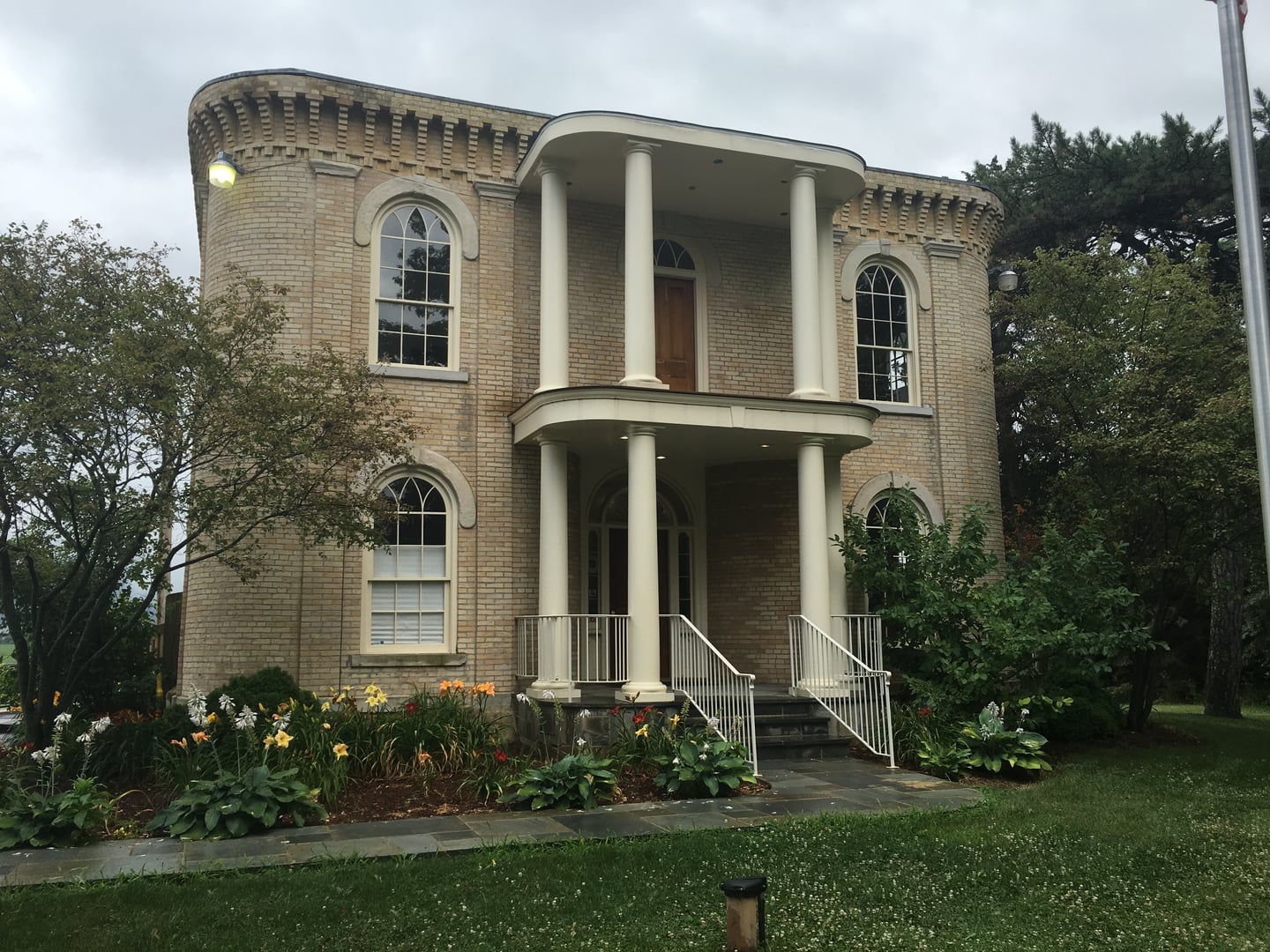
The George Stickney House is an 1865 stucco-over-frame mansion in Bull Valley, Illinois, built for spiritualists George and Sylvia Stickney. The Stickneys, both practicing mediums, are said to have designed the interior without right angles to ease the movement of spirits during seances. The building has served as the Bull Valley Police Department since 1985 and has been listed on the National Register of Historic Places since 1979.
Lexington, KY
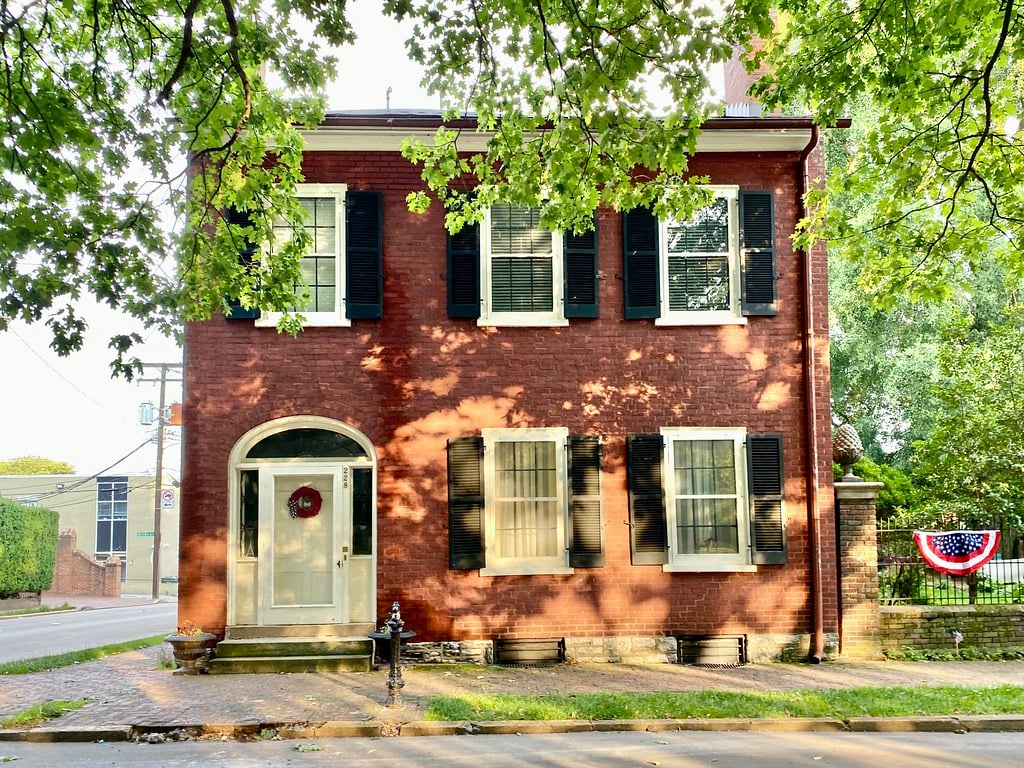
The Federal townhouse at 228 Market Street was built in 1813 by bricklayer Robert Grinstead and sold to farmer John Stark, the owner who gave the house its surviving name. Transylvania University rented the property in 1820 to house its president Horace Holley, and architect Gideon Shryock lived there in 1832 while supervising construction of Old Morrison. The house later became the home of Dr. Robert Peter, the Transylvania medical professor who served as a Union surgeon during the Civil War.