Outdoor Exploration
Visit the marker block and farmers market
Walk the renamed square, read the Cheapside Slave Auction Block marker and the Tandy dedication, and explore the Lexington Farmers Market when in season.
- Duration:
- 30 min
HauntBound archive · catalog record
Reported phenomena, as catalogued
Downtown Lexington square renamed in 2020 for the formerly-enslaved mason Henry A. Tandy, on a block whose pre-Civil-War slave auction trade is now memorialized by historical markers.
251 West Main Street, Lexington, KY 40507
Research updated September 2026
Age
All Ages
Cost
Free
Free public park; Lexington Farmers Market and events use the space.
Access
Wheelchair OK
Paved plaza adjoining the Old Fayette County Courthouse.
Equipment
Photos OK
Est. 1781 · Lexington's central public square since 1781 · Major pre-Civil-War slave auction site in Kentucky · Renamed in August 2020 for Henry A. Tandy · Site of the Cheapside Slave Auction Block historical marker
The square at 251 West Main Street has functioned as Lexington's central public space since the town's founding in 1781, originally laid out as 'Public Square' and later known for most of the 19th and 20th centuries as 'Cheapside.' It served as the main marketplace for produce, livestock, dry goods — and, before the Civil War, for enslaved people. Thousands of enslaved men, women, and children were sold here, many separated from their families and forced into the cotton-and-sugar economies of the Deep South.
A Cheapside Slave Auction Block historical marker, produced through the efforts of the Lexington Alumni Chapter of the Kappa Alpha Psi Fraternity and the Kentucky Historical Society, was installed on the square to make this history visible. The 'Take Back Cheapside' community campaign, formed in 2017, pressed for further reckoning with the square's history and for the removal of Confederate monuments associated with the courthouse.
In August 2020 the Lexington–Fayette Urban County Council voted to rename the park Henry A. Tandy Centennial Park. Henry Allen Tandy was a Black entrepreneur and mason who was born into slavery and, after emancipation, partnered with Alfred Byrd to form Tandy & Byrd — one of central Kentucky's leading masonry contractors. Their firm laid the brick under the stone facade of the 1898–1900 Old Fayette County Courthouse that stands at the north edge of the square.
Today the park hosts the Lexington Farmers Market, civic events, and Black-history walking tours. The site is adjacent to the Old Fayette County Courthouse / Lexington History Center.
Sources
The square is presented on most Lexington ghost tours as a site of residual trauma rather than as the haunt of any single named individual. Tour operators including US Ghost Adventures' Lexington Ghost Tour, ScavengerHunt.com's Lexington Ghost Trail, and the Bites of the Bluegrass walking tours include the square as a stop and frame the haunting context through the documented history of the Cheapside slave auction block.
Guides report that visitors describe unexplained sounds (footsteps, voices, brief crying), flickering lights along the courthouse facade after dark, shadowy figures observed near the historical marker, and 'dancing orbs' captured in photographs during early-morning farmers-market visits. These reports are treated as testimonial rather than evidentiary; no paranormal investigation team has published formal data on the square.
In keeping with the sensitivity of the site's history, the haunting framing is best understood as a way visitors and guides process the weight of what happened on the square between 1781 and 1865. The site memorializes a documented history of enslaved people who were bought and sold here, including children separated from parents. Visitors should approach the park as a site of memory — read the historical marker, the Tandy dedication, and the surrounding civil-rights interpretive panels — rather than as a thrill-seeking ghost-tour stop.
Notable Entities
Media Appearances
Walk the renamed square, read the Cheapside Slave Auction Block marker and the Tandy dedication, and explore the Lexington Farmers Market when in season.
Lexington walking tours (US Ghost Adventures, Scavenger Hunt, Bites of the Bluegrass) include the square; the site is also a stop on Lexington's Black-history walks led by the Lexington Alumni Chapter of Kappa Alpha Psi.
Some links on this page may earn HauntBound a small commission when you book, at no extra cost to you. Our editorial picks are independent. Full disclosure
Every HauntBound history is researched from documented sources. We clearly separate verified historical fact from paranormal folklore.
Free Guide
11 verified stops, rated for families, mapped in order. Free.
One email to confirm, then the guide link. Unsubscribe anytime.
Gatlinburg, TN
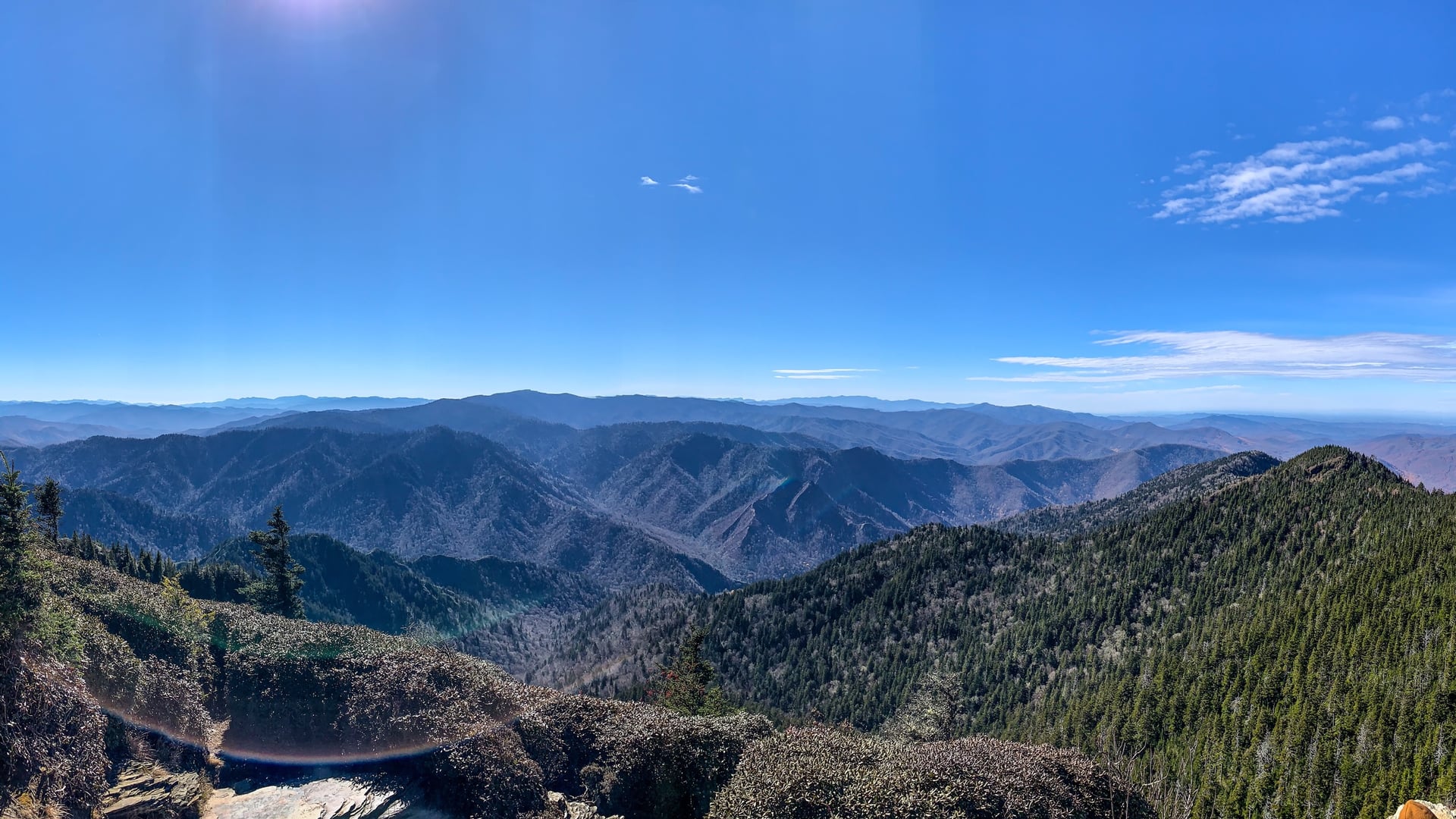
Great Smoky Mountains National Park preserves 522,427 acres of southern Appalachian terrain across Tennessee and North Carolina. The land was the heart of the Cherokee Nation before forced removal in 1838 along what became the Trail of Tears, and home to Appalachian Scots-Irish and English settler communities through the early twentieth century. Congress authorized the park in 1926; it was formally dedicated by Franklin D. Roosevelt on September 2, 1940.
Mobile, AL
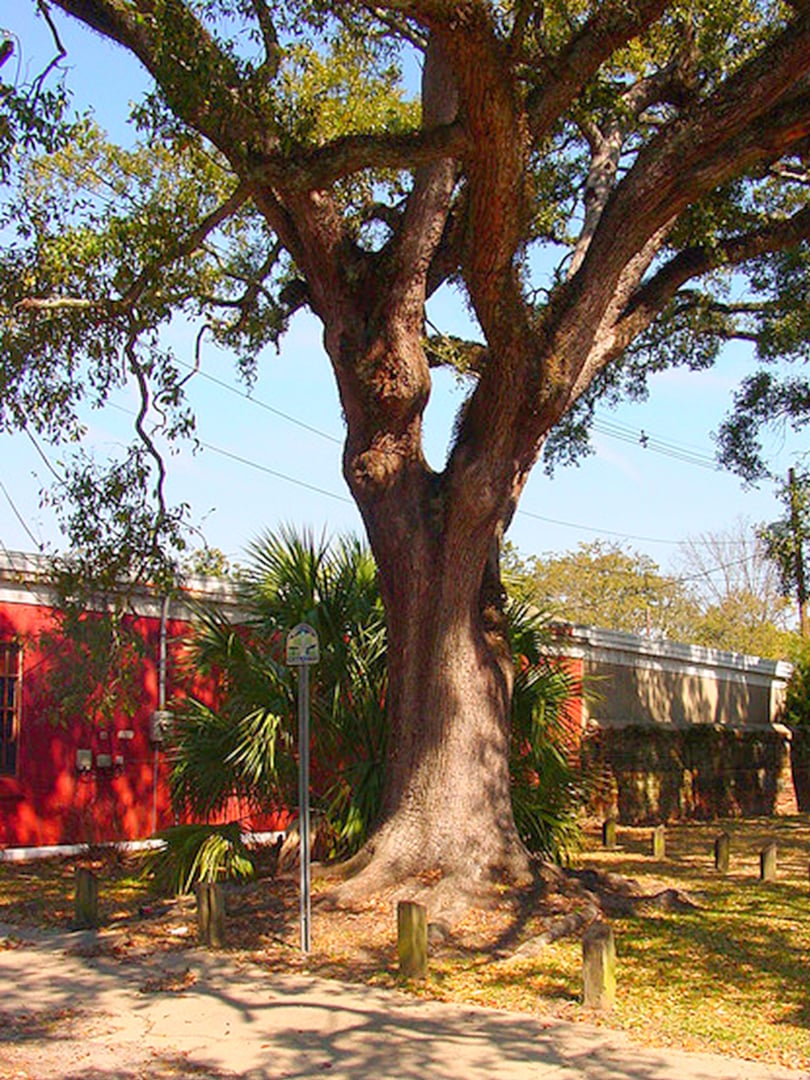
The Boyington Oak is a historic Southern live oak that grew from the grave of Charles R.S. Boyington, a 21-year-old Connecticut printer hanged on February 20, 1835 for the stabbing murder of his roommate Nathaniel Frost — a crime Boyington denied to the gallows, vowing that an oak would rise from his heart as proof of his innocence. Two people are said to have later confessed to the killing on their deathbeds.

Estes Park, CO
Rocky Mountain National Park, established by President Woodrow Wilson on January 26, 1915, preserves 415 square miles of Front Range Colorado including Trail Ridge Road, Longs Peak, and the headwaters of the Colorado River. The park's Ute and Arapaho heritage is documented in oral tradition and in early settler accounts including the Legend of Grand Lake.