Est. 1853 · Civil War Mass Grave · Confederate Mound — largest Confederate burial site in the North · Notable African-American burials
Oak Woods Cemetery was chartered by the State of Illinois on February 12, 1853, and designed by landscape architect Adolph Strauch in the rural cemetery tradition. First burials took place in 1860 on the South Side, in what is now the Greater Grand Crossing neighborhood. The cemetery spread across 183 acres and was established as a non-denominational private burial ground at a time when Chicago's City Cemetery on the North Side had become overcrowded.
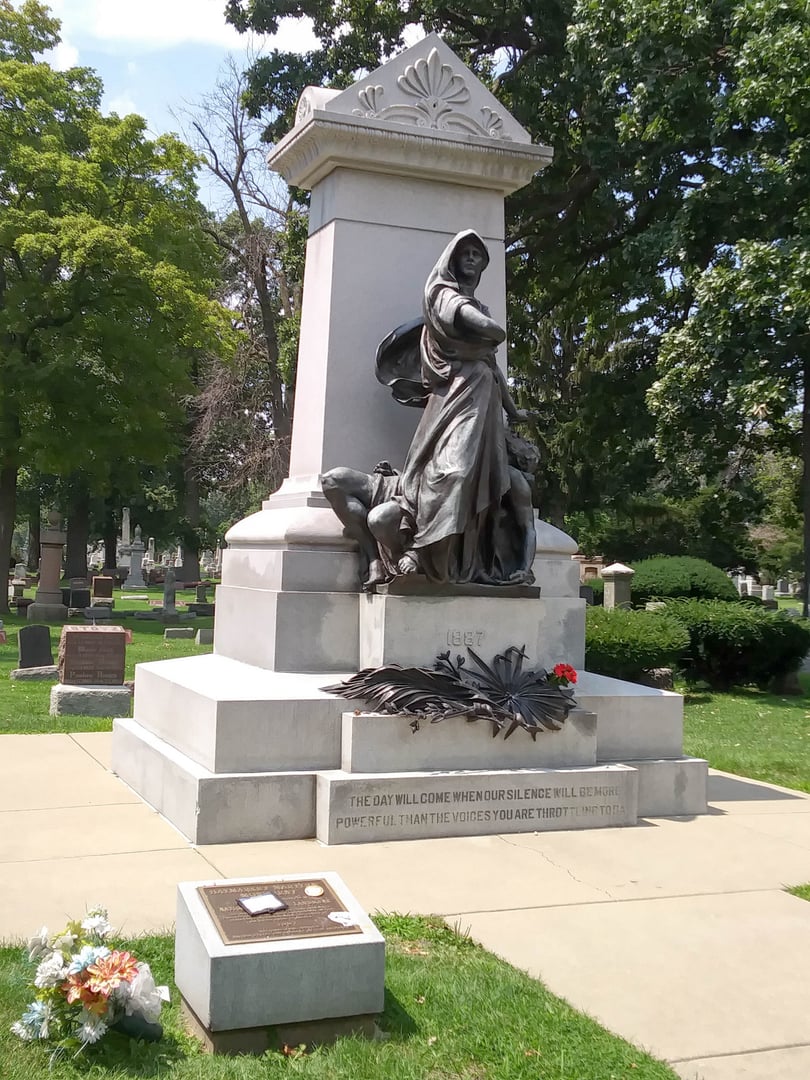
The cemetery's most historically significant section emerged from the Civil War. Camp Douglas, the Union prisoner-of-war camp operating a few miles to the north, killed thousands of Confederate prisoners through disease and exposure between 1862 and 1865. In 1866 and 1867, the bodies of those prisoners were disinterred from the camp grounds and reburied in Oak Woods' southwest section. A monument erected in the late 1880s and dedicated on May 30, 1895 — with President Grover Cleveland and an estimated 100,000 attendees present — marks the site as the Confederate Mound. The 30-foot granite column is topped by a bronze statue of a Confederate soldier looking south. Sixteen bronze plaques near the base list over 4,000 names, though scholars estimate the actual burial count may be somewhat higher or lower depending on how deaths were recorded.
Oak Woods holds over 60,000 interments total. Among the notable burials: Harold Washington, the first African-American mayor of Chicago (d. 1987); Jesse Owens, who won four gold medals at the 1936 Berlin Olympics (d. 1980); journalist and anti-lynching activist Ida B. Wells (d. 1931); Nobel Prize–winning physicist Enrico Fermi (d. 1954); and John H. Johnson, founder of Ebony and Jet magazines (d. 2005). The cemetery ended its racial segregation policy in September 1963 following protests.
Sources
- https://en.wikipedia.org/wiki/Oak_Woods_Cemetery
- https://www.atlasobscura.com/places/confederate-mound
- https://www.cem.va.gov/cems/lots/confederate_mound.asp
- https://www.hydeparkhistory.org/oak-woods-cemetery-project/civilwarmemorials
Cold spotsOppressive atmosphere
The paranormal tradition at Oak Woods is quieter than at some Chicago sites, but the Confederate Mound section draws accounts of cold spots and an oppressive feeling that visitors describe as distinct from the rest of the cemetery. These reports appear in ghost tour literature and travel writing without the kind of specific, named witness accounts that characterize sites like the Luetgert factory or the Biograph Theater.
The strongest basis for a haunting narrative is the physical reality of the site: the mound directly covers the mass grave of thousands of men who died in captivity under harsh conditions. Ghost tour operators who include Oak Woods on South Side itineraries frame the location primarily around that documented history — the specific human cost of Camp Douglas, tallied in the names on sixteen bronze plaques — rather than around specific apparition reports.
The cemetery's racial history adds a separate layer. The cemetery's segregation policy, in place until 1963, means that prominent Black Chicagoans like Harold Washington, Ida B. Wells, and Jesse Owens were buried in a section that would have been inaccessible to them in earlier decades — a tension that some contemporary guides explore in the context of Chicago's civil rights history.
Where this legend is told