Est. 1882 · Largest cemetery in Idaho · Established January 1882 by Mayor James Pinney · First burial: William Lindsay, age 16, March 1882 · ~30,000 interments across 60 developed acres · Continuously operated by the City of Boise since March 1, 1882 · Commonwealth War Graves Commission-recognized site
Morris Hill Cemetery was established in January 1882 when Boise Mayor James Pinney purchased the eighty-acre parcel for $2,000 from William H. Ridenbaugh and Lavinia I. Morris - the latter the source of the cemetery's name. The City of Boise took over operation on March 1, 1882, and has operated the property continuously since.
The first burial was that of 16-year-old William Lindsay in March 1882. The cemetery grew steadily through Boise's late-nineteenth and early-twentieth-century expansion. Early mortality records, which are partially indexed by the Ada County genealogical project IDGenWeb, document the broad cross-section of frontier-era deaths: accidents in mines and on rivers, infectious disease outbreaks, and incidents of violence. The cemetery is also the resting place of politicians, corporate leaders and military heroes, including a Civil War veteran whose remains were brought to Morris Hill from Illinois in 1922.
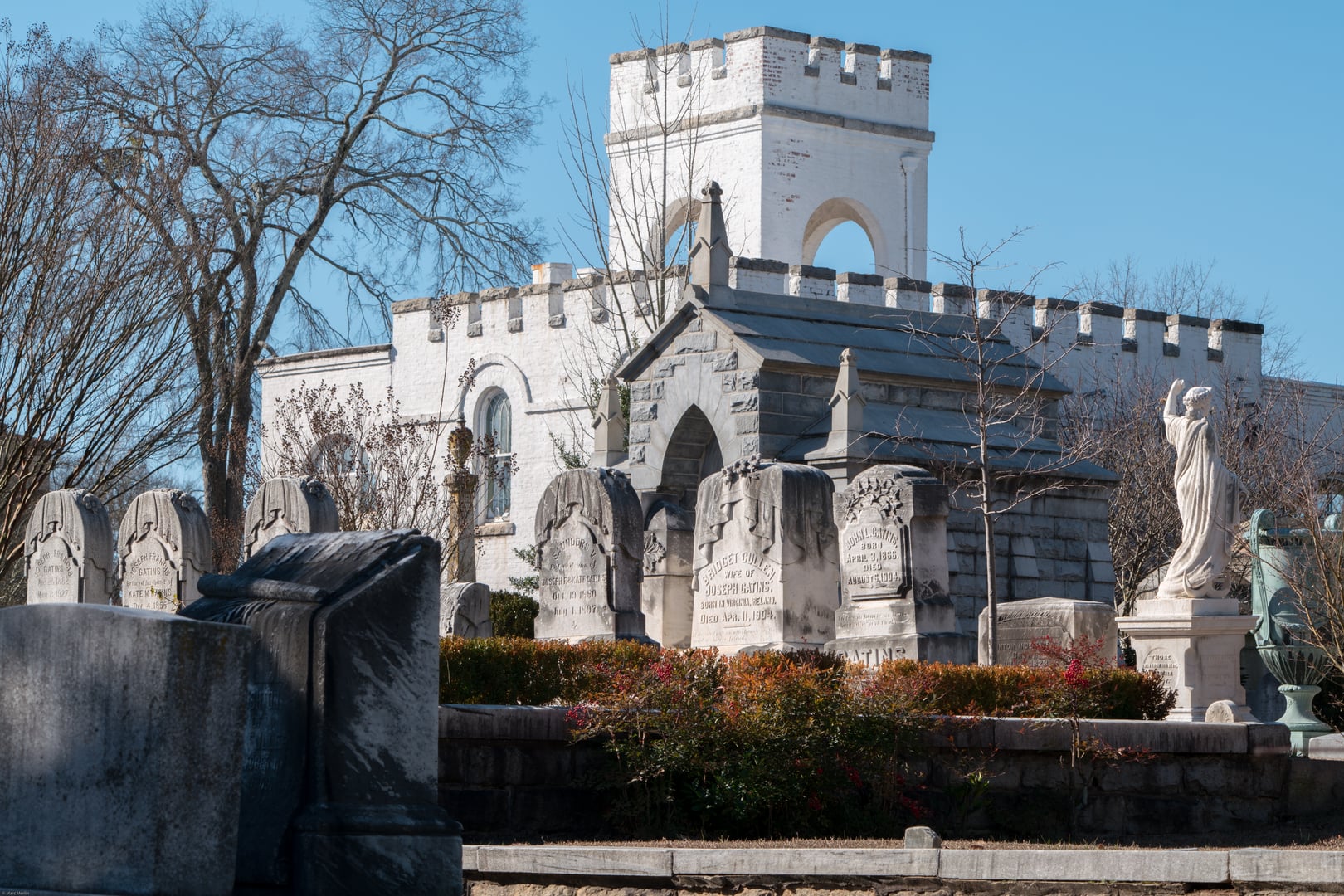
The cemetery currently consists of 60 developed (platted) acres organized into 53 sections plus a mausoleum, with approximately 30,000 grave sites. Boise Parks and Recreation operates the property and maintains an online burial-search tool. Notable monumental features include the ceramic picture monuments dating from the early 1900s and iron-fenced family plots throughout the older sections.
Morris Hill is a Commonwealth War Graves Commission-recognized site as Boise (Morris Hill) Cemetery, recording Commonwealth war dead interred at the property. The cemetery is open sunrise to sunset daily.
Sources
- https://www.cityofboise.org/departments/parks-and-recreation/cemeteries/morris-hill-cemetery/
- https://ada.idgenweb.org/history/history-morrishill.html
- https://www.cwgc.org/visit-us/find-cemeteries-memorials/cemetery-details/2073044/boise-morris-hill-cemetery/
- https://www.findagrave.com/cemetery/80570/morris-hill-cemetery
Apparition sightingsSpirit-box and EVP capturesLetters appearing on completed grave rubbingsCalm-breeze responses in still airUncontrollable crying near iron-fenced plotsMale voice heard in daylight
Morris Hill's paranormal lore is primarily collected by the Idaho Haunted Houses directory and by the Late Night Legends podcast/blog, both of which compile field reports from cemetery investigators and visitors.
The most-cited named-entity case is a child spirit identified by investigators as Virginia, who is said to have died during surgery in the early twentieth century. Spirit-box and EVP sessions documented by Late Night Legends describe what investigators interpret as Virginia's voice responding to questions. A second reported child spirit is associated with grave rubbings on which additional letters are reported to appear after the rubbing has been completed.
A third strand of reports involves environmental responses: investigators describe asking the cemetery for a confirming sign and receiving what they interpret as a localized calm-breeze response in otherwise still air. Visitors photographing the older iron-fenced family plots have described sudden bouts of uncontrollable crying with no apparent trigger.
A male voice heard in daylight, described by one investigator as 'joking' about being ghost-hunted, recurs across multiple sessions documented by Late Night Legends.
HauntBound presents these reports as compiled field observations from amateur investigation teams. None of the claims is independently corroborated by physical evidence, and the families of named decedents (where identifiable) deserve and retain editorial dignity.
Notable Entities
Virginia (reported child spirit)
Media Appearances
- Late Night Legends (podcast/blog)