Self-Guided Visit
Historic Cemetery Walk
Walk the grounds of Sioux City's second-oldest cemetery and find the older upper section associated with the 'hanging tree' headstone legend.
- Duration:
- 40 min
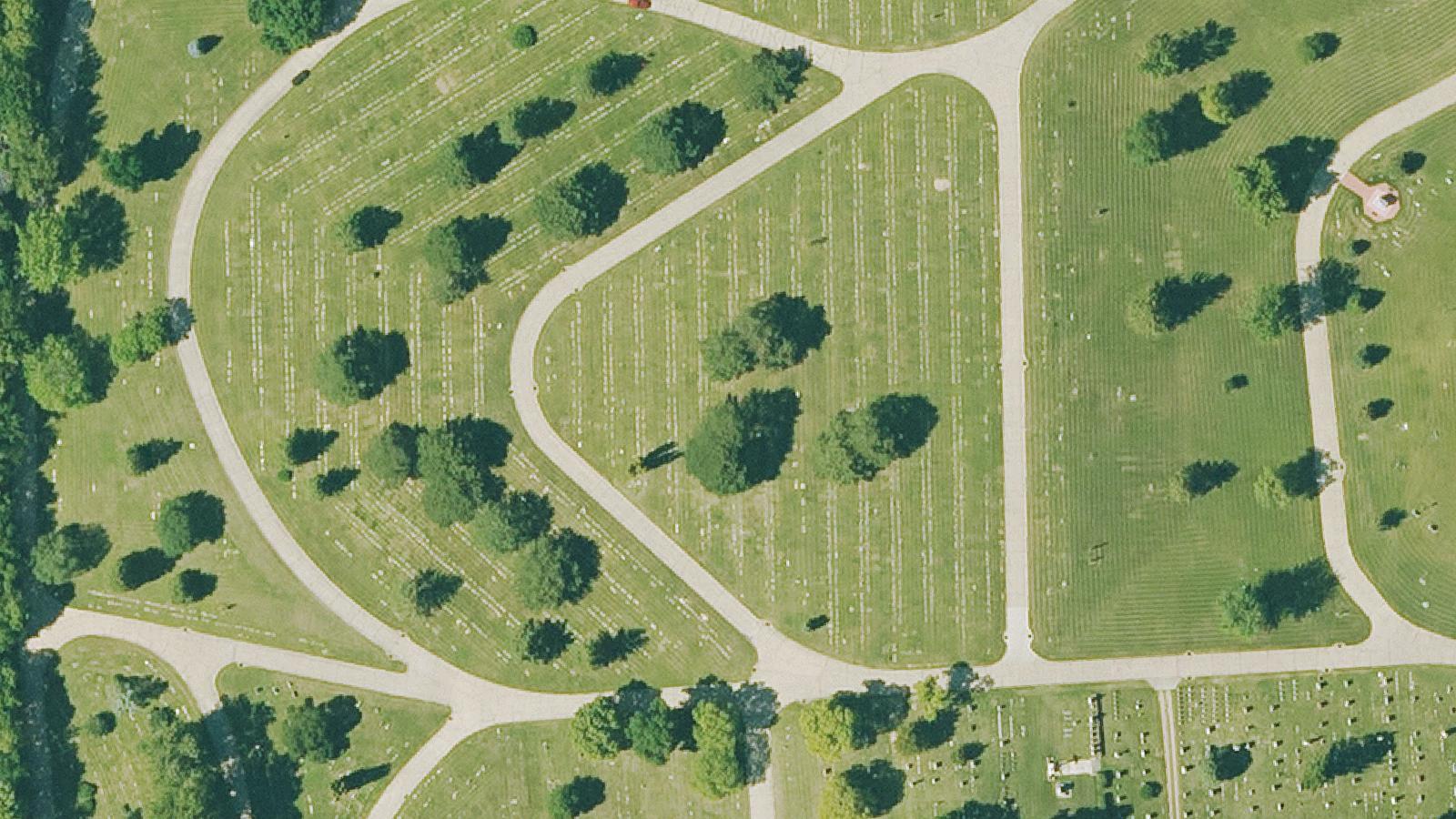 Aerial survey · USDA NAIP · public domain
Sioux City's second-oldest cemetery, a historic Catholic burial ground on the city's west side known for a 'hanging tree' headstone and reports of ringing ears and phantom cobwebs.
28th Street and Cassleman Street, Sioux City, IA 51103
Research updated May 2026
Age
All Ages
Cost
Free
Active Catholic cemetery; daytime visits only.
Access
Limited Access
Hilly cemetery grounds with older sections reached by dirt cut-throughs.
Equipment
Photos OK
Sioux City's second-oldest cemetery · Catholic burial ground on the city's historic west side · Setting of the long-circulated 'hanging tree' headstone legend
Calvary Cemetery sits at 28th Street and Cassleman on the west side of Sioux City, in Woodbury County. It is a Catholic cemetery and, according to local history accounts, the second-oldest cemetery in the city, placing its origins among Sioux City's early decades as a Missouri River trading and meatpacking center.
Like many older cemeteries, Calvary is divided into sections of differing age, with the oldest graves in an upper portion of the grounds reached by a dirt cut-through. This older section is where the cemetery's folklore is concentrated.
The central legend concerns a headstone carved in the shape of, or from, a tree. In the most dramatic telling it is described as a 'hanging tree' — a tree from which executions were carried out before the area became a cemetery, supposedly with a rope still attached above the marker. This claim is not historically documented, and it is contradicted by visitors who report that the feature is simply a concrete or carved tree-form gravestone, a common Victorian funerary style (often associated with the Woodmen of the World fraternal order) rather than any gallows.
The cemetery is an active burial ground covered in regional haunted-history surveys, including local broadcast coverage and Sioux City history projects. As with all working cemeteries, visitors are expected to come during daylight and to treat the grounds and graves respectfully.
Sources
Two sensations dominate the Calvary Cemetery legend: visitors commonly report a persistent ringing in their ears and the feeling of fingertips or cobwebs drifting across their faces while walking the grounds. According to accounts collected by Iowa haunted-place archives and local broadcast coverage, both sensations are said to grow stronger as one approaches a particular headstone in the older, upper section of the cemetery.
That marker is the heart of the lore. It is described as a headstone carved from or shaped like a tree, with half of the 'tree' appearing dead and half still leafing out. In the most sensational version, repeated in regional retellings, it is identified as a 'hanging tree' from the era before the cemetery existed, when Iowa still carried out executions — supposedly with a rope still attached above the stone.
This hanging-tree origin is unverified and actively disputed. At least one local commenter has stated flatly that there was no hanging tree and that the feature is simply a tree-form gravestone, a popular Victorian and fraternal-order memorial style. A separate, more vivid claim describes a full-body gray apparition seen sprinting before dissolving into mist. Because the dramatic 'hanging tree' backstory cannot be corroborated and is contested, it is presented here strictly as contested local legend rather than as established fact.
Notable Entities
Walk the grounds of Sioux City's second-oldest cemetery and find the older upper section associated with the 'hanging tree' headstone legend.
Some links on this page may earn HauntBound a small commission when you book, at no extra cost to you. Our editorial picks are independent. Full disclosure
Every HauntBound history is researched from documented sources. We clearly separate verified historical fact from paranormal folklore.
Free Guide
11 verified stops, rated for families, mapped in order. Free.
One email to confirm, then the guide link. Unsubscribe anytime.
 Aerial survey · USDA NAIP
Sioux City, IA
Graceland Park Cemetery in Sioux City dates to the early 1900s and was significant enough at its founding that its mausoleum dedication drew visitors from neighboring states. It remains an active burial ground in Woodbury County.
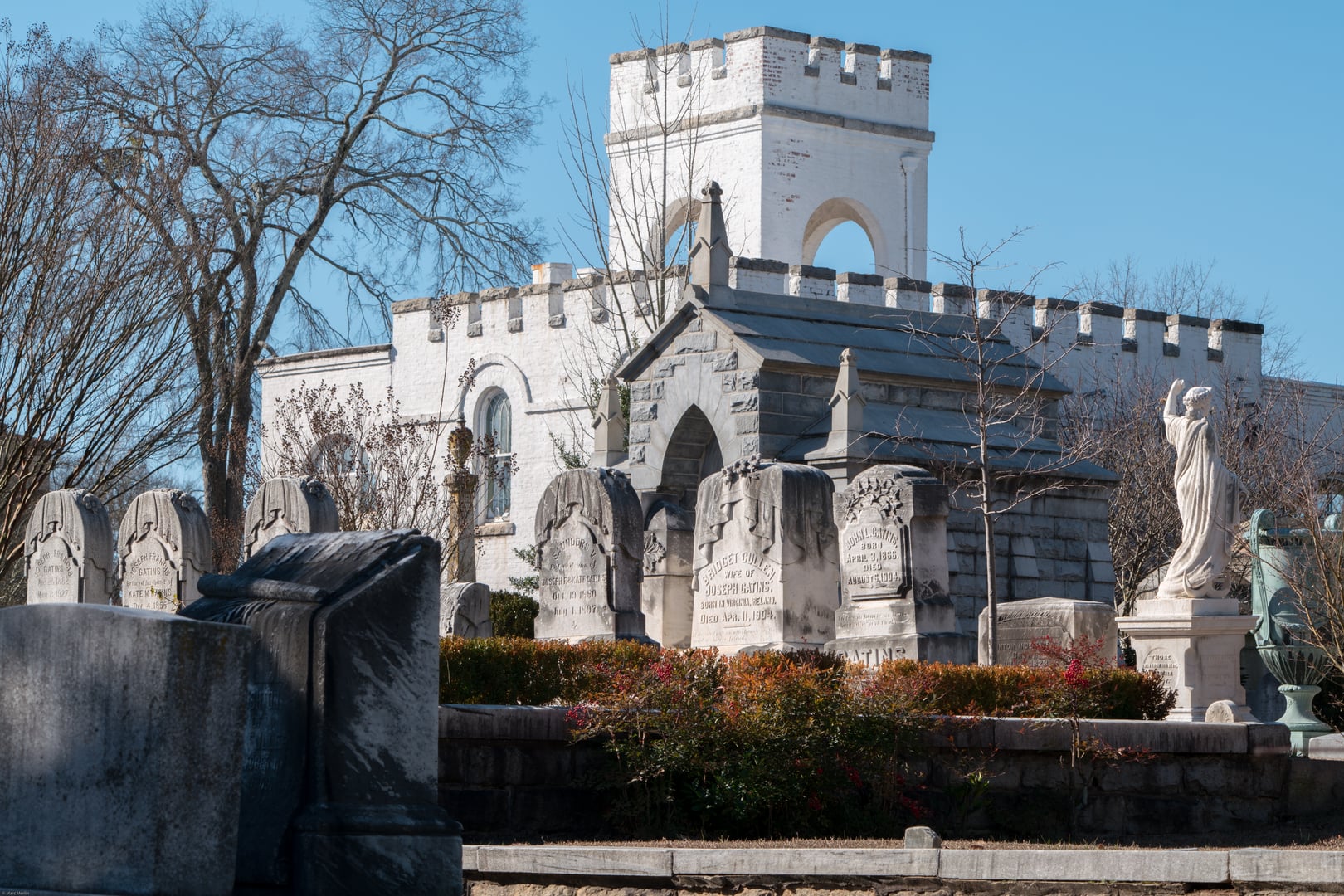
Atlanta, GA
Historic Oakland Cemetery was chartered in 1850 as the six-acre 'Atlanta Cemetery,' renamed Oakland in 1872, and expanded to 48 acres. Approximately 70,000 people are interred, including roughly 6,900 Confederate soldiers (3,000 unidentified), four Confederate generals, six Georgia governors, 27 Atlanta mayors, Margaret Mitchell, golfer Bobby Jones, and Maynard Jackson, Atlanta's first African American mayor. The cemetery was listed on the National Register of Historic Places on April 28, 1976.
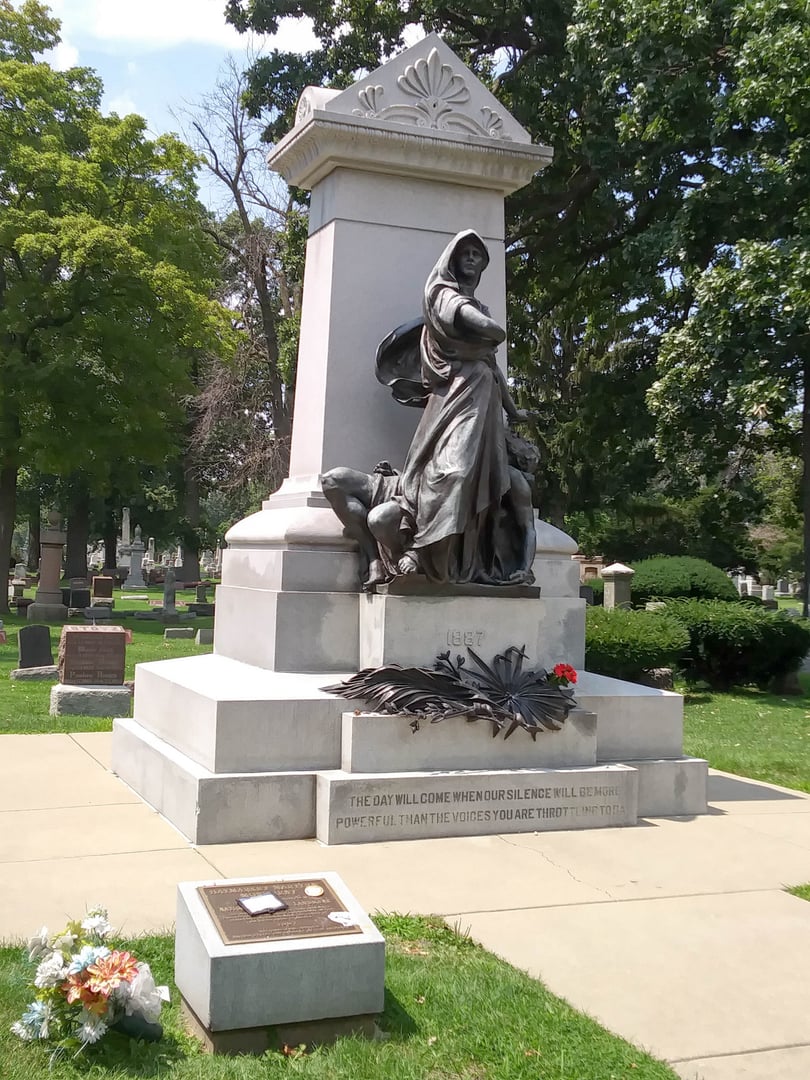
Forest Park, IL
Forest Home Cemetery in Forest Park, Illinois, grew from two adjacent cemeteries — German Waldheim (established 1873) and Forest Home (1876) — which merged in February 1969. The 220-acre site was chosen as a non-denominational burial ground, a policy that made it the only Chicago-area cemetery willing to accept the bodies of the Haymarket defendants in 1887.