Museum Visit
USS Midway Museum Self-Guided Tour
Self-guided exploration of the flight deck, hangar deck, engine room, berthing compartments, and 30-plus restored aircraft aboard the decommissioned carrier.
- Duration:
- 4 hr
HauntBound archive · catalog record
Reported phenomena, as catalogued
+ 1 further entry on record
Decommissioned U.S. Navy aircraft carrier moored at San Diego's Navy Pier since 2004 — curator David Hanson, who prefers the term 'paranormally active,' logs roughly thirty entities aboard, with marquee reports of a Navy-uniformed man near the engine room and an entity in a fourth-deck cold-storage locker.
910 North Harbor Drive, San Diego, CA 92101
Research updated May 2026
Age
All Ages
Cost
$$
General-admission tickets typical of major museum ships; check the official site for current pricing.
Access
Wheelchair OK
Steel ship decks with steep 'knee-knocker' hatchways; elevator access between key decks but most aircraft carrier areas involve narrow stairs.
Equipment
Photos OK
Est. 1945 · Lead ship of the Midway-class aircraft carriers · Largest ship in the world at her 1945 commissioning · Longest twentieth-century U.S. carrier service (47 years, 1945-1992) · Flagship of carrier forces during Operation Desert Storm (1991) · Permanently moored as USS Midway Museum at San Diego's Navy Pier since 2004
USS Midway (CV-41) was commissioned on September 10, 1945, eight days after the formal Japanese surrender ended World War II. Built at the Newport News Shipbuilding yard in Virginia, she was the lead ship of her three-vessel class and, at her commissioning, the largest ship in the world. Her oversized hull was designed to fly the new generation of heavier carrier aircraft that World War II had introduced.
Through the late 1940s and 1950s Midway served as a Cold War deterrent platform and a testbed for naval aviation transitions, including the first launch of an operational ballistic missile from a U.S. ship in 1947. She was modernized multiple times to accommodate jet aircraft, angled flight decks, and steam catapults. She forward-deployed to Yokosuka, Japan in 1973 — the first U.S. carrier to make a Japanese home port — and operated extensively in the Western Pacific.
Midway flew combat missions during the Vietnam War, including involvement in the 1975 Operation Frequent Wind evacuation of Saigon. In 1991 she served as the flagship of carrier forces in Operation Desert Storm during the Persian Gulf War, her aircraft flying combat missions over Iraq and Kuwait. Decommissioning followed in 1992 at NAS North Island, San Diego, after 47 years of continuous service — the longest such carrier tenure of the twentieth century U.S. Navy.
The USS Midway Museum nonprofit acquired the hull and moved her to San Diego's Navy Pier on January 5, 2004. The museum opened to the public on June 7, 2004 and now hosts more than a million visitors annually, with more than thirty restored aircraft on the flight and hangar decks and self-guided tours covering most of the ship's twelve levels.
Sources
According to a USS Midway Museum blog post titled 'Spirits of the Midway' and a 2017 Genea-Musings program writeup describing curator David Hanson's presentation 'Ghosts of the USS Midway,' Hanson has served as the museum's curator since December 2004. As leader of San Diego's largest paranormal research group, he keeps a log of unusual incidents reported by staff, volunteers, and visitors and has authorized historical investigations of the ship.
Hanson explicitly prefers the term 'paranormally active' rather than 'haunted,' arguing that 'haunted' carries negative implications and that most of the activity aboard is residual-energy recordings or returning-crew presences rather than active human-soul intelligences. He has estimated approximately thirty entities aboard, the majority of whom he believes are not people who died aboard the ship — Midway's combat-era casualty count was unusually low for a carrier of her tenure — but rather former crew who passed away later in life and returned out of loyalty.
Two specific reports recur in his materials and in regional paranormal sources. The first concerns a Navy-uniformed man seen near the engine room area. The second is associated with a food cold-storage locker in the bow of the fourth deck; during an early investigation an EVP recording is reported to capture a voice asking 'What is the name of this ship?' Other reported phenomena include disembodied voices, sudden cold spots in interior compartments, and the sound of footsteps and equipment moving in empty berthing areas.
The museum no longer permits structured paranormal investigations aboard but treats the lore openly through the curator's published materials. Lore here is unusually well-anchored for a museum ship: multi-source, named-curator-attributed, with a documented institutional log and decades of staff-and-volunteer reports.
Notable Entities
Media Appearances
Self-guided exploration of the flight deck, hangar deck, engine room, berthing compartments, and 30-plus restored aircraft aboard the decommissioned carrier.
The Midway runs structured overnight family and group programs that include below-decks access; paranormal-specific tours are not currently authorized by the museum.
Some links on this page may earn HauntBound a small commission when you book, at no extra cost to you. Our editorial picks are independent. Full disclosure
Every HauntBound history is researched from documented sources. We clearly separate verified historical fact from paranormal folklore.
Free Guide
10 verified stops, rated for families, mapped in order. Free.
One email to confirm, then the guide link. Unsubscribe anytime.
San Diego, CA
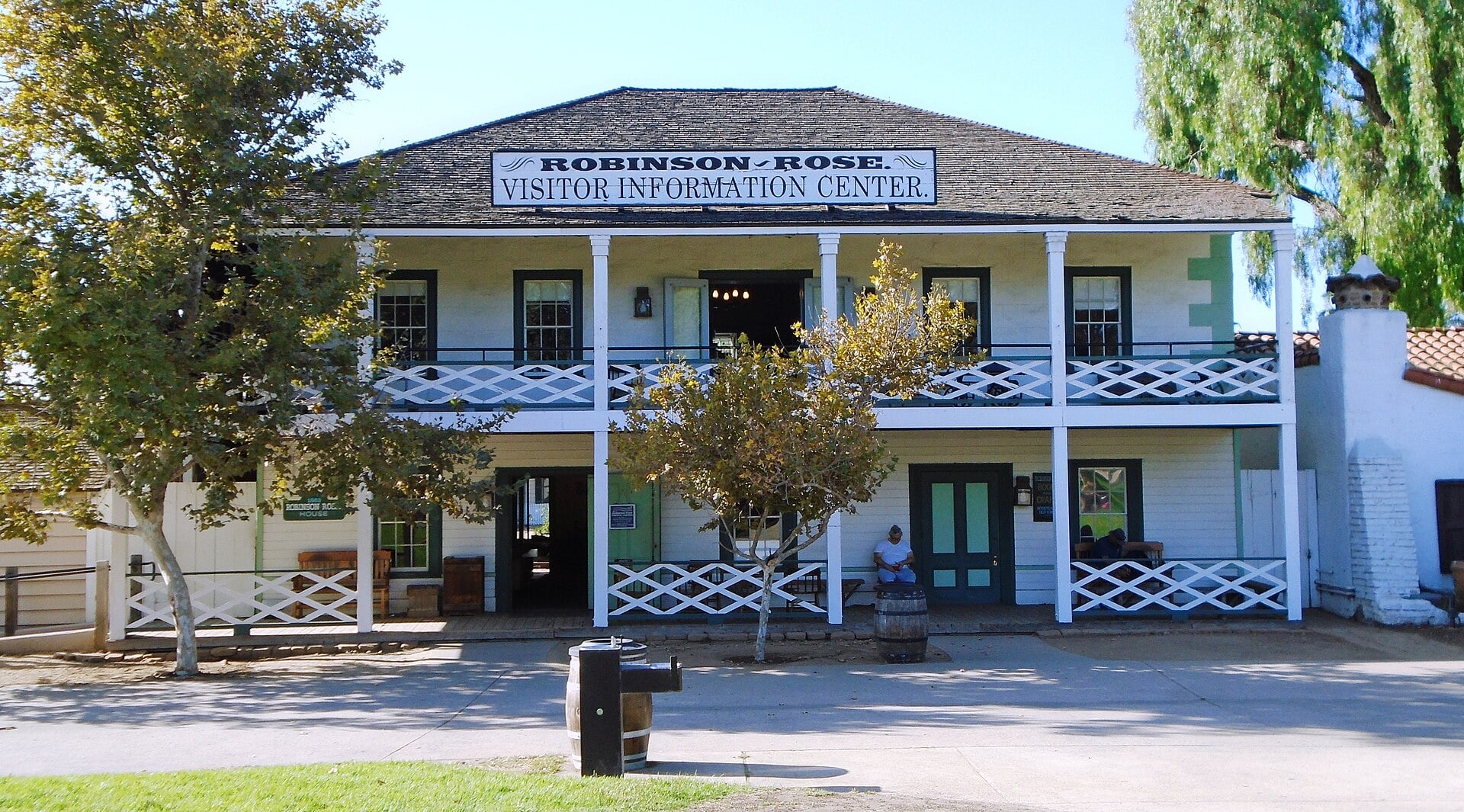
The Robinson-Rose House was originally built in 1853 as the San Diego home and law office of Judge James W. Robinson, an attorney from Texas who became a leading figure in early American-era San Diego. After Robinson's 1857 death the house was sold to Louis Rose and later served as a newspaper office, railroad headquarters, schoolroom, and apartments before falling into ruin. The current structure is a state-park reconstruction now operating as the Old Town San Diego State Historic Park visitor center.
Yuma, AZ
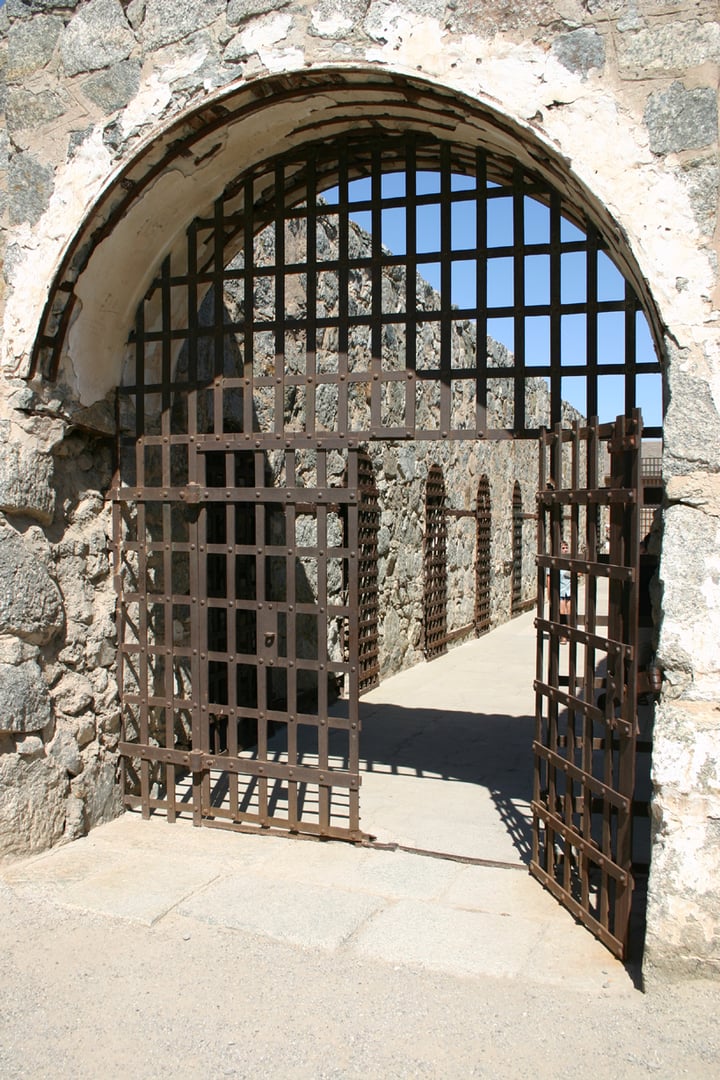
Yuma Territorial Prison operated from 1876 to 1909 on a bluff overlooking the Colorado River in Yuma, Arizona. It held 3,069 prisoners during its 33-year operation, including 29 women. The facility became a state historic park and has been voted by USA Today readers as the Best Haunted Destination in the nation.
St. Augustine, FL
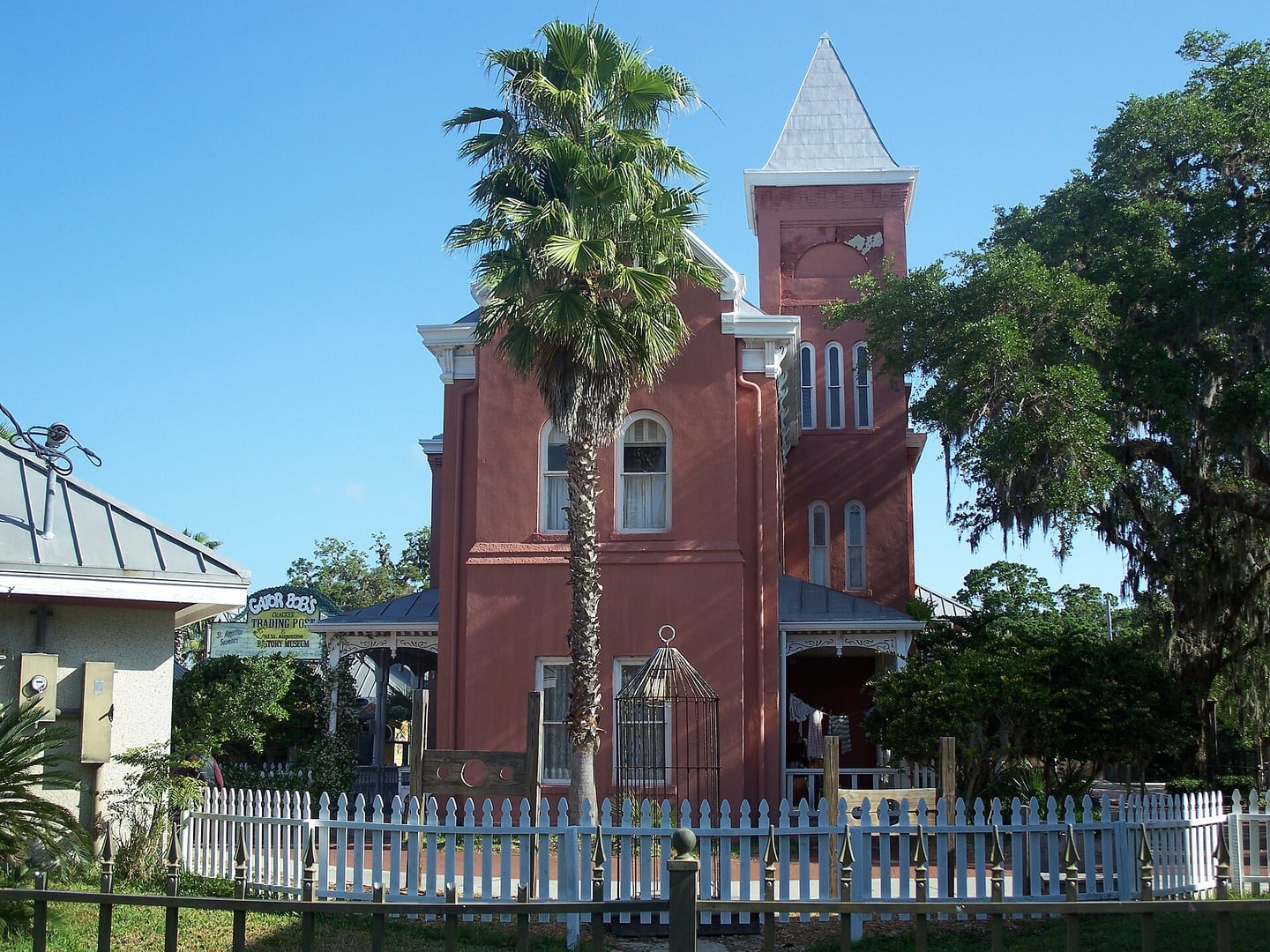
The Old St. Johns County Jail at 167 San Marco Avenue in St. Augustine, Florida was commissioned by railroad magnate Henry Flagler and constructed in 1891. Designed by the same architectural firm later used for Alcatraz, the facility housed prisoners under conditions so severe — one bucket per cell as a toilet, minimal diet, and labor in Flagler's fields — that it was closed in 1953. Eight documented executions occurred on site before the county converted the building to a tourist attraction in 1954.