Guided Tour
Free guided tour of the Leland Stanford Mansion
California State Parks docents lead tours through the restored 19,000-square-foot Second Empire mansion, its public rooms, and the Stanford family quarters.
- Duration:
- 1 hr
HauntBound archive · catalog record
Reported phenomena, as catalogued
1856 Sacramento mansion expanded by Governor Leland Stanford in the 1870s, later an orphanage and 1918 flu hospital, now a California State Park. Lore centers on the Stanfords' young son who died abroad in 1884.
800 N Street, Sacramento, CA 95814
Research updated September 2026
Age
All Ages
Cost
Free
Free guided tours offered by California State Parks; donations accepted. Special seasonal events may carry a fee.
Access
Wheelchair OK
ADA-accessible state park; tour route is the historic mansion interior.
Equipment
Photos OK
Est. 1856 · Home of Leland Stanford, California governor (1862-1863), U.S. senator, and founder of Stanford University · Functioned as the state's executive office during Stanford's governorship · Operated 1900-1978 as a Catholic orphanage and home for dependent girls under the Sisters of Mercy and Sisters of Social Service · Reportedly served as a hospital during the 1918 influenza pandemic · California State Historic Park since 1978; restored 1991-2005; now California's official reception center
The home at 800 N Street was originally built in 1856 by Sacramento merchant Shelton C. Fogus, with Renaissance Revival detailing attributed to architect Seth Babson. Leland Stanford — railroad magnate and future California governor, U.S. senator, and university founder — purchased the property for $8,000 in June 1861, shortly before being elected governor; it served as the de facto state executive office during his term.
The Stanfords undertook a massive 1871-1872 remodel that raised the entire structure twelve feet to escape downtown Sacramento's repeated floodwaters and added stories above and below the original house. The work expanded the home from 4,000 to roughly 19,000 square feet and redesigned the exterior in the Second Empire style, with a prominent Mansard roof. The Stanfords' only child, Leland DeWitt Stanford Jr., grew up in the house and at the family's Palo Alto estate before dying of typhoid fever on March 13, 1884, at age 15, while traveling with his parents in Florence, Italy. His death prompted the Stanfords to found Leland Stanford Junior University in his memory.
After Leland Sr.'s death in 1893, his widow Jane Lathrop Stanford continued to oversee the Sacramento property. In 1900 she donated it to the Roman Catholic Diocese of Sacramento, and the Sisters of Mercy operated it as the Stanford and Lathrop Memorial Home for Friendless Children — a Catholic orphanage. The building reportedly served as a hospital during the 1918 influenza pandemic. From 1932 to 1978, the Sisters of Social Service ran it as a residence for dependent high-school girls.
The State of California acquired the mansion in 1978. A 14-year, roughly $22 million restoration was completed in 2005, and the property reopened to the public as Leland Stanford Mansion State Historic Park. The mansion now functions as both a museum (with free docent-led tours) and the State of California's official reception center, used by sitting governors for state ceremonial functions.
Sources
Per a 2023 CBS Sacramento report, capital-district State Parks superintendent John Fraser said: 'We've definitely heard from staff some experiences that they couldn't easily explain,' while noting that the agency 'won't officially say it's haunted.' Documented phenomena from that reporting are limited to flickering lights and doors slamming on their own.
Local accounts and haunted-tour write-ups (Haunted Rooms America; abc10) more colorfully connect the activity to Leland Stanford Jr., the Stanfords' only child, who died abroad of typhoid fever at age 15 in 1884. Some accounts also describe a jovial party-goer apparition glimpsed in a hallway. Independent corroboration of named-entity sightings is thin; the strongest documented claim remains the State Parks staff acknowledgment of unexplained experiences.
Additional historical anchors cited in haunted-locations writeups include the property's nearly eight-decade run as a Catholic orphanage and its reported role as a hospital during the 1918 influenza pandemic. Because most paranormal claims trace back to directory-tier sources rather than first-person investigation, this entry is shipped with status published but the lore is framed as tradition rather than confirmed phenomena. The site's sensitive lineage (a teenage boy's death; institutional child welfare; pandemic illness) is treated with care — State Parks itself avoids sensationalism and so do we.
Notable Entities
Media Appearances
California State Parks docents lead tours through the restored 19,000-square-foot Second Empire mansion, its public rooms, and the Stanford family quarters.
Tour the mansion museum interpreting its three eras: Stanford family residence and California governor's office, Catholic orphanage, and state reception center.
Some links on this page may earn HauntBound a small commission when you book, at no extra cost to you. Our editorial picks are independent. Full disclosure
Every HauntBound history is researched from documented sources. We clearly separate verified historical fact from paranormal folklore.
Free Guide
10 verified stops, rated for families, mapped in order. Free.
One email to confirm, then the guide link. Unsubscribe anytime.
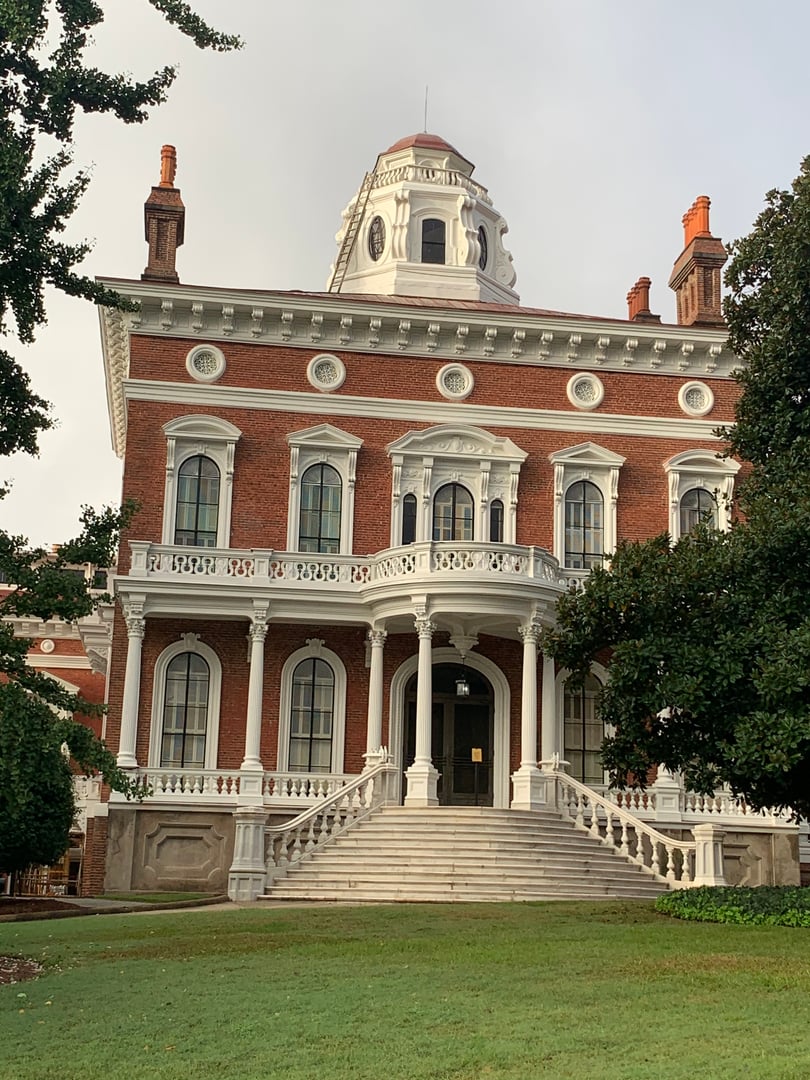
Macon, GA
Built between 1855 and 1859 for businessman William Butler Johnston at a cost of approximately $100,000, the Italian Renaissance Revival mansion at 934 Georgia Avenue has been called the 'Palace of the South' and is a National Historic Landmark. The house remained in Johnston hands through the Civil War, spared when Sherman's march to the sea bypassed Macon; it passed to the Johnstons' daughter Mary Ellen and her husband, Judge William Felton, in 1896. The Hay family acquired the house in 1926 and donated it to The Georgia Trust for Historic Preservation in 1977.
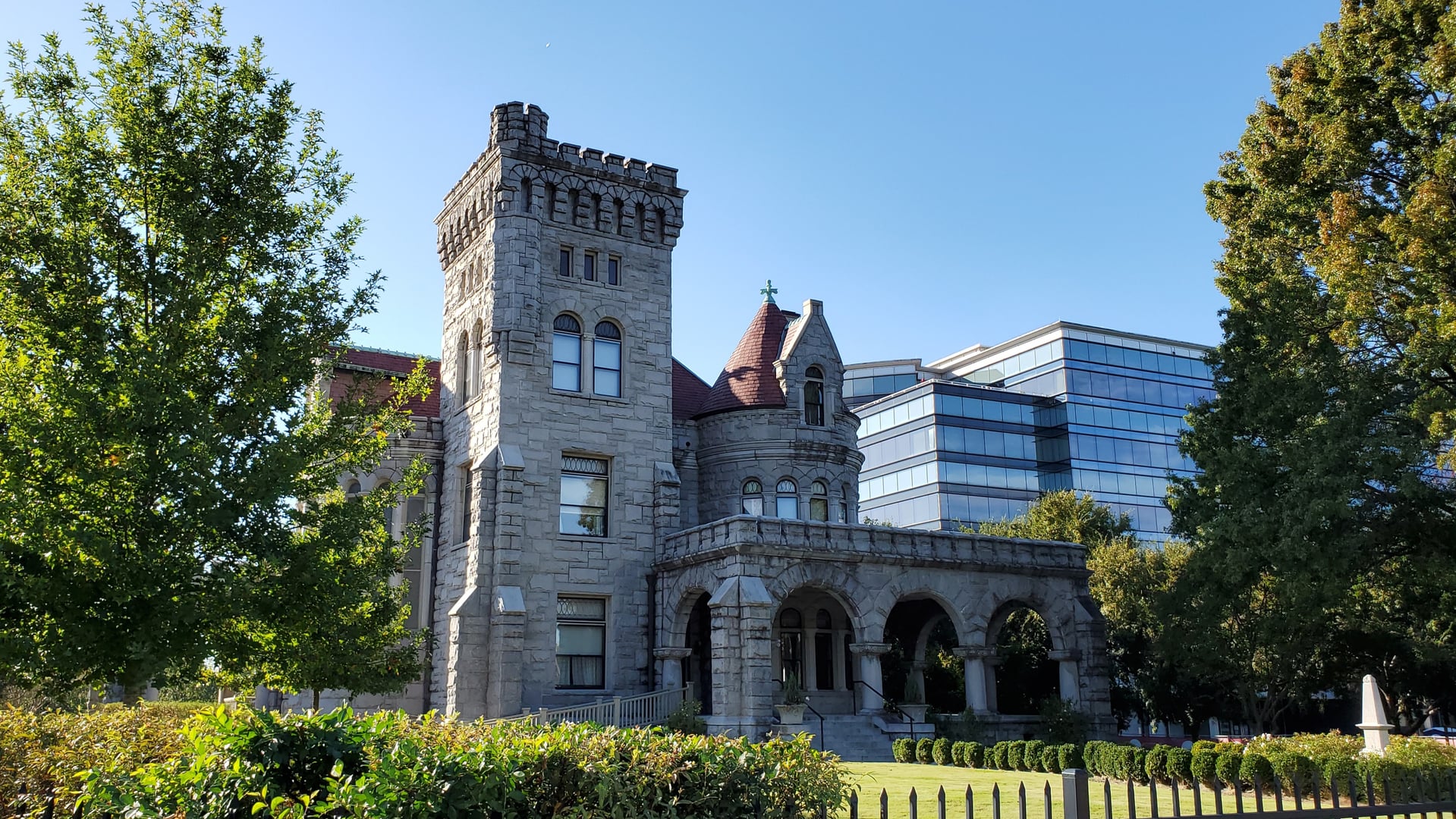
Atlanta, GA
Rhodes Hall was built 1902-1904 for furniture magnate Amos Giles Rhodes, founder of Rhodes Furniture. Designed by Atlanta architect Willis F. Denny II of Stone Mountain granite in a Romanesque Revival style with Victorian and Arts and Crafts interior elements. Listed on the National Register of Historic Places in 1974; Atlanta Landmark Building since 1989; headquarters of the Georgia Trust for Historic Preservation since 1983.
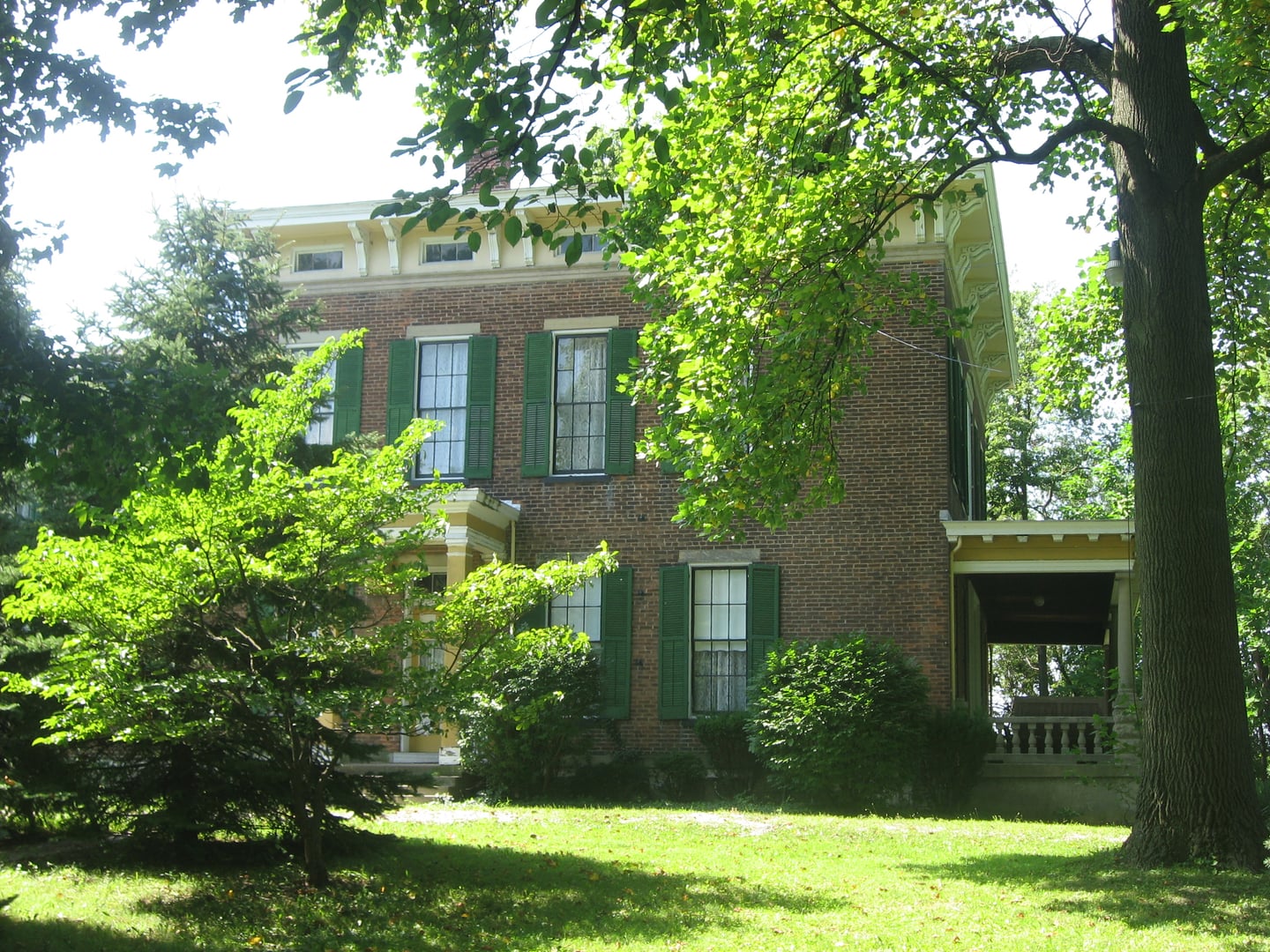
Indianapolis, IN
Hannah House is an 1858 Italianate mansion at 3801 Madison Avenue on the south side of Indianapolis, built by Alexander Hannah, an Indiana businessman who returned wealthy from the California Gold Rush. The property is listed on the National Register of Historic Places.