Drive-By
California Governor's Mansion Guided Tour
Docent-led tour of the 1877 Second Empire Italianate mansion and the rooms used by 13 California governors from 1903 to 1967, including the Earl Warren and Ronald Reagan periods.
- Duration:
- 1 hr
HauntBound archive · catalog record
Reported phenomena, as catalogued
1877 Second Empire Italianate Victorian mansion designed by Nathaniel Goodell — official residence of 13 California governors from 1903 to 1967 (including Earl Warren and Ronald Reagan), now a California State Historic Park.
1526 H Street, Sacramento, CA 95814
Research updated June 2026
Age
All Ages
Cost
$
Standard California State Parks admission applies; check parks.ca.gov for current fees and tour schedule.
Access
Limited Access
Historic 19th-century mansion with stairs to upper floors; first floor is partially accessible.
Equipment
Photos OK
Est. 1877 · Official residence of 13 California governors (1903-1967) · Home of governors Earl Warren (later Chief Justice) and Ronald Reagan (later President) · Designed by Nathaniel Goodell in Second Empire Italianate Victorian style · California State Historic Park since 1967 · Listed on the National Register of Historic Places
The Governor's Mansion in Sacramento was built in 1877 as a private home for Albert Gallatin, a partner in the Huntington & Hopkins hardware company — one of the most successful Sacramento businesses of the post-Gold-Rush era. The 30-room, three-story house was designed by Sacramento architect Nathaniel Goodell in the Second Empire Italianate Victorian style and built by contractor Uriah Reese. Goodell's mansion design is considered one of the most refined surviving examples of high-Victorian residential architecture in California.
Gallatin sold the house in 1887 to Joseph Steffens, a local businessman. In 1903 the State of California purchased the property from the Steffens family for $32,500 to serve as the official residence of the California governor. Governor George Pardee and his family were the first occupants of the new state-owned mansion.
Thirteen successive governors and their families lived in the house from 1903 to 1967. Notable residents included Hiram Johnson (later a U.S. Senator), Earl Warren (later Chief Justice of the United States Supreme Court), Pat Brown, and Ronald Reagan (later 40th President of the United States). The Reagan family lived in the mansion briefly in 1967 before deciding it was too small and outdated for modern use; subsequent governors lived elsewhere.
In 1967 the State of California retired the mansion from gubernatorial use and established Governor's Mansion State Historic Park, managed by California State Parks since 1967. The mansion has been preserved and interpreted to reflect the different gubernatorial-family eras, and it is open for guided tours year-round. The building's original Goodell architectural details, the period-appropriate furnishings from multiple decades of gubernatorial families, and the third-floor servants' quarters provide an unusually layered look at California state-level political and domestic life from the early 20th century through the 1960s.
Sources
The California Governor's Mansion has appeared in regional Sacramento haunted-locations compilations for decades, but its paranormal record is genuinely thinner than the available coverage initially suggests. A substantial fraction of the 'haunted Governor's Mansion' content circulating online actually describes the nearby Leland Stanford Mansion — a separate California State Park property a few blocks away that has its own well-documented haunted reputation tied to Stanford Jr.'s 1884 typhoid death in Florence, the property's 1888-1933 use as the Stanford Home for Friendless Children orphanage, and its use as a hospital during the 1918 flu pandemic.
Specifically, claims about an apparition of Leland Jr. asking his father to found a school, the Mrs. Stanford seance accounts, and the orphanage-era activity all originate at the Stanford Mansion, not the Governor's Mansion. abc10's 'Ghostly Lineage' feature on the Stanford Mansion has been frequently miscited and re-posted as being about the Governor's Mansion, contributing to confusion.
The Governor's Mansion's own paranormal record reduces, when this conflation is controlled for, to a small number of older haunted-tour entries (including the HauntedHoneymoon.com 'Old Governor's Mansion' compilation, the main published source found) and to occasional State Parks staff accounts of unexplained sounds during after-hours work. These reports have not been independently documented and are not the subject of any major paranormal investigation programming.
Given the substantial confusion in available paranormal-locations coverage and the thinness of independently documented Governor's-Mansion-specific claims, this entry is included cautiously, to avoid reproducing claims that actually belong to the nearby Stanford Mansion.
Media Appearances
Docent-led tour of the 1877 Second Empire Italianate mansion and the rooms used by 13 California governors from 1903 to 1967, including the Earl Warren and Ronald Reagan periods.
Some links on this page may earn HauntBound a small commission when you book, at no extra cost to you. Our editorial picks are independent. Full disclosure
Every HauntBound history is researched from documented sources. We clearly separate verified historical fact from paranormal folklore.
Free Guide
10 verified stops, rated for families, mapped in order. Free.
One email to confirm, then the guide link. Unsubscribe anytime.
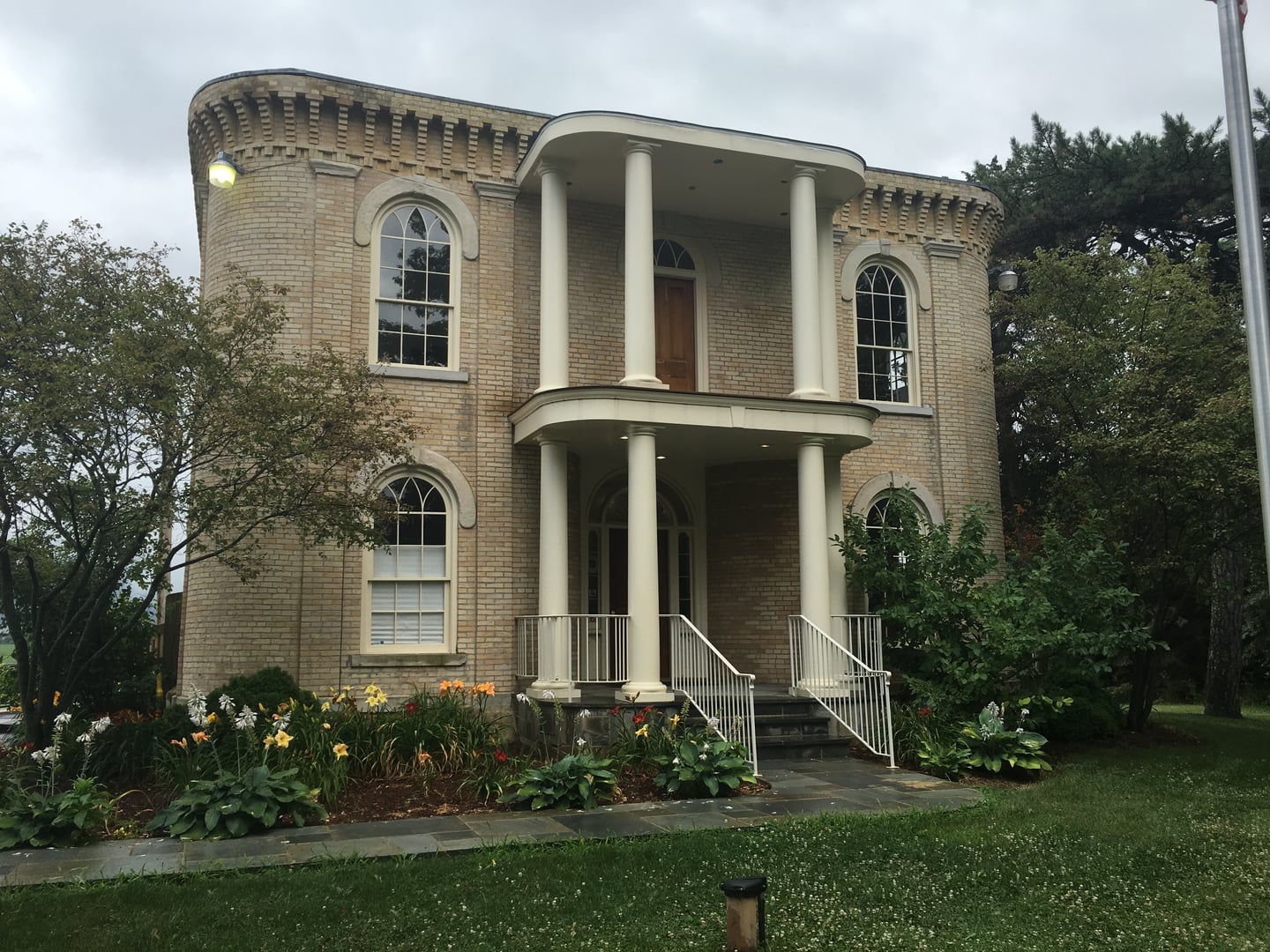
Bull Valley, IL
The George Stickney House is an 1865 stucco-over-frame mansion in Bull Valley, Illinois, built for spiritualists George and Sylvia Stickney. The Stickneys, both practicing mediums, are said to have designed the interior without right angles to ease the movement of spirits during seances. The building has served as the Bull Valley Police Department since 1985 and has been listed on the National Register of Historic Places since 1979.
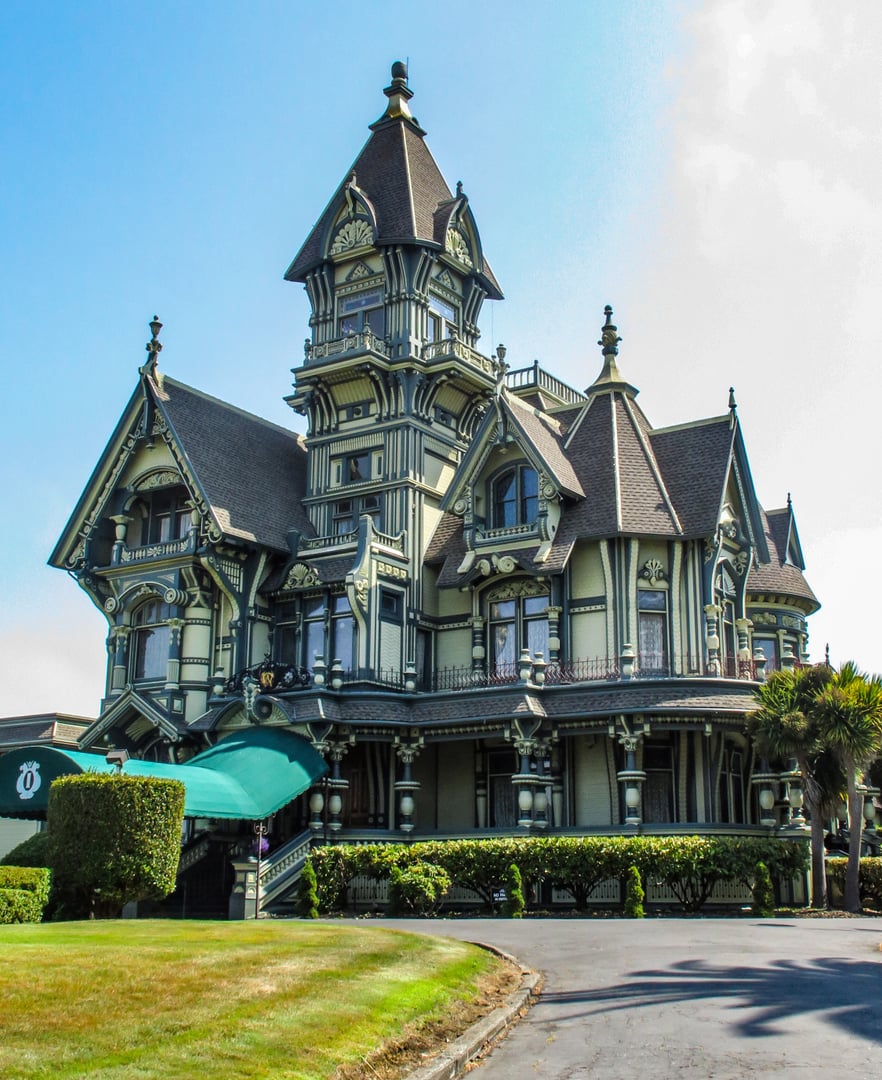
Eureka, CA
Built 1884-1886 for redwood-lumber baron William Carson, the 18-room Victorian combines Queen Anne, Eastlake, Stick, and Italianate elements with a four-story tower overlooking Humboldt Bay. Since 1950 it has been the private clubhouse of the Ingomar Club. It is widely cited as a visual inspiration for Disney's Haunted Mansion and the silhouette image of the American haunted house.
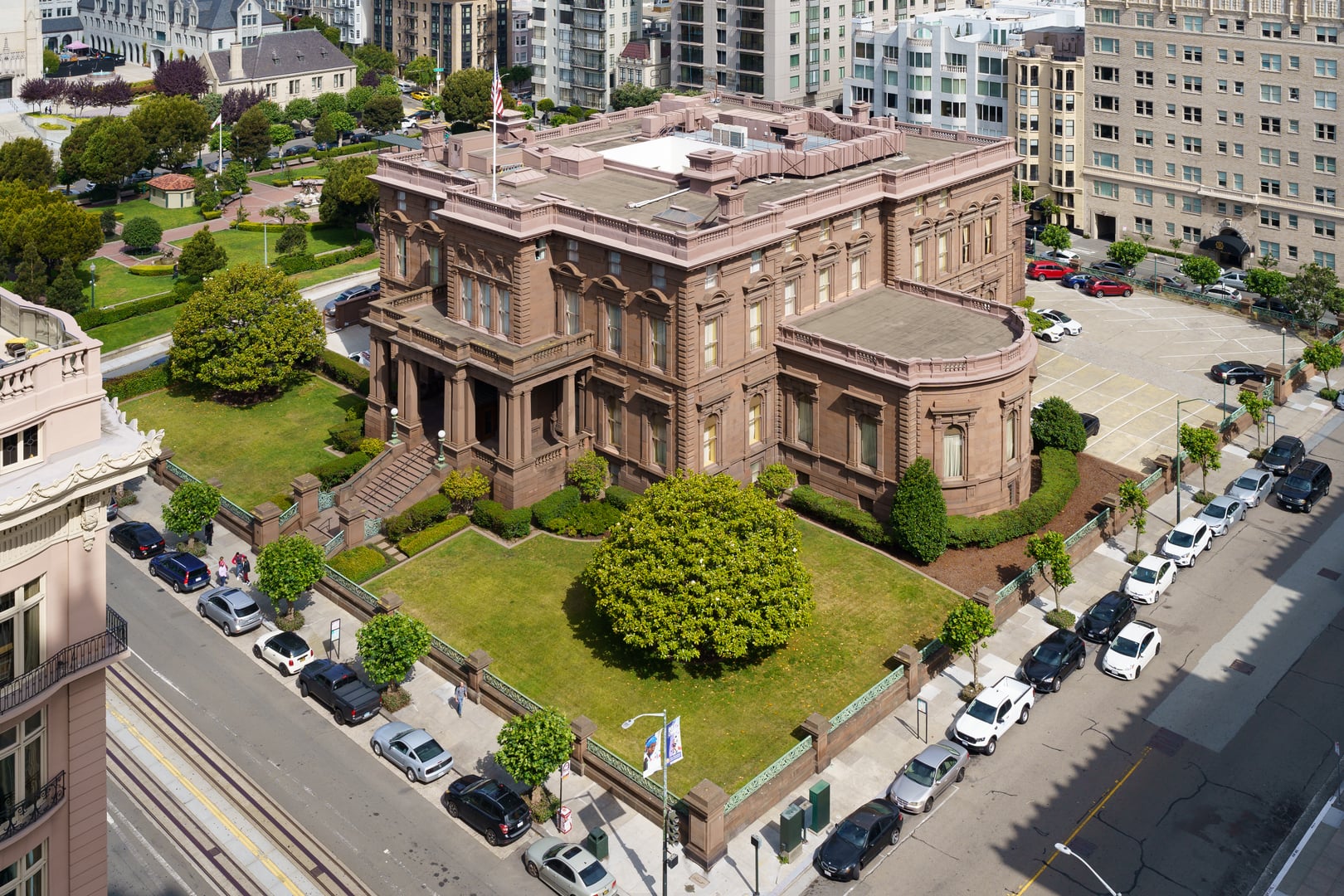
San Francisco, CA
The James C. Flood Mansion at 1000 California Street was built in 1886 for Comstock Lode silver baron James C. Flood, who had made his fortune in the Big Bonanza strike of the Comstock mines. Designed by architect Augustus Laver of Connecticut brownstone, it was the first brownstone west of the Mississippi River. The only Nob Hill mansion whose structure survived the 1906 earthquake and fire (its interior was gutted but the brownstone walls stood), it was acquired by the Pacific-Union Club, remodeled by Willis Polk, and has been the Club's home since 1912.