Est. 1898 · El Presidio Historic District · Victorian-Era Tucson Architecture · Wright and Zellweger Family Ownership · Tucson Charitable and Community History
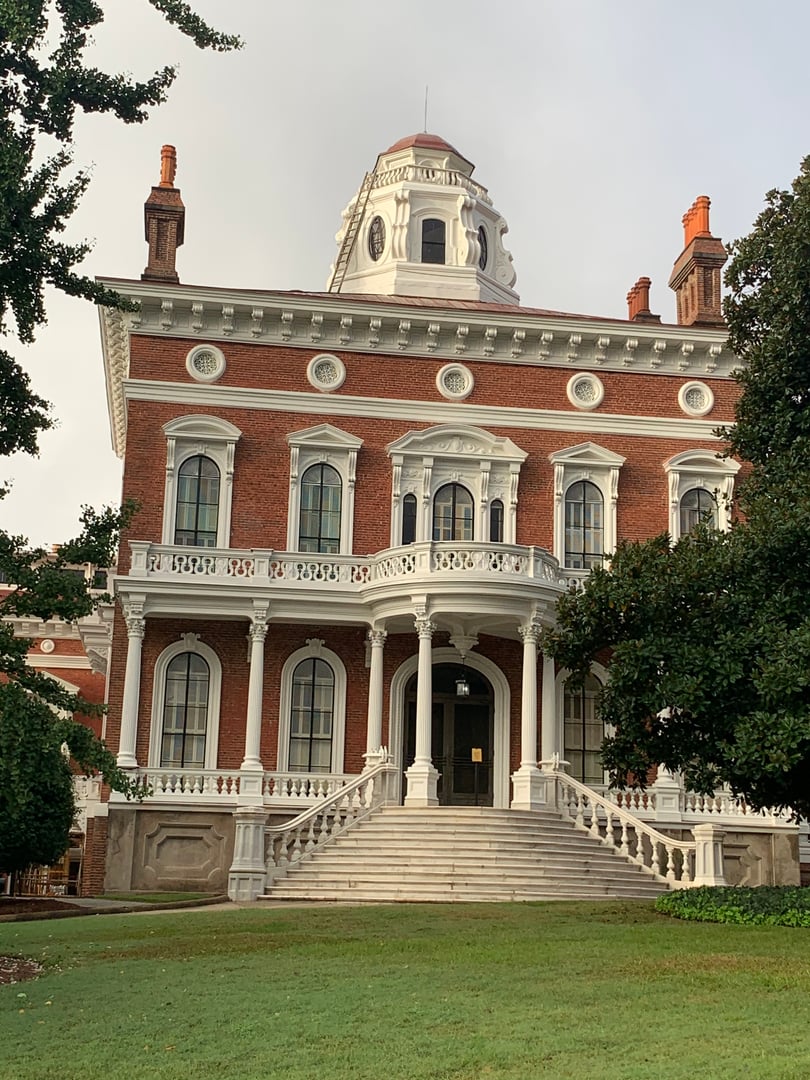
Charles Wright and his wife Harriett began building their Neoclassical home on Church Avenue in 1898, in what was then a prosperous stretch of Tucson sometimes called Millionaires' Row. Wright had served as attorney general of Colorado around 1879-1880 before relocating to Tucson in 1888. He died in 1900, shortly after the house was completed.
Following Wright's death, the property was sold to the Zellweger family, ranchers and cattle dealers whose name eventually attached to the house as the 'Z Mansion.' The family kept the home for roughly three quarters of a century. Local accounts describe the house as a gathering place tied to Tucson's early arts scene, and some histories note its use to support wartime needs during World War II.
The mansion stands in Tucson's El Presidio Historic District, one of the city's oldest neighborhoods, and is now operated as a private events and weddings venue. For more than two decades its operators have also used the property as a base for charitable meal service to people in need. The building's nineteenth-century construction, Wright's ownership, and the Zellweger family's long tenure are documented in the venue's own history page and in regional press; the ghost story attached to the staircase is a separate, less-documented strand of its lore.
Sources
- https://www.zmansion.com/history
- https://tucson.com/lifestyles/relationships-and-special-occasions/article_4d0a4c98-b25b-5f36-9359-9bd489f0399a.html
- https://downtowntucson.org/go/z-mansion
Apparition on the staircaseFigure in period dress
The Z Mansion's ghost story centers on its grand staircase. A guide to Tucson legends describes a figure known as the 'Victorian Lady,' said to be seen gliding down the stairs in period dress. The account does not name the figure or tie her to a documented person connected with the house, and it does not describe any specific incident behind the haunting.
The story appears in a single local source and is not repeated in the venue's own materials or in the regional press that covers the mansion's history and charitable work. No witness, date, or investigation is offered, and the venue presents itself as an events space rather than a haunted attraction.
The apparition account rests on one source, while the building's documented history is well established. The mansion's interior, including the staircase at the center of the story, is generally accessible only through booked events, so most visitors encounter the building's history rather than its lore.
Notable Entities
Victorian Lady
Where this legend is told