Est. 1915 · Arkansas's seat of government since 1915 · Built on the site of the former state penitentiary · Designed by George R. Mann, completed under Cass Gilbert · National Register of Historic Places (1974)
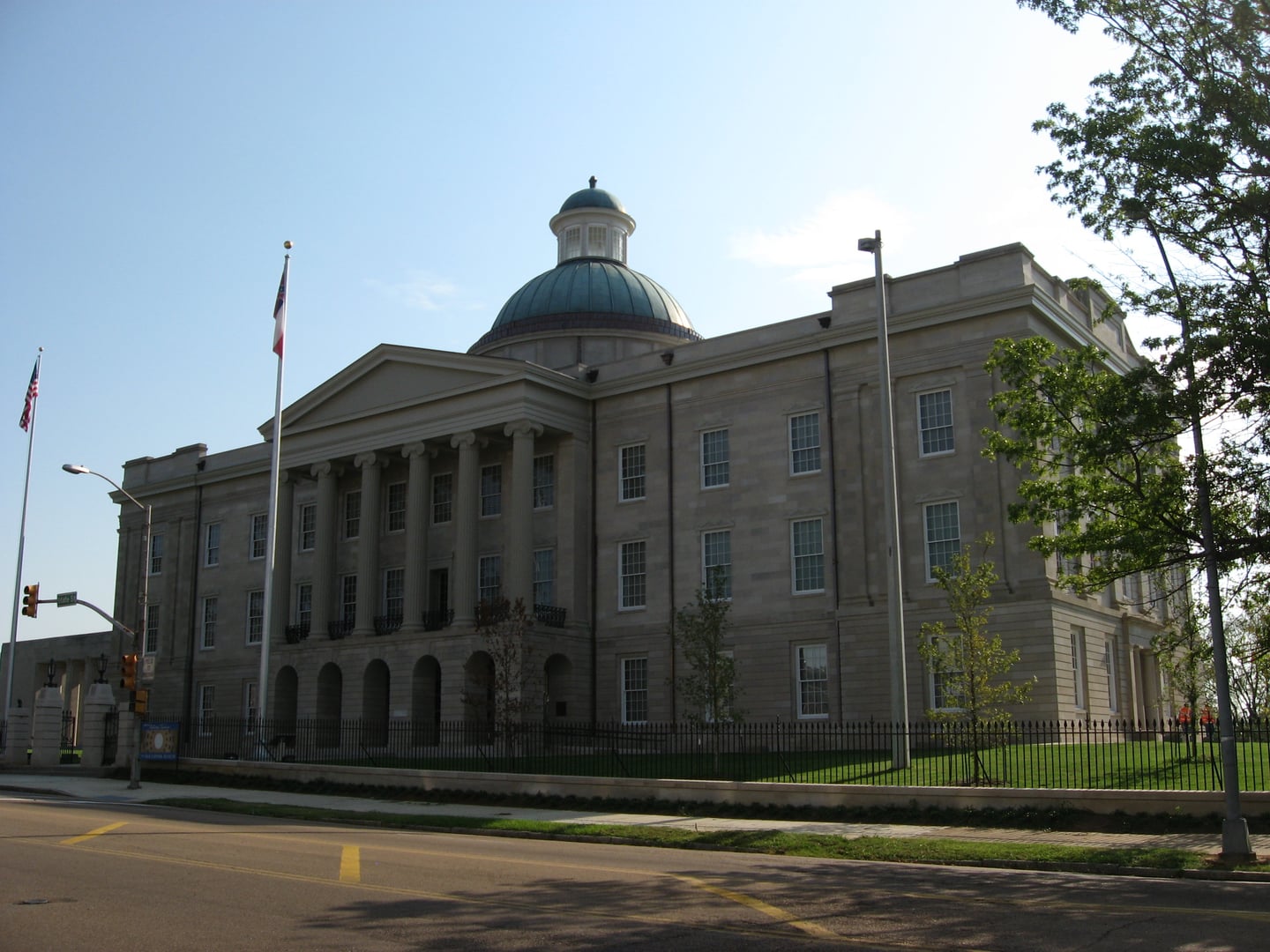
The Arkansas State Capitol sits on Capitol Hill at the east end of downtown Little Rock's Capitol Mall, on ground that held the state penitentiary until construction began. St. Louis architect George R. Mann won the design competition in 1899 after showing Governor Daniel W. Jones his earlier, unbuilt design for the Montana capitol. Mann's selection was contested from the start: commission member George Donaghey opposed it and wanted an open national competition instead. Donaghey lost that argument in 1899, but after he was elected governor in 1908 he removed Mann from the project and brought in architect Cass Gilbert to finish it.
Construction ran sixteen years, from 1899 until the building's completion on January 1, 1915, at a reported cost of $2.2 million. Prisoners from the penitentiary that previously occupied the site helped build their own replacement, living in a dormitory left standing on the grounds while the work went on. An early surveying error by Donaghey, who aligned the foundation to the old penitentiary walls rather than true compass directions, left the finished Capitol slightly out of alignment with Little Rock's street grid.
The Classical Revival dome has made the building a popular filming location for scenes meant to represent the U.S. Capitol, including the 1986 NBC miniseries Under Siege, whose pyrotechnics left stains on the dome. The Capitol was added to the National Register of Historic Places in 1974 and today houses the Arkansas General Assembly, the governor's office and the secretary of state, whose staff run the public tour program.
Sources
- https://en.wikipedia.org/wiki/Arkansas_State_Capitol
- https://www.sos.arkansas.gov/state-capitol
Sounds and figures reported by custodians and overnight Capitol police (per the state historian, 2021)A woman's scream recorded on camera during a 2021 investigationThermal-camera silhouette beside an investigator on the stairsVoice recorded in the basement (EVP)
Ira Gurley is the Capitol's most specific documented death. In June 1932, as he stepped into an elevator, the car started upward and crushed him in the doorframe. He had served in the Arkansas House, sat on the Game and Fish Commission and was expected to run for secretary of state. His ten-year-old daughter, Helen, grew up to write Sex and the Single Girl and edit Cosmopolitan, which is why local television still retells the accident.
In June 2021, FOX16 went into the building after hours with the group Sweet N Sour Paranormal. State historian David Ware told the station that stories of spirits are common among the staff who work when the halls are empty, from custodians in the basement to Capitol police on the overnight shift: they "had heard things," and some swore they had seen things. Ware, who has had no experience of his own, pointed to the site's past. The state penitentiary stood there until 1899, prisoners who died there were buried on what are now the Capitol grounds, and although there was an effort to move the remains, he believes any left behind are fragmentary. During the five-hour visit the crew's camera recorded a woman's scream in a hallway, a thermal camera showed a silhouette beside an investigator on the stairs where no one stood, and an investigator's recorder picked up a voice in the basement. The Arkansas Democrat-Gazette's Friday Frights podcast took up the same history in October 2025.
Notable Entities
Ira Gurley (state representative, died in a 1932 elevator accident)
Media Appearances
- Is the Arkansas State Capitol haunted? (FOX16, TV, 2021)
- Did You Know: Elevator death at state capitol is tied to Cosmo mag (THV11, TV)
- Friday Frights: Lawmakers and lawbreakers (Arkansas Democrat-Gazette, podcast, 2025)
Where this legend is told