Est. 1867 · 1867 gold strike at the Carissa Mine · First women's suffrage law in the nation, December 1869 · Esther Hobart Morris, first woman to hold U.S. public office, February 1870 · 23 original buildings, ~30,000 original artifacts
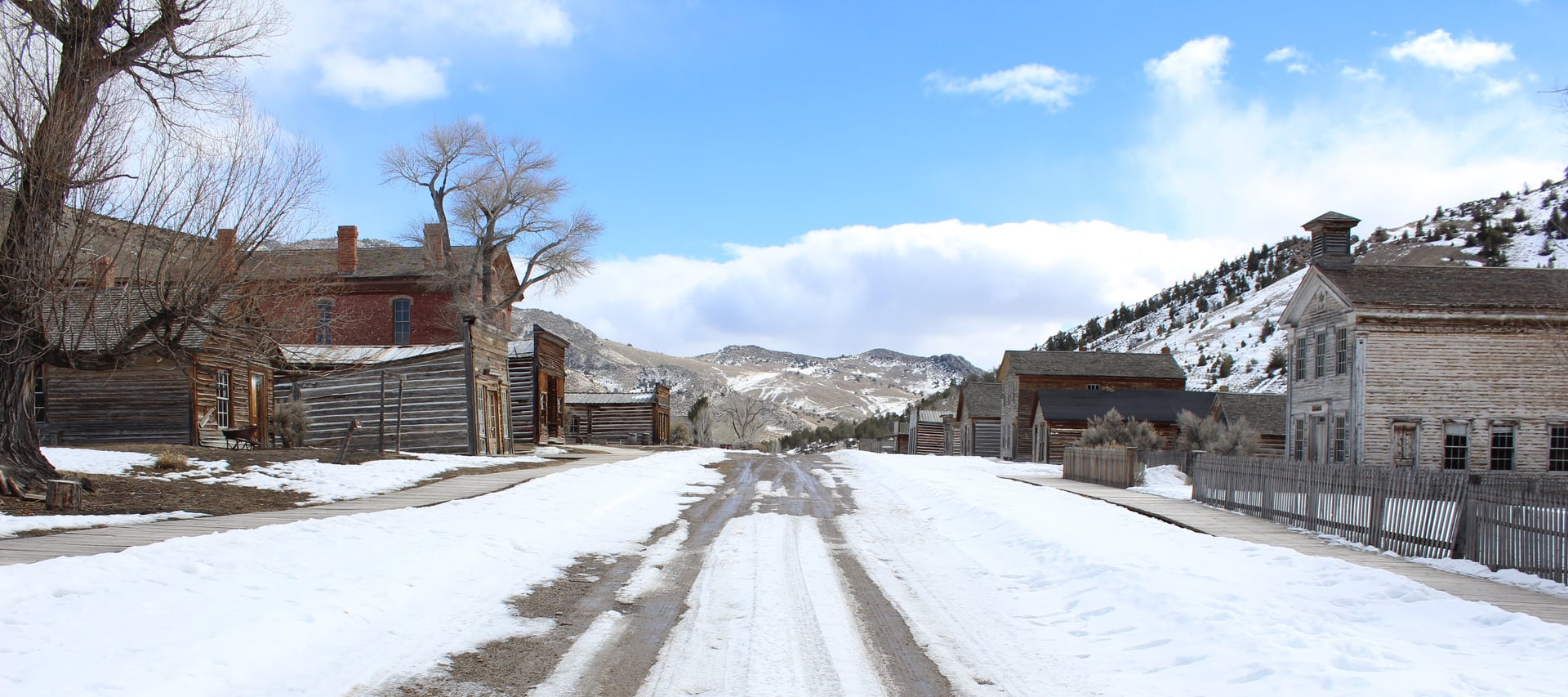
Gold was discovered near South Pass in the summer of 1867, and word of the strike at the Carissa Mine pulled prospectors into Wyoming's Wind River Mountains fast enough that the town held more than 250 buildings and roughly 1,000 people within a year, with the wider mining district eventually reaching an estimated 3,000 residents. The main street filled in with hotels, restaurants, stores, a newspaper, doctors, and saloons, and the town briefly served as county seat, first for Dakota Territory's Carter County and then for Wyoming Territory's Sweetwater County.
South Pass City's most lasting mark on the country came from its politics rather than its ore. In December 1869, local saloon and mine owner William Bright, serving in Wyoming's first territorial legislature, introduced the bill granting women the right to vote, the first such law to pass anywhere in the nation. Two months later, in February 1870, South Pass City resident Esther Hobart Morris was appointed Justice of the Peace, becoming the first woman in the United States to hold public office; she heard 27 cases in an eight-month term.
The boom did not last. Rising mining costs and thinning ore drove the population down to a few hundred by 1872, though a smaller community held on through ranching and timber work into the late 1940s. The State of Wyoming purchased the townsite in 1966, and a combined state and private restoration effort has preserved 23 original structures and about 30,000 artifacts, nearly all original to the settlement, making South Pass City one of the most intact gold-rush towns in the West.
Sources
- https://www.legendsofamerica.com/wy-southpasscity/
- https://wyoparks.wyo.gov/index.php/places-to-go/south-pass-city
A shadowy figure near the Carissa Mine, locally called Black-Eyed JoeSounds of weeping in the Smith-Sherlock Co. storeFootsteps on wooden floors inside locked buildingsDisembodied laughter near the old schoolhouseCold spots and the sensation of being watched
As with most restored ghost towns, South Pass City has accumulated visitor folklore that regional sources report but no one has documented as historical fact. The best-known figure, known locally only as Black-Eyed Joe, is said to be a miner who died buried in a cave-in; visitors report a shadowy shape near the Carissa Mine's old workings. A second story centers on the Smith-Sherlock Co. store, where some visitors report the sound of a woman weeping, with local tradition holding she was left behind by a family that vanished in a blizzard.
Other reports collected across regional ghost-lore sources describe footsteps and boots on wooden floors inside locked buildings, cold spots on warm days, flickering lights in structures with no power, and disembodied laughter near the town's old schoolhouse, understood locally as the sound of children. None of these accounts is tied to a documented name, date, or death record, and they should be read as the kind of folklore that accumulates around any well-preserved 19th-century townsite rather than as verified history.
Notable Entities
Black-Eyed Joe (local ghost-town legend name)
Where this legend is told