Overnight Stay Booking Required
Stay in the historic resort
Book a room in the AAA Five-Diamond American Club. The oldest East Wing rooms carry the resort's strongest ghost reputation, including the famous Room 209.
- Duration:
- 12 hr
HauntBound archive · catalog record
Reported phenomena, as catalogued
A AAA Five-Diamond Tudor-style luxury resort in Kohler, Wisconsin, built in 1918 as immigrant-worker housing and listed on the National Register, where guests and staff report a 'lady in the blue hat' near Room 209 and a cigar-smoking figure in the historic East Wing.
419 Highland Drive, Kohler, WI 53044
Research updated September 2026
Age
All Ages
Cost
$$$$
An upscale luxury resort; overnight stays and dining are premium-priced. Day visitors can dine, shop, and tour the public spaces.
Access
Wheelchair OK
Fully developed luxury hotel with accessible public areas, restaurants, and grounds.
Equipment
Photos OK
Est. 1918 · Built in 1918 as immigrant-worker housing for the Kohler Company · Listed on the National Register of Historic Places in 1978 · AAA Five-Diamond resort and member of Historic Hotels of America
The American Club was constructed in 1918 as part of Walter J. Kohler's vision for his company town in Kohler, Wisconsin. The son of an Austrian émigré, Kohler built the Tudor-style building to house the immigrant laborers who worked at the Kohler Company plumbing-ware plant. For about $27.50 a month, residents received a private room, three meals a day, and laundry service, and the building also offered a pub, bowling alley, barbershop, and lessons in English and American citizenship. By 1930 the company estimated it had helped nearly 700 immigrants pass their citizenship tests.
As those workers became citizens and bought homes of their own in the planned village of Kohler, the dormitory's original purpose faded and the building gradually fell into disrepair. The American Club was placed on the National Register of Historic Places in 1978.
Under Herbert V. Kohler Jr., the company undertook a major renovation, and in 1981 the building reopened as a luxury hotel. It has since become one of the Midwest's premier resorts — a AAA Five-Diamond property, a member of Historic Hotels of America, and the centerpiece of Destination Kohler, with championship golf courses, the Kohler Waters Spa, multiple restaurants, and shops.
The oldest part of the building, the East Wing, dates from the 1918 construction and is the section most often associated with the resort's ghost stories. The resort celebrated its centennial in 2018.
Sources
The American Club's haunted reputation centers on its original 1918 East Wing, the oldest part of the building. The most frequently told story is that of the 'lady in the blue hat,' a spirit seen near Room 209 — sometimes called the Washington Room — standing forlornly by the fireplace. According to the legend, she took her own life out of grief after learning that her fiancé had been killed in an industrial accident at the Kohler plant. Staff and guests describe disappearing figures and odd occurrences around Room 209 and in the upper-floor hallways, along with frigid pockets of air and faint, hushed conversations in several languages — an echo, some say, of the building's immigrant-dormitory past.
Another often-repeated account describes a man in a dirty, torn flannel shirt and faded corduroy trousers, standing against a wall with a cigar, staring blankly. In the version that first circulated this site online, a staff member greeted the man, passed him, and turned to find him gone; security review of the hallway camera reportedly showed the witness waving and speaking to no one. A similar figure is associated with the third floor near Room 315, where a man is said to walk the hall as lights flicker on by themselves.
These stories are folklore. The named people in them are anonymous figures of legend rather than documented individuals, and the resort itself has not officially claimed to be haunted. They are best understood as the romantic ghost tradition that has grown up around a beautifully preserved historic hotel with a rich immigrant-labor history.
Notable Entities
Book a room in the AAA Five-Diamond American Club. The oldest East Wing rooms carry the resort's strongest ghost reputation, including the famous Room 209.
Visit the resort's restaurants and public spaces without staying overnight, and take in the Tudor-style historic interiors where the hauntings are reported.
Some links on this page may earn HauntBound a small commission when you book, at no extra cost to you. Our editorial picks are independent. Full disclosure
See current room rates and availability at The American Club.
Check rates and bookRates come from booking partners, so a small property may not be listed. Book direct with The American Club
Every HauntBound history is researched from documented sources. We clearly separate verified historical fact from paranormal folklore.
Free Guide
11 verified stops, rated for families, mapped in order. Free.
One email to confirm, then the guide link. Unsubscribe anytime.
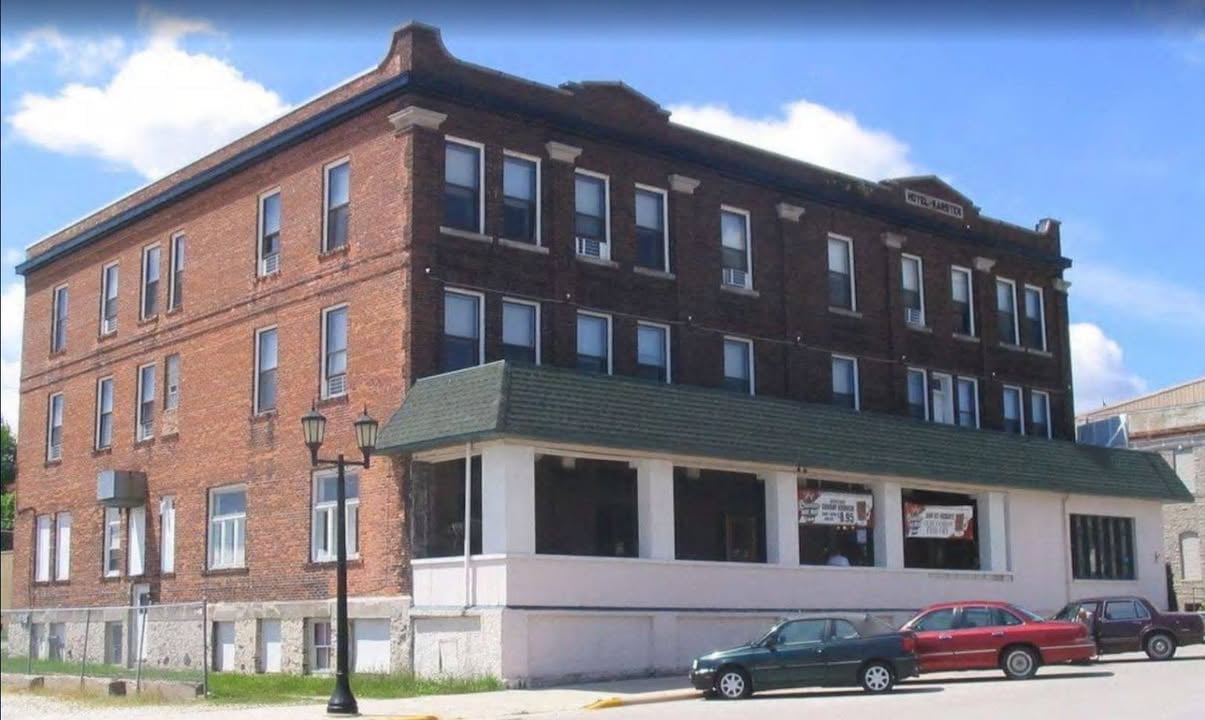
Kewaunee, WI
The Hotel Karsten opened on Valentine's Day 1913 in Kewaunee, Wisconsin, replacing an earlier wood inn called The Steamboat House that burned in the early 1910s. Built and operated by William Karsten Sr., the 52-room Arts and Crafts hotel sits on the Lake Michigan shoreline and remains one of the few surviving hotels of its period in the region.
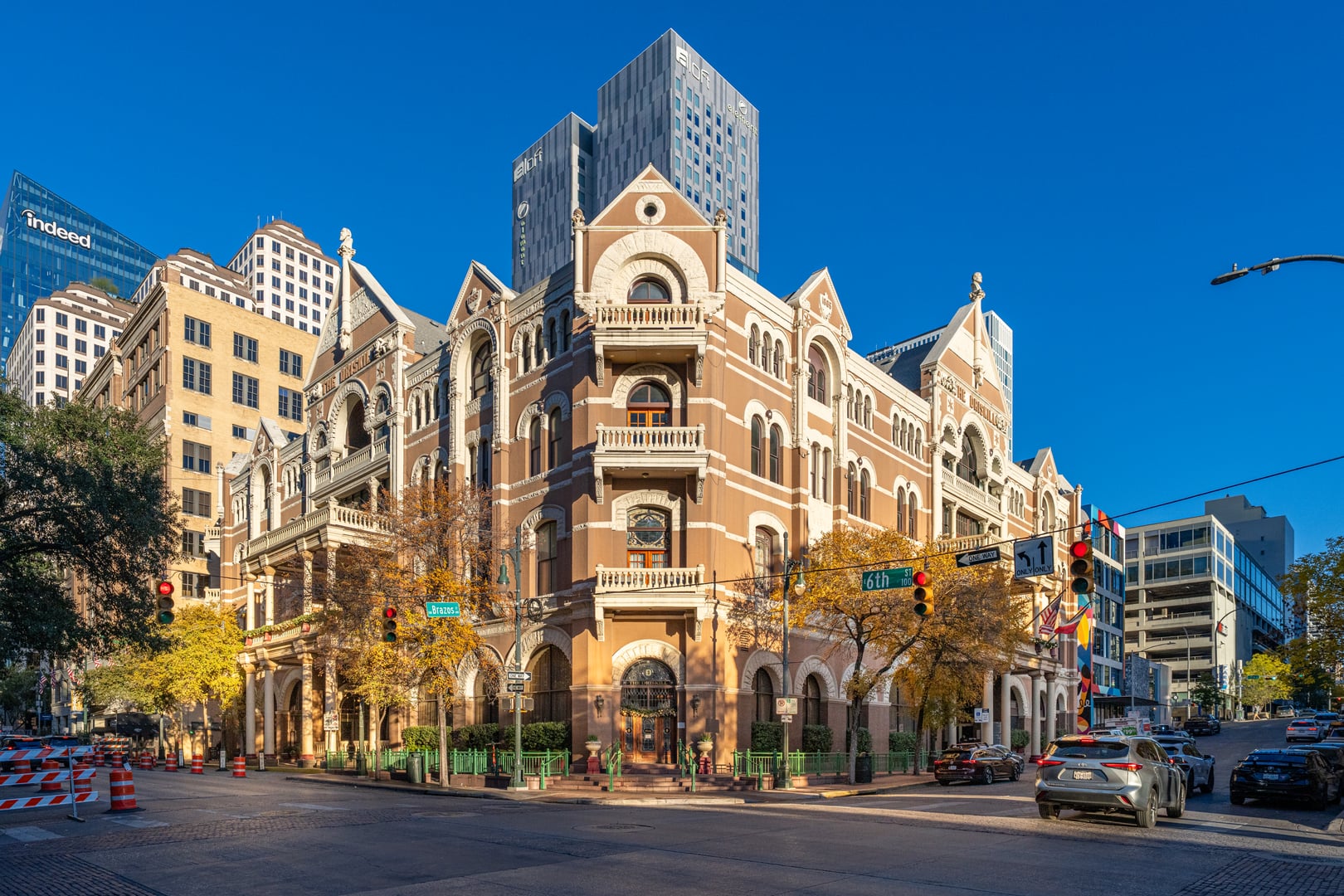
Austin, TX
Colonel Jesse Lincoln Driskill, a Tennessee-born cattle baron who supplied beef to the Confederate Army and later the Texas Rangers, opened The Driskill Hotel on December 20, 1886. Its first event, two weeks after opening, was the inaugural ball for Texas Governor Sul Ross. Driskill sold the hotel in 1888 after severe drought devastated his cattle herds and died in 1890. The hotel has hosted every Texas governor's inaugural ball since 1887.
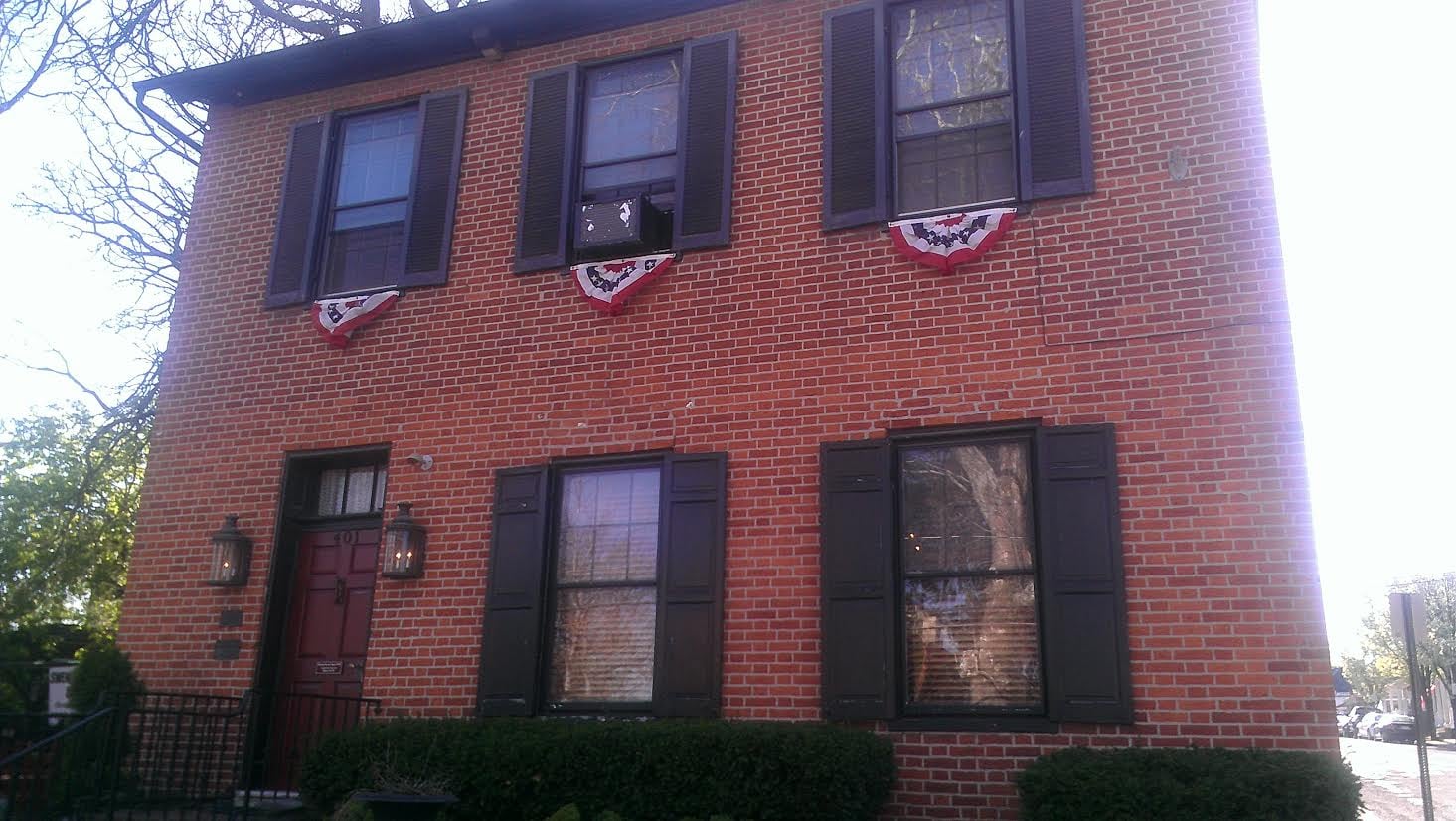
Gettysburg, PA
Built around 1810 by tanner John F. McFarlane and expanded with an 1833 brick addition, the Farnsworth House sits on Baltimore Street in Gettysburg. During the 1863 battle, Confederate sharpshooters occupied the structure, and the south-facing wall still carries more than 100 bullet holes from Union counter-fire.