Drive-By
Walk the Marquette campus exterior
Self-guided walk past the Gothic Johnston Hall and the Helfaer Theatre, viewing the buildings from public sidewalks. Active academic buildings — no interior tour offered.
- Duration:
- 30 min
HauntBound archive · catalog record
Reported phenomena, as catalogued
+ 2 further entries on record
Jesuit university where Johnston Hall (1907) is said to be haunted by a former Jesuit resident, and the Helfaer Theatre is reportedly haunted by a former artistic director who bangs on the catwalks.
1131 W Wisconsin Ave, Milwaukee, WI 53233
Research updated May 2026
Age
All Ages
Cost
Free
Marquette is a private campus; exteriors are publicly walkable. Interior access varies by building, ID requirement, and event.
Access
Wheelchair OK
Urban campus; ADA-compliant building entrances; sidewalks and quads.
Equipment
Photos OK
Est. 1907 · One of Marquette University's oldest extant academic buildings (Johnston Hall, 1907) · Former principal Jesuit residence on campus · Active home of Marquette's College of Communication and student-media operation · Helfaer Theatre is the academic home of Marquette Theatre Arts
Marquette University was founded in 1881 by the Society of Jesus and is one of the oldest Jesuit institutions in the upper Midwest. The campus occupies a corridor along Wisconsin Avenue on Milwaukee's near west side and is one of the city's largest urban universities.
Johnston Hall opened in 1907 and stood for years as the principal academic building on campus, housing both classrooms and the Jesuit community's residence quarters on its upper floors. The building's Gothic design — pointed arches, stone facade, tall narrow windows — has remained a visual anchor of the campus. In the modern era Johnston Hall houses the Diederich College of Communication and the Marquette Wire student-media operation; the building is no longer used as a Jesuit residence.
The Helfaer Theatre is the home of Marquette's Theatre Arts program. The building hosts the academic season of student and faculty theatrical productions, and its catwalks and Studio 13 are referenced in campus folklore about the theater's haunting.
Marquette has been profiled by Milwaukee Magazine, the Marquette Wire student newspaper, and HauntedPlaces.org as one of Milwaukee's most haunted campuses.
Sources
The Johnston Hall lore centers on the building's former life as a Jesuit residence. According to the Marquette Wire student newspaper, campus rumor holds that a Jesuit who once lived in the building still haunts Johnston Hall. No name or date for the story is documented.
Since then, students working late in the Marquette Wire newsroom and staff in the upper-floor offices have reported disembodied footsteps echoing in empty hallways at night, doors that open and close on their own, and the impression of someone passing around a fifth-floor corner who is no longer there when the witness looks back. Milwaukee Magazine notes a 1990s campus ghost investigation that recorded cold spots, strange noises, and a shadowy figure in Johnston Hall.
The Helfaer Theatre's lore concerns a former artistic director who, per HauntedPlaces.org and Milwaukee Magazine, is said to haunt the theater. Staff and student crews report unexplained banging on the catwalks above the stage and, occasionally, an apparition of the director in the studio. Milwaukee Magazine frames the activity as 'rumored' and treats the artistic director as anonymous in published coverage.
Notable Entities
Where this legend is told
Self-guided walk past the Gothic Johnston Hall and the Helfaer Theatre, viewing the buildings from public sidewalks. Active academic buildings — no interior tour offered.
Attending a ticketed Marquette Theatre production at Helfaer Theatre is the standard way to access the building interior associated with the artistic-director apparition.
Some links on this page may earn HauntBound a small commission when you book, at no extra cost to you. Our editorial picks are independent. Full disclosure
Every HauntBound history is researched from documented sources. We clearly separate verified historical fact from paranormal folklore.
Free Guide
11 verified stops, rated for families, mapped in order. Free.
One email to confirm, then the guide link. Unsubscribe anytime.
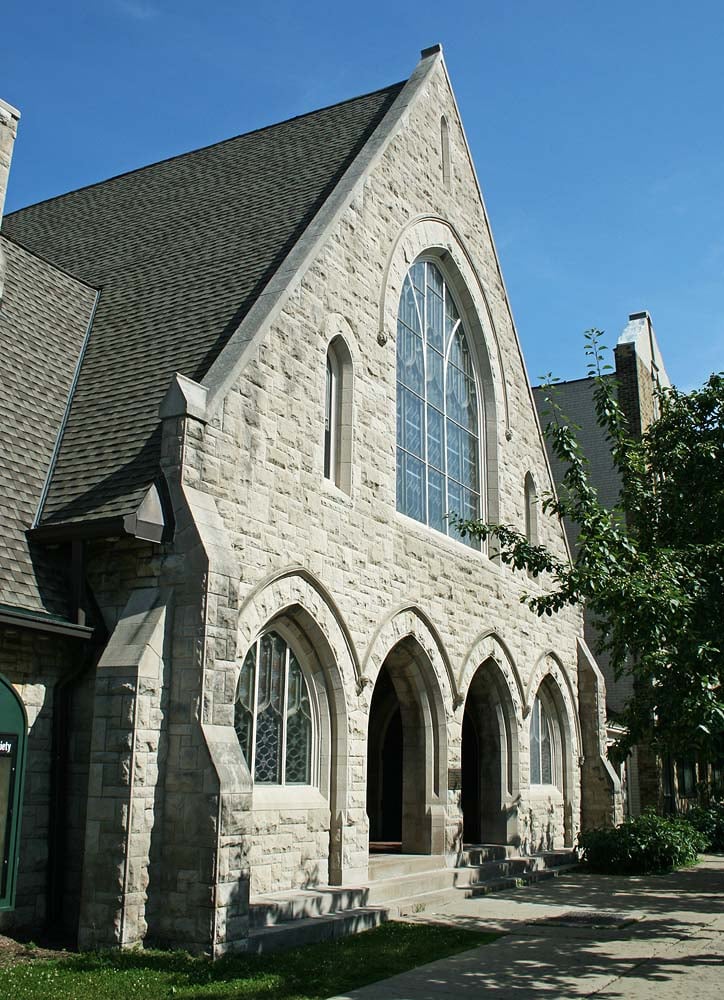
Milwaukee, WI
The First Unitarian Church of Milwaukee is a Gothic Revival stone church built 1891-1892 at 1342 N. Astor Street for a Unitarian congregation founded in 1842. Designed by the Milwaukee architectural firm Ferry & Clas and dedicated on May 15, 1892, the building was added to the National Register of Historic Places in 1974.
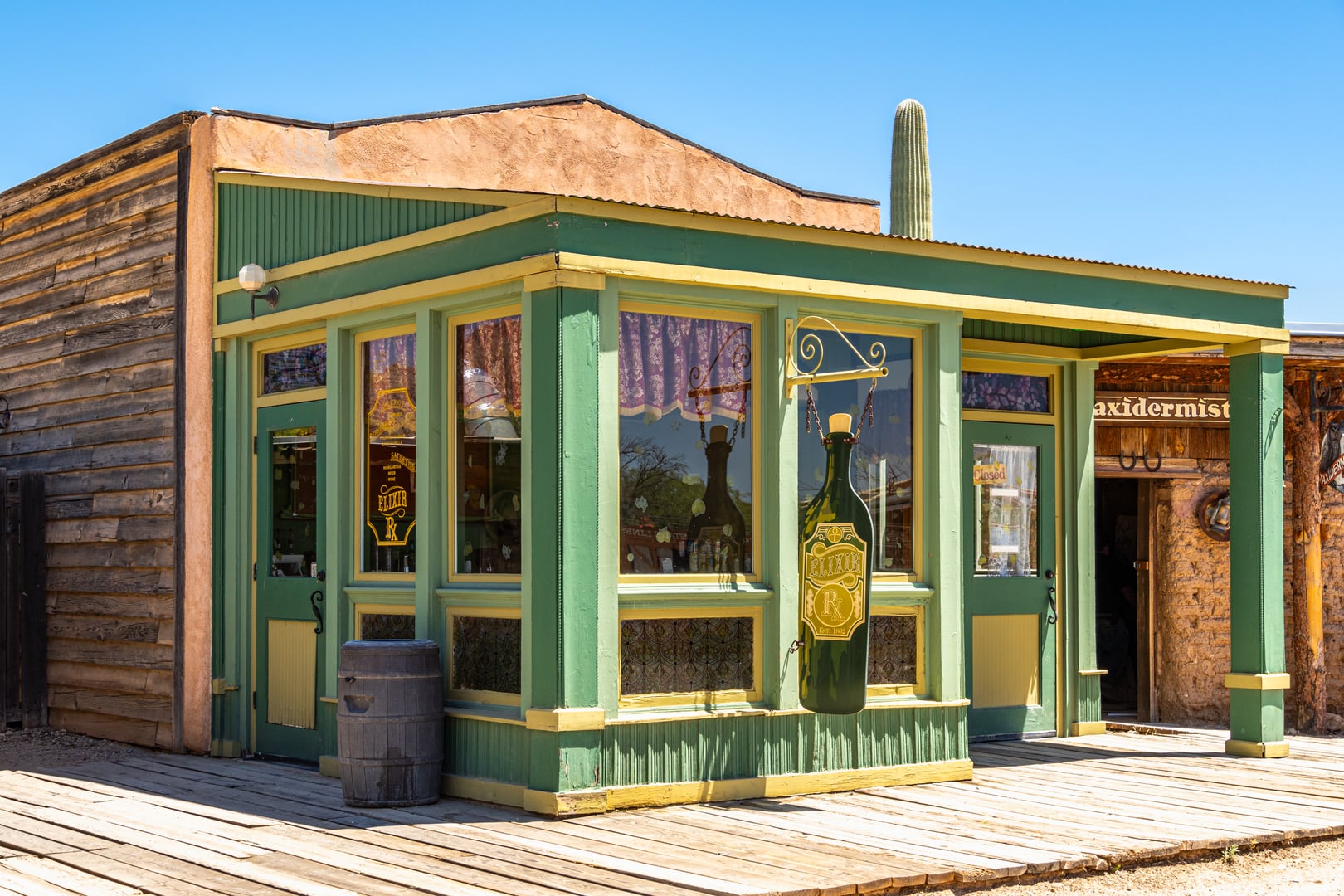
Tucson, AZ
Old Tucson was constructed in 40 days in 1939 by Columbia Pictures for the film Arizona, then opened to the public as a tourist attraction in 1960. It has been used in over 300 film and television productions. On April 24, 1995, an arson fire destroyed nearly 40 percent of the studio, causing $10 million in damage; the park reopened after nearly two years of reconstruction.
 Aerial survey · USDA NAIP
Fort Myers, FL
Walter G. Langford, president of the First National Bank of Fort Myers, commissioned this bank building at the corner of First and Hendry Streets. Construction began around 1913 and the neoclassical building, with Ionic columns and a marble banking hall, was completed in 1914. It anchored the downtown commercial district through the Florida land boom and now houses professional offices in the Fort Myers River District.