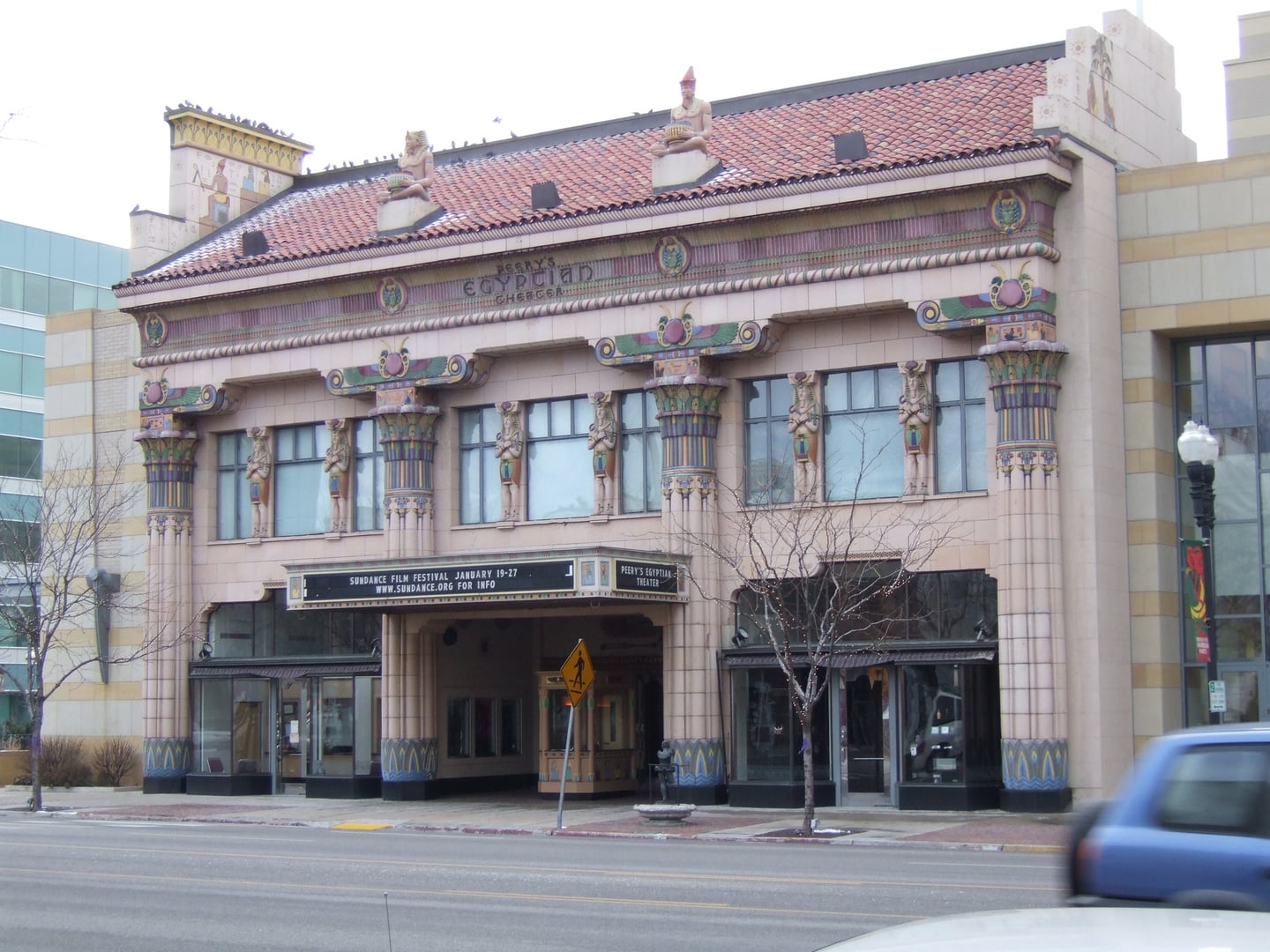
Est. 1926 · 1926 Egyptian Revival theater on Park City's Main Street · Built on the site of the Dewey Theatre (1899-1916) · Sundance Film Festival venue
Main Street in Park City has carried a performance hall on or near this block since the 1890s. The Park City Opera House burned in 1898; the Dewey Theatre that replaced it operated from 1899 until its roof gave way under heavy snow in January 1916. The Egyptian Theatre that stands at 328 Main Street today opened on December 25, 1926, with its first production on Christmas Day.
The design reflected a national fashion. After the 1922 discovery of Tutankhamun's tomb, Egyptian Revival became a common motif for American movie palaces, and the Park City theater was built with lotus-leaf detailing, scarabs, hieroglyphics, and other decorative elements drawn from that style. It anchored entertainment on Main Street through the silent-film and early-sound eras.
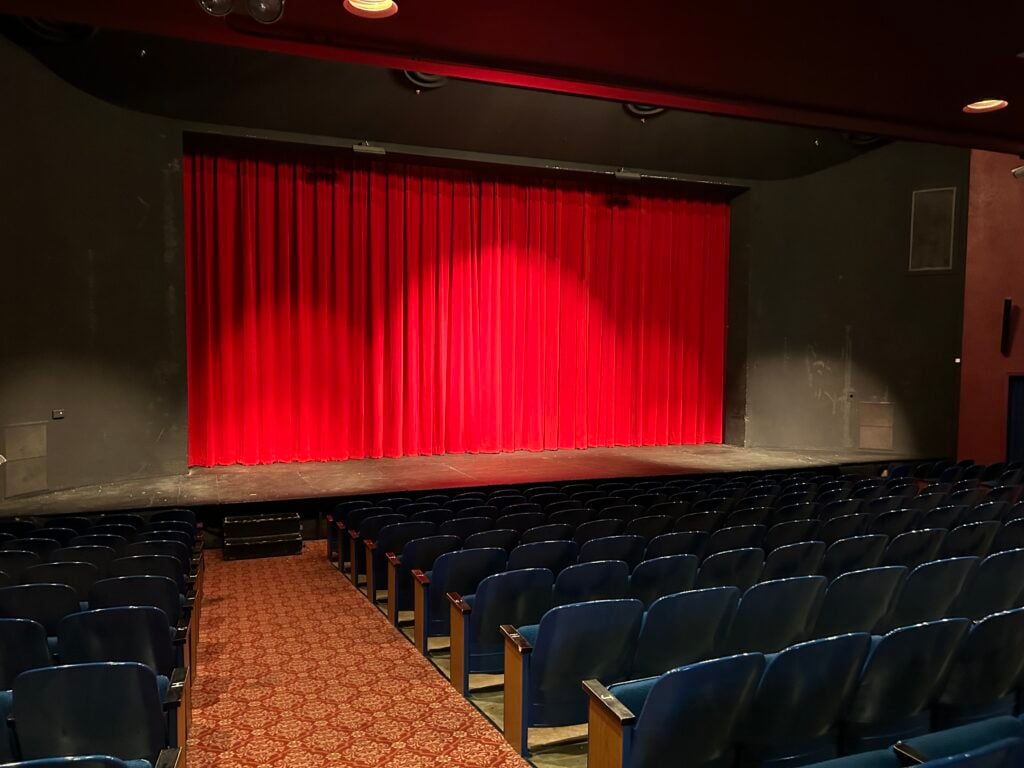
In the early 1990s a preservation group formed to save the building, and it was renamed the Mary G. Steiner Egyptian Theatre. The property is held by a preservation foundation and operated by Park City Performances, which programs concerts, theater, comedy, and community events. The theater is also a Sundance Film Festival venue each winter. Today it runs an active, ticketed calendar of shows, with the restored 1926 interior visible to anyone attending a performance.
Sources
- https://en.wikipedia.org/wiki/Egyptian_Theatre,_Park_City
- https://parkcityshows.com/about/history
- https://nowplayingutah.com/venue/egyptian-theatre-park-city/
- https://www.hauntworld.com/real-haunted-house-in-park-city-utah-egyptian-theater-in-park-city-utah
Footsteps on the empty stageDoors opening on their ownScreams heard inside the theaterSense of a presence backstage
The ghost story attached to the Egyptian Theatre predates the current building. As the local telling goes, Johnnie McLaughlin was a stagehand and would-be actor connected to the Dewey Theatre that stood on this Main Street site around the turn of the century. Accounts hold that McLaughlin, in his early twenties, died during the 1902 mining accident that struck the Park City district. When unexplained activity was reported soon after the Egyptian opened in 1926, storytellers linked it to McLaughlin, suggesting the presence had stayed with the site rather than the structure.
The reported phenomena are the kind common to old theaters: footsteps crossing the wooden stage when it is empty, doors that swing open on their own, and the sound of screams inside the building. Park City ghost-tour operators add two named figures to the lore, the Man in the Yellow Slicker and a presence called Edwina, presented on Main Street walking routes.
The McLaughlin connection rests on local folklore and tour narration rather than documented record, and the specific identities of the named entities are not independently verified. They are recounted here as the stories told about the building, not as established fact.
Notable Entities
Johnnie McLaughlin (identity per local folklore)Man in the Yellow Slicker (tour lore)Edwina (tour lore)