Est. 1854 · National Register of Historic Places (1972) · Pioneer Agricultural History · LDS Church Economic History · Tooele Valley Settlement
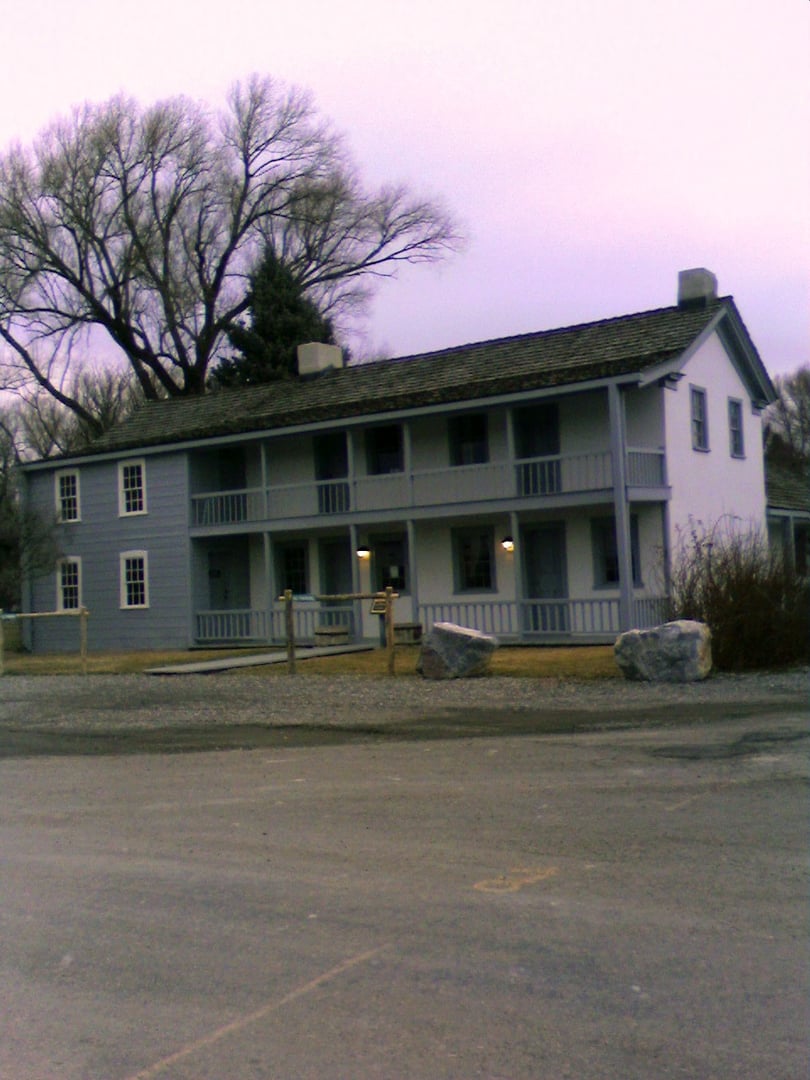
Ezra Taft Benson, an apostle in the Church of Jesus Christ of Latter-day Saints, arrived in Tooele Valley in 1851 with a directive to help anchor the region for Mormon settlement. The grist mill was part of that mission: a reliable local milling operation would reduce settlers' dependence on flour brought in from the east. The Lee brothers completed the mill in 1854 on a millrace fed by a reservoir carved into the Oquirrh foothills. Settlers in the valley quickly learned the mill's reputation for reliability — local lore held that grain was "as safe as flour in the lower mill."
Brigham Young purchased the property for the LDS Church in 1860, integrating the mill into the broader tithing and cooperative economy the church ran throughout Utah Territory. The mill ground wheat and corn for the surrounding communities through the late nineteenth century and into the early twentieth. By 1938 it had stopped regular operation, and for the next four decades the structure sat largely abandoned.
In 1983, Stansbury Park resident John "Jack" Smith organized a restoration committee that eventually secured the deed to the property for Tooele County. Volunteers completed most of the restoration work by 1987–1988. The mill reopened as a museum on June 11, 1988, and has attracted roughly ten to twelve thousand visitors annually since. The National Register of Historic Places listing (Reference No. 72001260) came in 1972, recognizing the mill's significance as one of the earliest surviving examples of pioneer industrial infrastructure in Utah.
Sources
- https://en.wikipedia.org/wiki/Benson_Grist_Mill
- https://tooelecountyparksandrec.org/benson-grist-mill/
- https://www.intermountainhistories.org/items/show/773
- https://www.hauntedrooms.com/utah/ghost-hunts/benson-grist-mill
Shadow figuresDisembodied voicesPoltergeist activityPhotographic anomaliesRed anomalous mass on camera
The central figure in the mill's haunting tradition is a girl identified only as Alice — later accounts give her surname as Solomon and describe her as six years old at the time she drowned in the reservoir behind the mill. The Wikipedia article and official Tooele County documentation do not record this drowning, and the specific date is not established in historical sources; the Alice legend circulates primarily through paranormal tourism literature.
The second reported presence is a former millworker described as continuing his labor into the afterlife, turning machinery and moving through the mill's interior during after-hours investigations. Investigators report shadow figures, poltergeist-style activity — objects shifting without apparent cause — and disembodied voices audible in audio recordings made on the premises. A third entity appears mainly in photographic form: a red anomalous mass captured on camera during multiple investigations.
Haunted Rooms America, one of the operators running ticketed events at the mill, describes the paranormal activity as "frequent and intense" based on their investigation records. Advanced Paranormal Service has organized multiple sold-out events at the site through 2025 and 2026. The Fabled Collective published a detailed account of an investigation that corroborates the shadow figures and voice phenomena across independent visits.
Notable Entities
Alice (girl reportedly drowned in reservoir)Unnamed millworker
Where this legend is told