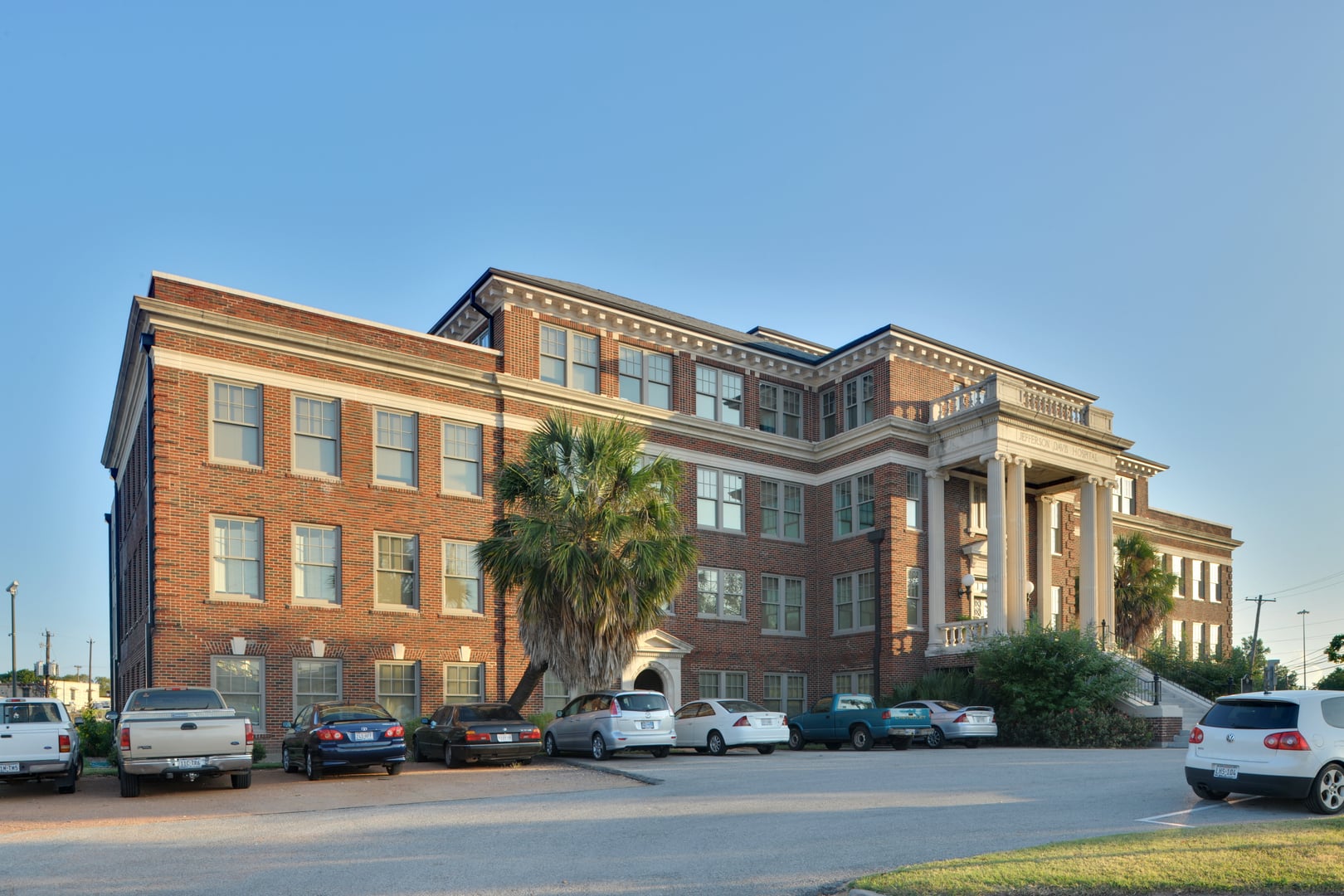
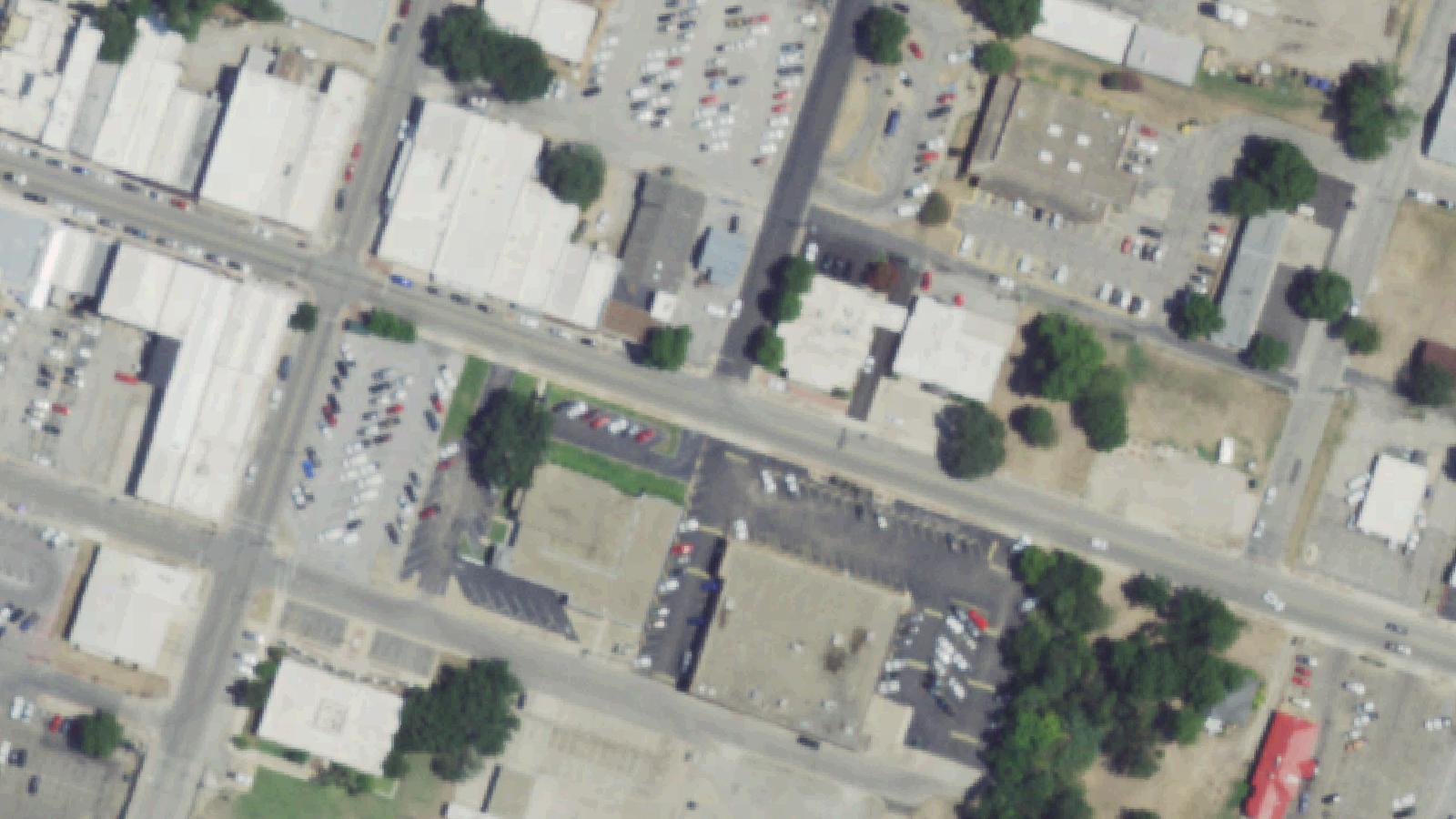
Est. 1913 · Site of the former Capitol of the Republic of Texas (1837-1839, 1842-1845) · Hosted six U.S. presidents including John F. Kennedy on the evening of November 21, 1963 (LULAC dinner and meetings; Kennedy slept that night at the Hotel Texas in Fort Worth) · Designed by Mauran, Russell & Crowell; third wing by Alfred C. Finn · First air-conditioned public room in Houston (Rice Hotel Cafeteria, 1922) · 1998 adaptive-reuse conversion to loft apartments
The block at 909 Texas Avenue is one of Houston's most historically layered pieces of real estate. Augustus and John Kirby Allen originally set the site aside for the Republic of Texas, and the republic's capitol building stood here from 1837 to 1839 and again from 1842 to 1845. The first Rice Hotel — a five-story brick structure named for William Marsh Rice — was built on the capitol site in 1881–1883.
The current building is the third Rice Hotel. Jesse H. Jones, the most influential developer and banker in early-twentieth-century Houston, opened the new seventeen-story Rice on May 17, 1913. Designed by St. Louis firm Mauran, Russell & Crowell and constructed with a skeletal steel frame, it was billed as a $2.5 million 'modern fireproof' hotel. In 1925 Jones engaged his favorite architect, Alfred C. Finn, to add a third wing, taking the building from U-shaped to E-shaped and increasing room capacity from 535 to roughly 1,000. The Rice Hotel Cafeteria, opened in 1922, was the first air-conditioned public room in Houston.
The Rice hosted six U.S. presidents. Its most-cited moment came on November 21, 1963, when President John F. Kennedy used a suite at the Rice for meetings and attended a League of United Latin American Citizens banquet in the hotel ballroom — approximately 3.5 hours in total — before departing to the Houston Coliseum for a tribute dinner for Congressman Albert Thomas, then flying to Fort Worth. Kennedy spent his actual last night at the Hotel Texas in Fort Worth, not the Rice. The Crystal Ballroom and rooftop served as social anchors for downtown Houston for decades.
The Rice closed in 1977 and stood largely vacant for two decades. In 1998, Randall Davis led a $32 million conversion of the upper floors into 312 loft apartments, with the historic Crystal Ballroom preserved as an event space. The building now operates as a private residential community marketed simply as 'The Rice' and remains a Houston downtown landmark.
Sources
- https://en.wikipedia.org/wiki/The_Rice_(Houston)
- https://livetherice.com/history/
- https://www.heritagesociety.org/rice-hotel
- https://www.houstontx.gov/planning/HistoricPres/landmarks/97L016_917_Texas_Rice_Hotel.pdf
- https://www.houstonpublicmedia.org/articles/news/2013/11/21/47796/jfks-final-visit-to-houston-came-50-years-ago-today/
- https://www.click2houston.com/news/local/2023/11/20/60-years-later-what-jfk-did-in-houston-on-last-full-day-of-his-life/
Rattling doors and bed frames in the former JFK suiteCold spots and felt presenceApparitions of couples in period dress in the Crystal Ballroom and rooftopPacing footsteps and crying attributed to Room 904Unexplained orbs of light
The Rice's reputation among Houston ghost-tour operators rests on three principal strands of lore, all of which are documented in published paranormal accounts but should be understood as folklore rather than verified incidents.
First, the JFK suite. According to Ghost City Tours and Ghost Texas, guests staying in the former Kennedy suite have reported rattling doors and bed frames, sudden cold spots, unexplained orbs of light, and the sense of an unseen presence. The connection between Kennedy's documented overnight stay on November 21, 1963 and these reports is the narrative anchor for downtown ghost-walk operators.
Second, the Crystal Ballroom and rooftop. The Crystal Ballroom served as Houston's grand social space for decades, and ghost-tour narration describes residents and event attendees seeing ghostly couples in period evening attire dancing across the ballroom floor or on the rooftop terraces, then disappearing. Ghost Texas and Ghost City Tours both repeat these accounts.
Third, Room 904. A persistent local legend — circulated by Ghost Texas and several Houston ghost-tour operators — claims a woman died in Room 904 and is heard pacing the corridor and crying at night. Independent corroboration of the underlying death is not available in mainstream historical sources, so this strand should be treated as single-source folklore.
Notable Entities
Woman said to have died in Room 904Ghostly ballroom dancers