Self-Guided Visit
Event Visit
Attend one of the arena's concerts, rodeos, or sporting events. The coliseum's concrete bowl and service corridors are where paranormal reports concentrate, according to ghost-tour accounts.
- Duration:
- 3 hr
HauntBound archive · catalog record
Reported phenomena, as catalogued
San Antonio's 1949 arena, named for philanthropist brothers Harry and Joe Freeman, where ghost-tour operators document reports of apparitions and unexplained tunnel legends beneath the floor.
3201 E Houston St, San Antonio, TX 78219
Research updated August 2026
Age
All Ages
Cost
$
Event-based admission; varies by event. Exterior accessible for free.
Access
Wheelchair OK
Large indoor arena with paved parking lots and accessible seating areas.
Equipment
Photos OK
Est. 1949 · Largest indoor arena in San Antonio, 1949–1968 · Named for philanthropist brothers Harry and Joe Freeman (1958) · San Antonio Stock Show and Rodeo home, 1950–2002
The coliseum at 3201 East Houston Street broke ground on November 17, 1947, and opened October 19, 1949, as the city's largest indoor arena—a distinction it held until HemisFair Arena opened in 1968. Construction cost $1.75 million and was designed by San Antonio architects Bartlett Cocke and the firm of Phelps, Dewees & Simmons, with additional work by Atlee B. and Robert M. Ayres.
The venue was originally referred to by its address before being renamed in 1958 to honor local philanthropist brothers Harry and Joe Freeman. For half a century, the coliseum anchored the annual San Antonio Stock Show and Rodeo, hosting the event from 1950 through 2002 before it relocated to the adjacent Frost Bank Center. It has also served as home ice for professional hockey teams, hosted the 1994 WWE Survivor Series, and provided temporary WNBA space for the San Antonio Stars in 2015.
The coliseum's capacity ranges from approximately 9,500 for rodeo and motor sports events to 11,700 for concerts and boxing. It remains an active venue under the same footprint it occupied at opening in 1949, with the surrounding complex now shared with the AT&T Center and Frost Bank Center.
Ghost-tour operators in San Antonio have associated the area with legends about a tunnel network beneath the building and with the broader claim—not confirmed by Wikipedia or local newspaper archives—that Teddy Roosevelt's Rough Riders trained on land in this vicinity before departing for Cuba in 1898.
Sources
River City Ghosts, a San Antonio ghost-tour operator, documents visitor and staff accounts of apparitions inside Freeman Coliseum described as figures in period clothing, which tour lore connects to the Rough Riders association promoted in some local history circles—though that connection is not confirmed in Freeman Coliseum's Wikipedia article or in newspaper archives reviewed for this build.
A separate strand of reported activity involves the coliseum's history as a circus venue. Tour accounts describe unexplained sounds associated with clown laughter and attribute them to the death of a circus performer at the building, though the specific incident, performer identity, and date are not sourced in primary materials reviewed here.
A third element is the legend of a sealed tunnel network beneath the arena floor. Ghost-tour operators describe these as passageways from earlier structures or wartime use, though the coliseum's Wikipedia entry contains no reference to subterranean infrastructure beyond standard arena mechanical access.
All three threads remain in the category of local haunting lore rather than documented incident, and none of the specific claims has been corroborated in local newspaper archives or city records during this build.
Notable Entities
Where this legend is told
Attend one of the arena's concerts, rodeos, or sporting events. The coliseum's concrete bowl and service corridors are where paranormal reports concentrate, according to ghost-tour accounts.
Some links on this page may earn HauntBound a small commission when you book, at no extra cost to you. Our editorial picks are independent. Full disclosure
Every HauntBound history is researched from documented sources. We clearly separate verified historical fact from paranormal folklore.
Free Guide
10 verified stops, rated for families, mapped in order. Free.
One email to confirm, then the guide link. Unsubscribe anytime.
 Aerial survey · USDA NAIP
Pensacola, FL
The Museum of Shadows is the creation of Nate Raterman, a demonologist and paranormal investigator with more than two decades of casework. Raterman opened the original location in Omaha, Nebraska, and the Pensacola branch opened in late 2024. The collection contains over 5,000 objects that Raterman and his team deemed genuinely active during investigations — ranging from allegedly cursed Ouija boards and haunted dolls to items used in criminal acts and human remains. The museum bills itself as the most haunted museum in the world.
Mason, OH
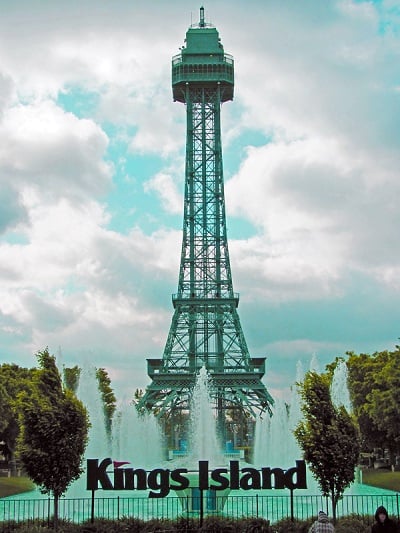
Kings Island opened in April 1972 after Paramount Parks relocated from flood-prone Coney Island on the Ohio River. Construction of the 364-acre site in Mason, Warren County, required working around a pre-existing pioneer burial ground — Dogstreet Cemetery, dating to at least 1803 — which remains at the north end of the parking lot to this day.
 Aerial survey · USDA NAIP
San Antonio, TX
The Forgotten Dollhouse Museum has operated since 2016 with a mission to rescue abandoned vintage and antique dolls. It is located in a building on West Hildebrand Avenue described by the museum as an old haunted house, which Telemundo named one of the most haunted locations in San Antonio. The museum is a non-profit and has been raising funds for building renovation and future operations.