Est. 1922 · National Register of Historic Places (Route 66–Sixth Street Historic District, 1994) · Texas Historical Landmark (1995) · Big Band era performance venue · Route 66 commercial history
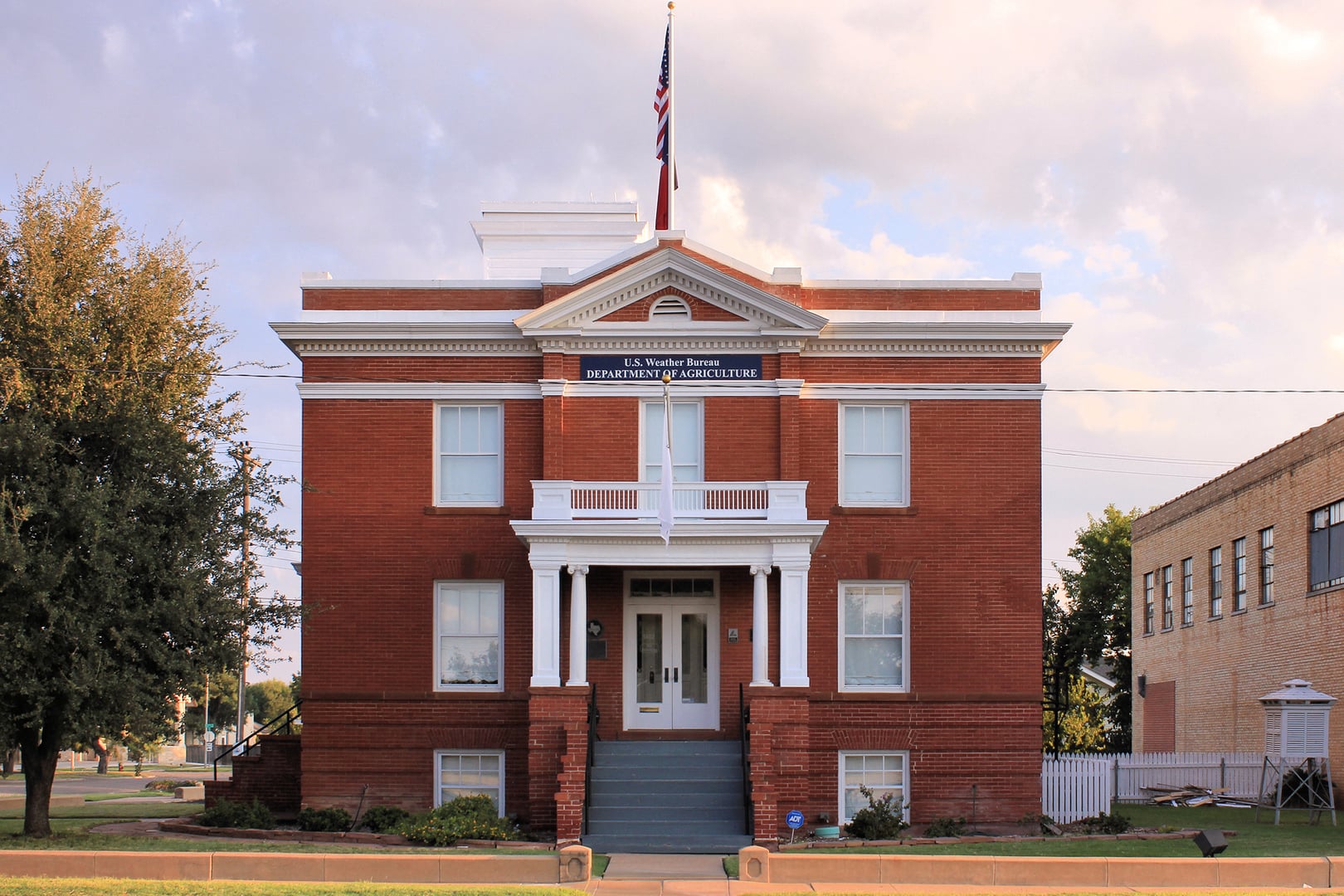
The Natatorium at 2705 W 6th Avenue opened on July 14, 1922. Designed by Guy Anton Carlander and built by engineer Arthur Ball and salesman Felix Walker, the 36-by-101-foot open-air pool was roofed in 1923 for year-round operation.
In 1926, J.D. Tucker recognized that dancing was drawing bigger crowds than swimming in Amarillo. He installed maple flooring over the pool and converted the building into a ballroom. A few years later, during the Depression, Harry Badger purchased it and added a café and a castle-like facade facing Sixth Street, renaming it The Nat Dine and Dance Palace. The transformation coincided with Sixth Street's emergence as a major Route 66 commercial corridor.
During the Big Band era The Nat hosted Tommy Dorsey, Louis Armstrong, Benny Goodman, Duke Ellington, Guy Lombardo, and the Dorsey Brothers. It later staged rock-era shows featuring Little Richard, Roy Orbison, and Buddy Holly and the Crickets — one of the last Texas venues to book Holly before his February 1959 death.
The Nat closed as a public dance hall in the 1960s. The building was designated a contributing property to the US Route 66–Sixth Street Historic District when the district was listed on the National Register of Historic Places in 1994; the Texas Historical Commission added a historical marker in 1996. By the 2020s the building was operating as a vendor marketplace.
Sources
- https://www.tshaonline.org/handbook/entries/amarillo-natatorium-the-nat
- https://en.wikipedia.org/wiki/Amarillo_Natatorium
- https://www.legendsofamerica.com/tx-amarillonat/
1996 audio capture of drum solo and woman singing with no sourceDancing couple apparition on ballroom floorWoman in white dress with red stain in gambling-hall roomsCamera malfunctions during investigationsPainted words bleeding through exterior despite repainting
Paranormal activity at The Nat centers on what is described as residual energy from the building's decades of dance-hall use.
In 1996 a team of paranormal investigators conducted an all-night investigation using cameras and audio recorders. Their cameras malfunctioned during portions of the session; the audio recorders captured a voice recording of a drum solo in the background and the sound of a woman singing — neither accounted for by any person present. The incident remains the most-cited piece of evidence in accounts of the building.
Visitors and staff have reported two recurring visual phenomena. A dancing couple appears on the ballroom floor — a man and woman in period dress moving together — and disappears when approached directly. A second apparition, a woman in a white dress with a red stain variously attributed to spilled wine, appears in rooms that formerly served as gambling areas at the back of the building. Some accounts describe her as looking directly at witnesses before vanishing.
A physical oddity contributes to the building's reputation: despite multiple repainting efforts since 1942, the words 'Monty McGee and His Orchestra' continue to bleed through the exterior paint on the building's facade. No fully satisfactory mechanical explanation has been published for the persistence of this lettering.
Notable Entities
Dancing coupleWoman in white dress (red stain)
Where this legend is told