Guided Tour Booking Required
Attend a ticketed performance
Attend a show at the restored 1914 Empire Theatre, adjacent to the Majestic Theatre. The downstairs restrooms are most frequently cited in paranormal reports.
- Duration:
- 2.5 hr
HauntBound archive · catalog record
Reported phenomena, as catalogued
+ 2 further entries on record
1914 vaudeville and silent-film theatre by Mauran, Russell & Crowe — the city's first modern theatre when it opened — where tour patrons report cold drops, whispers, shadows, and a beggar spirit asking for the 1930s ticket price of twenty-five cents.
226 N St Mary's St, San Antonio, TX 78205
Research updated June 2026
Age
All Ages
Cost
$$
Ticketed performances only; price varies by show. No standalone paranormal programming offered by the theatre.
Access
Wheelchair OK
Restored historic theatre with accessible main floor; balcony levels reached by stairs and elevator.
Equipment
No Photos
Est. 1914 · First modern theatre in San Antonio at its 1914 opening · Designed by Mauran, Russell & Crowe of St. Louis as a European-style opera house · Site of former Rische's Opera House · Damaged in the September 1921 San Antonio flood · Restored 1998 as the Charline McCombs Empire Theatre, paired with the Majestic
Thomas Brady, a San Antonio developer, commissioned the Empire Theatre on the downtown site formerly occupied by Rische's Opera House. The St. Louis firm of Mauran, Russell & Crowe designed the building as a European-style opera house, and it opened on December 14, 1914. At opening it was acclaimed as the first modern theatre in San Antonio and the largest in the city, primarily hosting vaudeville and silent-film bills.
The theatre was catastrophically damaged by the September 1921 San Antonio flood, when the San Antonio River overran much of downtown; the venue was repaired and continued in operation. It served as a movie palace through the mid-20th century before falling into disrepair.
The Empire Theatre was restored beginning in the late 1990s and reopened in 1998, renamed the Charline McCombs Empire Theatre after a major gift. It now operates jointly with the adjacent, larger Majestic Theatre as the Majestic & Empire Theatres complex, a Las Casas Foundation property.
Sources
Per Ghost City Tours' San Antonio coverage and the River City Ghosts walking tour, the Empire Theatre reports the typical pattern of historic-theatre phenomena: 'sudden drops in temperature, disembodied whispers, creepy unexplainable shadows and scratching sounds.' The downstairs restrooms are consistently cited across tour-operator sources as the most active location in the building.
A distinctive secondary strand of the lore concerns a male apparition reported outside the theatre on N St Mary's Street, near the entrance. The figure is described as approaching passersby and asking only for 'twenty-five cents — the price of a ticket in the 1930s' — before disappearing. The 1930s ticket-price detail is consistent across tour-operator retellings and ties the figure to the theatre's Depression-era vaudeville and movie-palace operations.
These reports are primarily tour-driven; primary news coverage of specific named paranormal incidents at the theatre is thin. The lore is included in San Antonio's standard haunted-downtown walking circuits alongside the adjacent, more elaborately documented Majestic Theatre.
Notable Entities
Media Appearances
Attend a show at the restored 1914 Empire Theatre, adjacent to the Majestic Theatre. The downstairs restrooms are most frequently cited in paranormal reports.
Some links on this page may earn HauntBound a small commission when you book, at no extra cost to you. Our editorial picks are independent. Full disclosure
This San Antonio tour includes Charline McCombs Empire Theatre on its route.
Every HauntBound history is researched from documented sources. We clearly separate verified historical fact from paranormal folklore.
Free Guide
10 verified stops, rated for families, mapped in order. Free.
One email to confirm, then the guide link. Unsubscribe anytime.
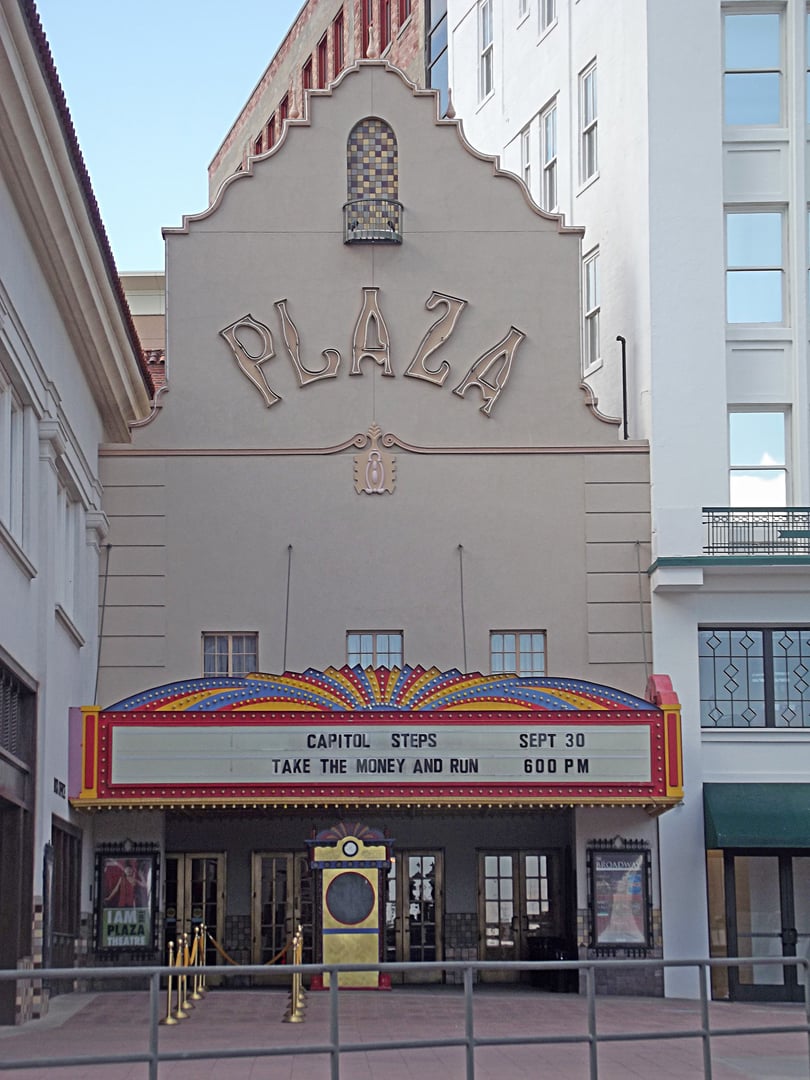
El Paso, TX
The Plaza Theatre opened September 12, 1930 on Pioneer Plaza in downtown El Paso. Developer Louis L. Dent commissioned the Spanish Colonial Revival movie palace in 1927, and the inaugural night drew a crowd of 2,410. Its lavish interior was designed to evoke 'the fabled beauty of Old Spain and the charm of Old Mexico.' After decades of decline, the theatre was extensively restored and reopened as a performing-arts venue, now home to the Plaza Classic Film Festival and a wide range of touring performances.
Cripple Creek, CO
The Butte Theater on Bennett Avenue is a historic Cripple Creek opera house rebuilt after the April 1896 fires that devastated the city. Associated with the Imperial Casino, it has operated as a performance venue for more than a century and is reportedly haunted by a ghost named Jack, linked to the nearby fire department.
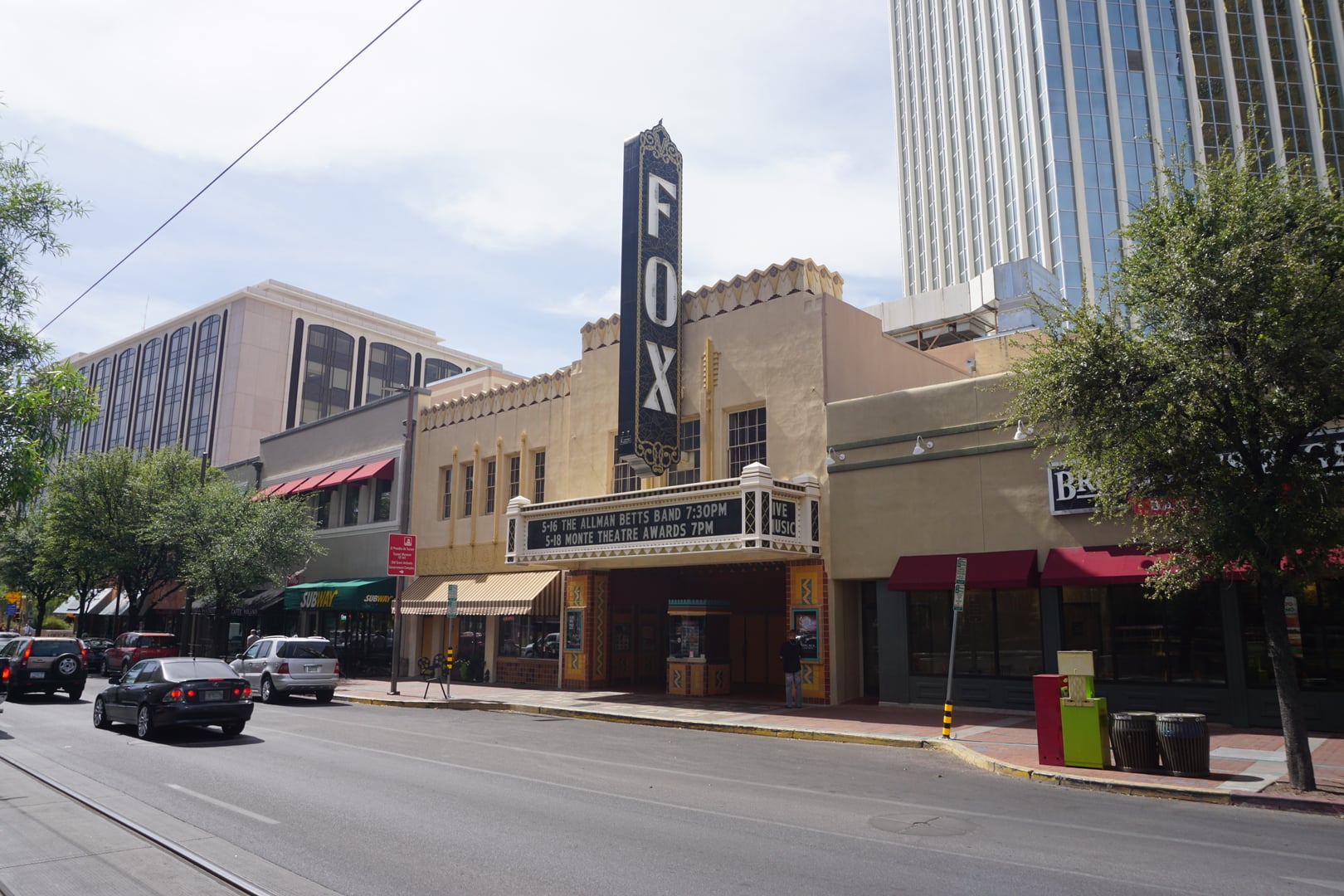
Tucson, AZ
The Fox Tucson Theatre opened on April 11, 1930, as a combined vaudeville and movie house. After closing in 1974 and standing vacant for 25 years, the building was purchased in 1999 by the non-profit Fox Tucson Theatre Foundation for $250,000 and reopened in 2006 following a multi-year, multi-million-dollar restoration.