Est. 1886 · Victorian Rural Cemetery · National Register of Historic Places · Victorian Funerary Sculpture Collection · Madison County Historical Burial Ground
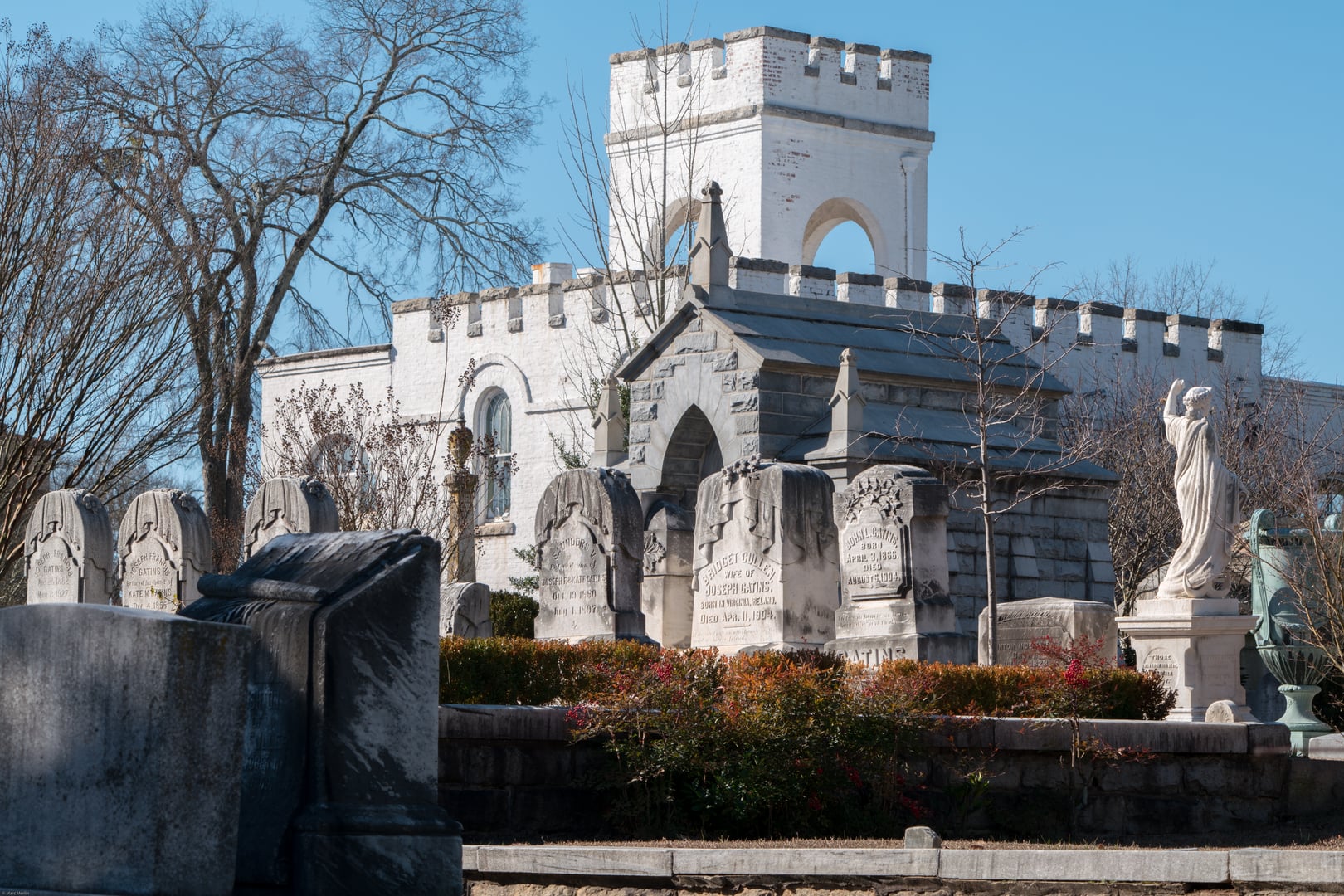
Hollywood Cemetery was founded in 1886 to serve as Jackson, Tennessee's answer to the Victorian rural cemetery movement that had swept American cities following the success of Mount Auburn in Cambridge, Massachusetts. The rural cemetery model emphasized landscape design, naturalistic paths, and artistic grave monuments as a setting for both burial and public contemplation. Jackson's wealthy families commissioned obelisks, draped urns, weeping figures, and marble angels for their plots, creating a 43-acre outdoor gallery of Victorian funerary art.
Among the notable works is the Warmack-Ezzell crypt, distinguished by stained glass windows—an unusual feature for a cemetery structure in West Tennessee. The collection also includes a 'Weeping Woman' sculpture cited among the more artistically significant pieces in the cemetery's inventory. Wikipedia's entry on Hollywood Cemetery (Jackson, Tennessee) documents the cemetery's 1886 founding, its National Register of Historic Places listing, and the character of its funerary art collection.
The cemetery remains active and is maintained by the Hollywood Cemetery organization, which offers public tours of the funerary art and publishes materials documenting the sculptural collection. With approximately 10,000 burials accumulated across nearly 140 years, the grounds represent one of the more substantial Victorian cemeteries in West Tennessee.
Sources
- https://en.wikipedia.org/wiki/Hollywood_Cemetery_(Jackson,_Tennessee)
- https://hollywoodcemeteryjacksontn.org/wp/funerary-art/
- https://www.sacredsitesoftn.com/post/jackson-a-tale-of-three-cemeteries
Atmospheric Victorian landscapeHistoric funerary sculpture
Hollywood Cemetery's dark tourism appeal lies primarily in its landscape and sculpture rather than documented paranormal incidents. The Victorian rural cemetery design—intended to evoke contemplation of mortality through art and naturalistic settings—creates an atmosphere distinct from utilitarian modern cemeteries. The Warmack-Ezzell crypt's stained glass and the weeping woman sculpture draw visitors who seek the particular combination of artistic achievement and death's presence that Victorian cemetery culture deliberately cultivated.
The Sacred Sites of Tennessee account of Jackson's cemeteries notes Hollywood's role as the burial ground for the city's prominent families, giving the grounds a density of local historical figures. The cemetery's ongoing operations and regular public tours have given it a reputation as one of West Tennessee's most worthwhile cemetery visits for those interested in funerary history and Victorian memorial art.