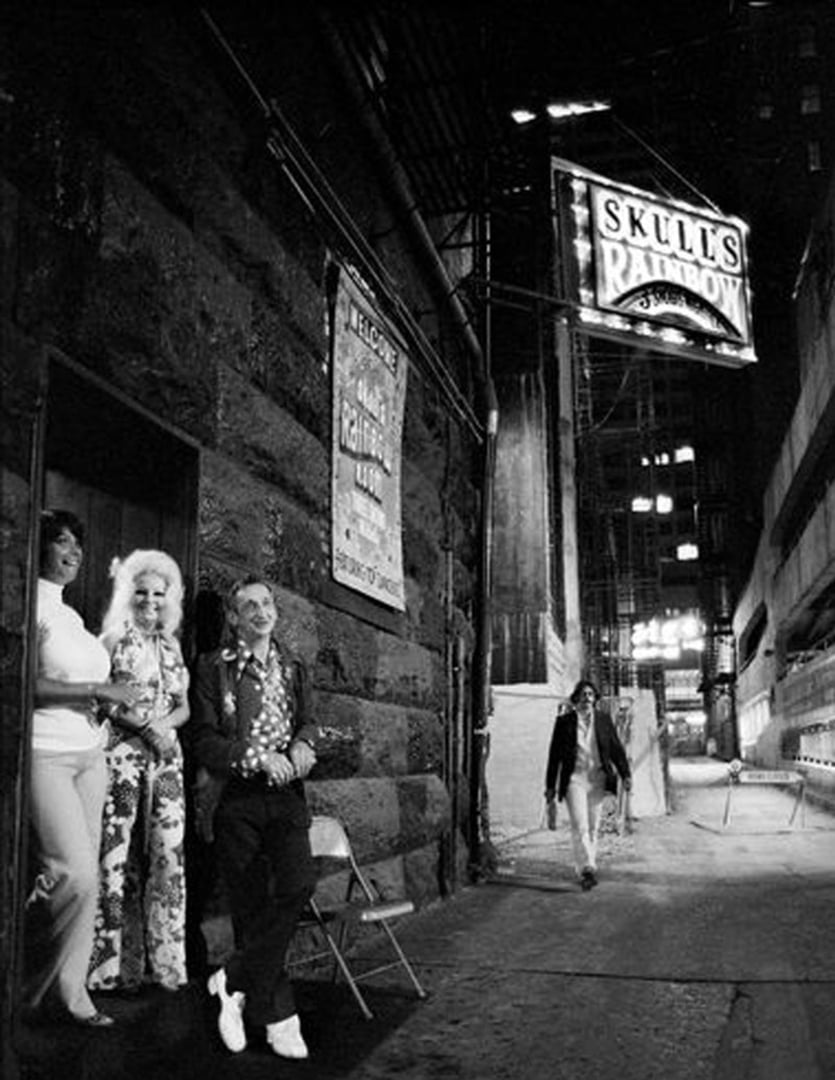
South Main historic commercial district · Pantaze Drugstore site (late 1930s) · Memphis blues social circuit anchor (1950s-1970s) · One of Memphis's last operating brothels through the 1980s
By the late 1930s, the building at 531 South Main Street housed a Pantaze Drugstore owned by Memphis businessman Abe Plough, the inventor of a hair-straightening product who later acquired Coppertone suntan lotion. Plough deeded the building to Earnestine and Hazel, cousins and hairstylists who used his products, and they converted the ground floor into a cafe.
Earnestine's husband — a street promoter known as Sunbeam — operated Club Paradise, a nearby music venue that hosted B.B. King, Tina Turner, Aretha Franklin, Ray Charles, Bo Diddley, Sam Cooke, Chuck Berry, and Jackie Wilson. For roughly two decades these musicians moved between Club Paradise and Earnestine & Hazel's for food, conversation, and the upstairs rooms, which operated as the city's most enduring brothel through the late 1980s.
Club Paradise closed when downtown Memphis declined in the 1970s, and by the late 1980s the building's ground-floor cafe and upstairs trade had largely ceased. In 1992 local entrepreneurs Bud Chittom and Delmer George purchased the property; it later reopened under operator Russell George as the dive bar known today, with the upstairs former-brothel rooms left largely as they had been.
The venue is now a fixture of the South Main district, beloved for its Soul Burger, jukebox, and unrenovated atmosphere. It regularly appears on national 'most haunted bar' lists and serves as an anchor stop on Memphis ghost tours.
Sources
- https://www.atlasobscura.com/places/earnestine-hazels
- https://www.earnestineandhazel.com/history
- https://www.publicbooks.org/earnestine-hazels-in-memphis-a-place-known-for-its-dead/
- https://houseofgeekery.com/2020/12/24/creepy-mysteries-ghosts-of-earnestine-and-hazels/
- https://dailymemphian.com/subscriber/section/neighborhoodsdowntown/article/56256/ask-the-memphian-earnestine-and-hazels-haunted
Jukebox playing unbidden, with songs matching conversationPhantom touches in upstairs former-brothel roomsApparitions of women in the upstairs mirrorDisembodied piano playingCold spots and footsteps on the upper floor
The most famous paranormal feature of Earnestine & Hazel's is the jukebox on the ground floor. Bartenders and longtime regulars report that it plays songs without being fed — and that the songs frequently respond to conversation in the room. Public Books quotes a bartender claiming the machine started playing 'Sympathy for the Devil' on its own during a paranormal researcher's visit. According to widely repeated Memphis lore, on the day James Brown died, two coworkers discussing the news heard 'I Feel Good' begin to play.
The upstairs rooms — left largely intact from the brothel era — generate the densest concentration of physical-contact reports. Visitors describe being touched on the shoulders or arms, hearing footsteps, and seeing reflections of unfamiliar figures in the bathroom mirror. A piano on the upper floor is occasionally reported playing on its own. Local accounts attribute these phenomena to the women who worked and, according to some accounts, died on the upper floor during its long brothel period.
The venue has been profiled by Atlas Obscura, Public Books, Vice, and the Boston Globe in the context of its paranormal reputation; ghost-tour itineraries from US Ghost Adventures, Backbeat Tours, and Historical Haunts Memphis include it as a featured stop.
Notable Entities
Spirits of women associated with the upstairs brothel periodReported entity nicknamed 'Clarence' or 'the jukebox spirit' in some tour accounts
Media Appearances
- Boston Globe 'Road Trip America' feature (2022)
- Vice — 'What It's Like to Work at the Most Haunted Bar in America'
- Atlas Obscura