Museum Visit Booking Required
Mansion and grounds day tour
Self-guided audio tour of the mansion, gardens (including Rachel Jackson's tomb), original 1820s slave cabins, and the broader 1,120-acre property.
- Duration:
- 3 hr
HauntBound archive · catalog record
Reported phenomena, as catalogued
+ 2 further entries on record
President Andrew Jackson's 1,120-acre Tennessee plantation and National Historic Landmark — where Rachel Jackson's garden tomb is the focus of cigar-smoke smell, self-opening gates, and footsteps among the foliage.
4580 Rachel's Lane, Nashville, TN 37076
Research updated September 2026
Age
All Ages
Cost
$$
Day admission to grounds and mansion; ghost tours sold separately as evening programming in season.
Access
Wheelchair OK
Mostly paved or compacted-gravel paths between mansion, garden, and slave-quarter cabins; the mansion's upper floors require stairs. Garden grades are gentle.
Equipment
Photos OK
Est. 1821 · National Historic Landmark and home of seventh U.S. president Andrew Jackson · Burial site of Andrew Jackson, Rachel Donelson Jackson, and Alfred Jackson · Plantation reliant on enslaved labor; ~150 enslaved people at Jackson's death · One of the longest continuously operated presidential museums in the U.S. (since 1889)
Andrew Jackson purchased the original Hermitage tract in 1804. He and Rachel Donelson Jackson initially lived in a log farmhouse; the current Greek Revival mansion was built between 1819 and 1821, with substantial additions and renovations completed by the late 1830s.
The plantation grew cotton as a cash crop and operated entirely on enslaved labor throughout Jackson's tenure. Roughly 150 enslaved people lived at the property at the time of Jackson's death in June 1845. Alfred Jackson, born enslaved at the Hermitage around 1812, lived on the property for nearly his entire life and is buried in the family garden alongside Andrew and Rachel — a placement directed by Alfred himself.
Rachel Jackson died at the Hermitage on December 22, 1828, weeks after her husband's election as president. Andrew commissioned an ornamental pleasure garden enclosing her tomb. Per Hermitage and Ghost City Tours accounts, he visited her monument every day when he was on the property, often smoking a cigar and 'talking to his beloved.' Andrew Jackson died at the Hermitage on June 8, 1845 and is buried beside Rachel in the same garden tomb.
The Ladies' Hermitage Association (now Andrew Jackson Foundation) acquired the property from the state of Tennessee in 1889 and has operated it as a museum continuously since. The Hermitage was designated a National Historic Landmark in 1960 and is one of the most-visited presidential homes in the United States.
Sources
Per Ghost City Tours' Hermitage feature and WKRN's Haunted Tennessee coverage, the property's ghost lore concentrates on the formal garden surrounding Rachel Jackson's tomb. Reports include 'footsteps roaming between the foliage,' the garden gate swinging open on its own with no visible cause, and 'the undeniable smell of cigar smoke near the Jacksons' tomb' — framed in local lore as the residual signature of Andrew's daily mourning visits, when he reportedly sat by Rachel's grave smoking a cigar and talking with her.
The Hermitage itself programs seasonal evening 'Ghost Tours' as a public-facing complement to its standard interpretive offering. Per Nashville Ghosts' feature and WKRN's 2022 ghost-tour coverage, guides also report 'ghostly apparitions of soldiers wandering through the grove' on the broader property, and visitors describe cold spots and full-body chills around the displaced original trees and grove paths.
A second strand of the lore concerns the slave-quarter cabins on the property, where figures have been reported by staff and visitors. Local accounts associate one of these figures with Alfred Jackson, who was born enslaved at the Hermitage around 1812 and lived on the property for nearly his entire life. Interpretation at the Hermitage now explicitly addresses Alfred's life and the lives of others enslaved there as part of the documented site history, and ghost-lore narrators are expected to follow that framing rather than romanticize.
Additional widely circulated lore — a face resembling Rachel reportedly visible in the paint of one of Jackson's carriages — appears in tour-operator coverage but with thinner provenance than the garden-tomb material.
Notable Entities
Media Appearances
Self-guided audio tour of the mansion, gardens (including Rachel Jackson's tomb), original 1820s slave cabins, and the broader 1,120-acre property.
Seasonal evening ghost tour programmed directly by Andrew Jackson's Hermitage staff, covering the garden, mansion, and slave-quarter areas.
Some links on this page may earn HauntBound a small commission when you book, at no extra cost to you. Our editorial picks are independent. Full disclosure
Every HauntBound history is researched from documented sources. We clearly separate verified historical fact from paranormal folklore.
Free Guide
11 verified stops, rated for families, mapped in order. Free.
One email to confirm, then the guide link. Unsubscribe anytime.
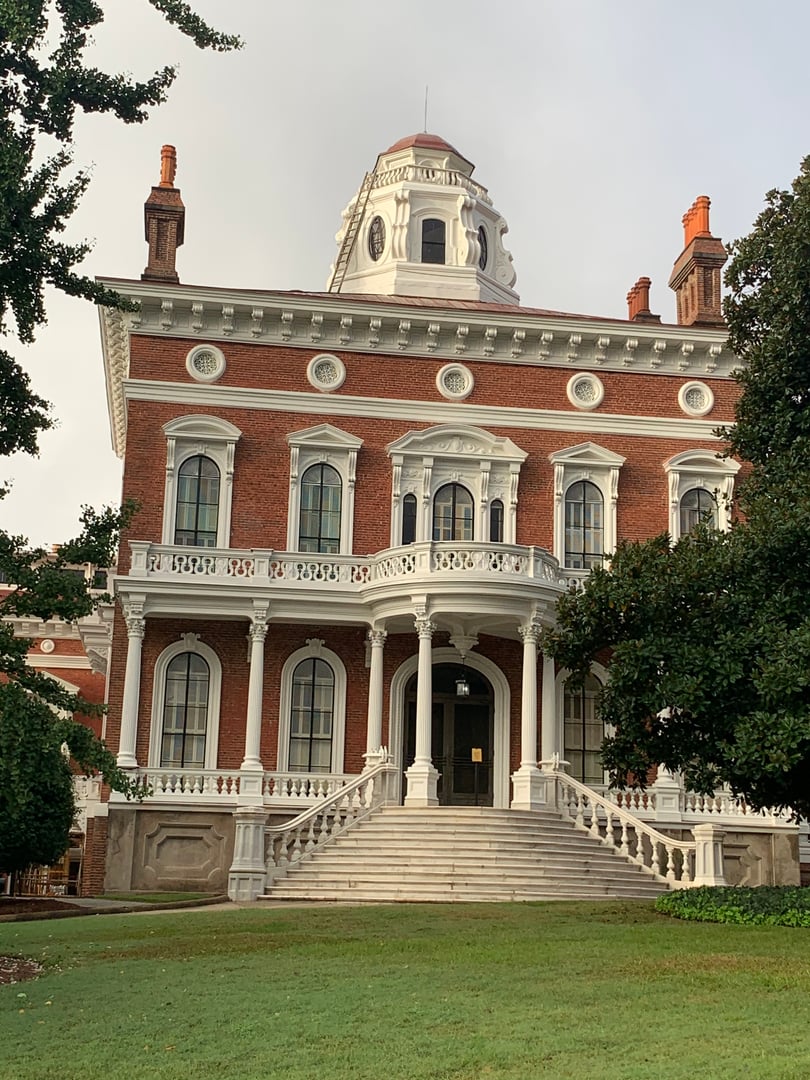
Macon, GA
Built between 1855 and 1859 for businessman William Butler Johnston at a cost of approximately $100,000, the Italian Renaissance Revival mansion at 934 Georgia Avenue has been called the 'Palace of the South' and is a National Historic Landmark. The house remained in Johnston hands through the Civil War, spared when Sherman's march to the sea bypassed Macon; it passed to the Johnstons' daughter Mary Ellen and her husband, Judge William Felton, in 1896. The Hay family acquired the house in 1926 and donated it to The Georgia Trust for Historic Preservation in 1977.
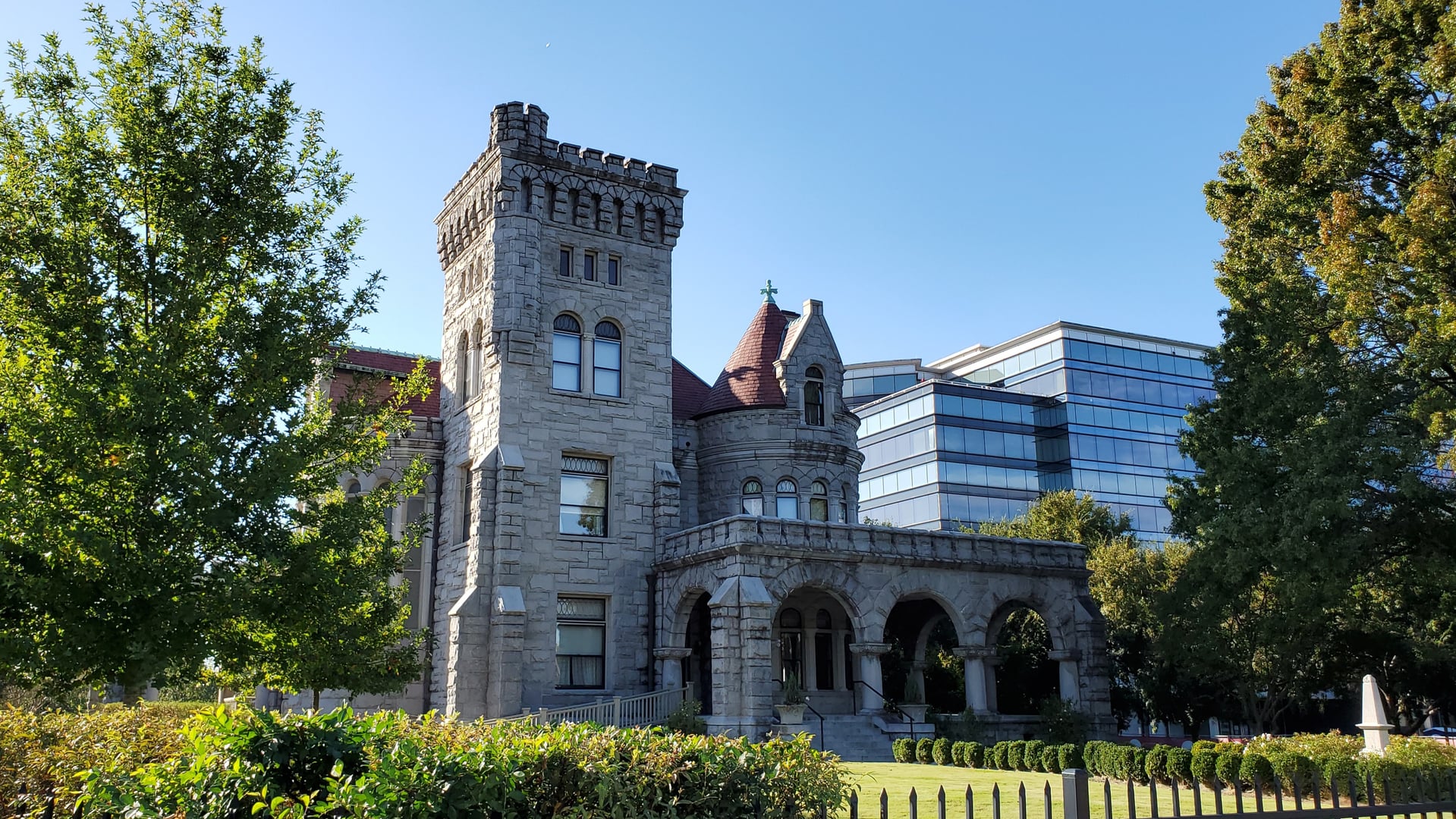
Atlanta, GA
Rhodes Hall was built 1902-1904 for furniture magnate Amos Giles Rhodes, founder of Rhodes Furniture. Designed by Atlanta architect Willis F. Denny II of Stone Mountain granite in a Romanesque Revival style with Victorian and Arts and Crafts interior elements. Listed on the National Register of Historic Places in 1974; Atlanta Landmark Building since 1989; headquarters of the Georgia Trust for Historic Preservation since 1983.
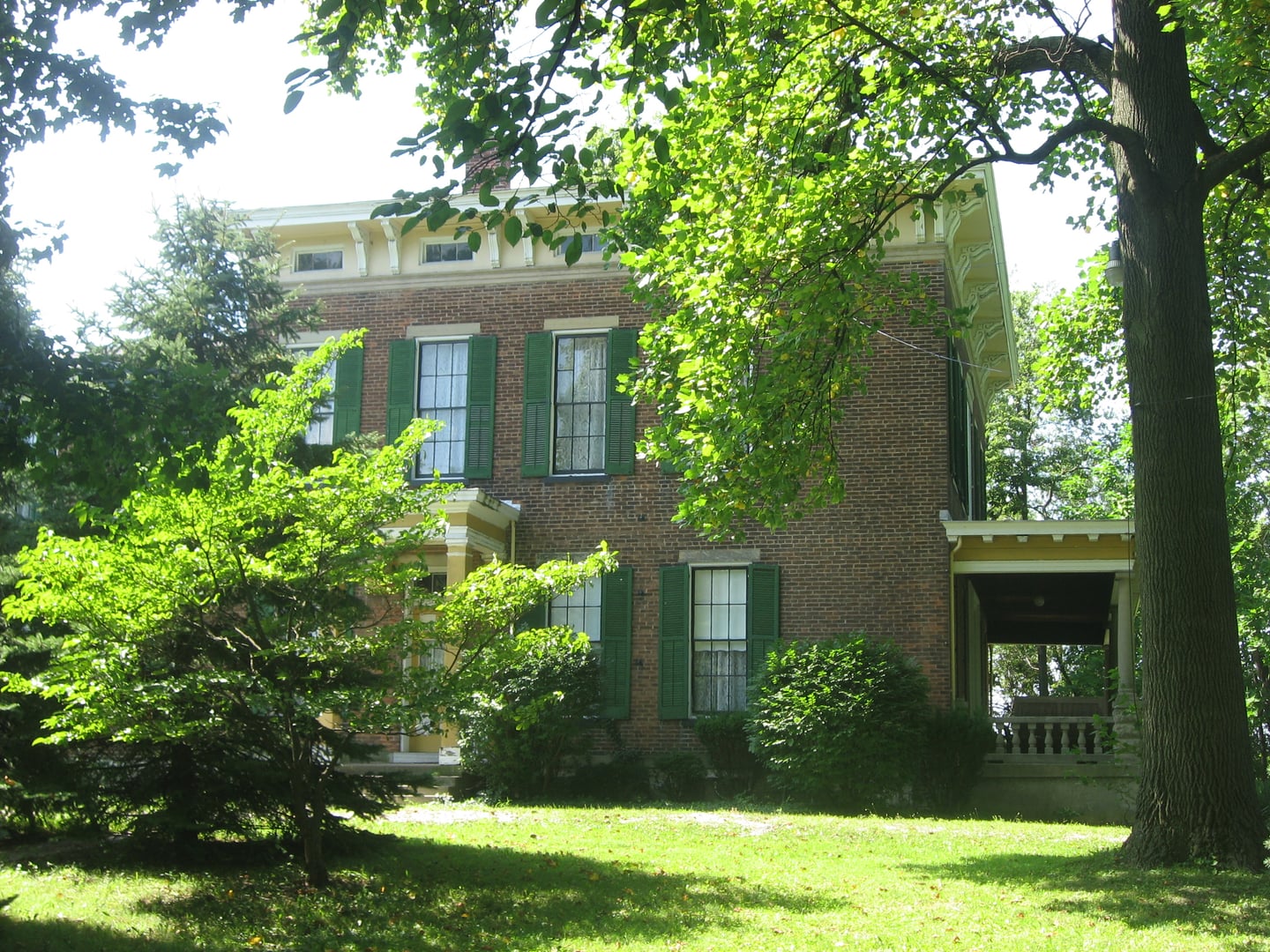
Indianapolis, IN
Hannah House is an 1858 Italianate mansion at 3801 Madison Avenue on the south side of Indianapolis, built by Alexander Hannah, an Indiana businessman who returned wealthy from the California Gold Rush. The property is listed on the National Register of Historic Places.