Self-Guided Visit
Self-Guided Cemetery Visit
Walk the historic hillside grounds, find the graves of Mount Rushmore carvers and early Black Hills miners, and take in the rare direct view of Mount Rushmore from the upper rows.
- Duration:
- 45 min
 Aerial survey · USDA NAIP · public domain
Hillside burial ground established in 1900 above the town of Keystone, said to be the only cemetery with a direct line of sight to Mount Rushmore, where transparent figures in old mining-era clothing are reported among the graves.
203 Cemetery Road, Keystone, SD 57751
Research updated May 2026
Age
All Ages
Cost
Free
Free to visit; it is an active public cemetery. Respect graves and posted hours.
Access
Limited Access
Steep, uneven hillside terrain with gravel paths; difficult footing on the slope.
Equipment
Photos OK
Est. 1900 · Established 1900 during the Keystone Black Hills mining boom · Cited as the only cemetery with a direct line of sight to Mount Rushmore · Burial place of Mount Rushmore carvers and early Black Hills miners · Resting place of David Swanzey, who married Carrie Ingalls
Keystone Cemetery, also recorded as Mountain View Cemetery, sits along Cemetery Road off Highway 16A above the old gold-mining town of Keystone in Pennington County, South Dakota. It was established in 1900, in the years when Keystone was a booming hard-rock mining camp in the Black Hills, and the land is associated with an early deed connected to the Harney (now Black Hills) National Forest. The grounds hold roughly 450 to 650 documented burials.
The cemetery is best known today for a geographic distinction: it is frequently described as the only cemetery in the world with a clear, direct line of sight to the carved faces of Mount Rushmore, which lie just to the southwest. The monument's sculptor and workers lived and worked in and around Keystone during the 1927-1941 carving period, and a number of those workers are buried here after dying in later years.
Notable burials include David Swanzey, an early Keystone figure who helped promote the naming of Mount Rushmore and who married Carrie Ingalls, sister of author Laura Ingalls Wilder. Miners, cowboys, and Rushmore carvers fill the older rows, alongside a handful of colorful local characters whose tall tales became part of Keystone lore.
The cemetery remains an active, publicly accessible burial ground maintained for the Keystone community. Its hillside setting, period grave markers, and the framed view of Mount Rushmore make it both a historic site and a quiet overlook.
Importantly, the popular claim that the cemetery holds workers who died during the carving of Mount Rushmore is not accurate: no workers were killed during the actual construction of the monument. Workers who carved Rushmore and were later buried here died in subsequent years of other causes.
Sources
Local ghost-tour storytellers and regional tourism accounts have long attached a haunting tradition to Keystone Cemetery. The most commonly repeated story holds that visitors who come to the hillside at night to pay respects have reported seeing people who appear to be old-time workers wandering among the graves: figures dressed in period mining and labor clothing who appear transparent or fade when looked at directly, according to US Ghost Adventures and Holy Smoke Resort's account of the site.
The lore is often framed around the cemetery's many Mount Rushmore-era and mining burials. A persistent local rumor claims the cemetery holds men who died building Mount Rushmore, with their restless spirits roaming the grounds. Historical sources are careful to correct this: there were no fatalities during the actual carving of Mount Rushmore. The men buried here who worked on the monument died later, of ordinary causes, so any 'worker spirits' would not be tied to construction deaths.
A submitted account collected by the Shadowlands Haunted Places Index claims that video cameras can capture faces and pale figures 'hanging from the trees' that are not visible to the naked eye. This single anonymous claim is uncorroborated and should be treated as unverified folklore rather than established tradition.
The cemetery's reputation as one of South Dakota's eerier burial grounds has been noted by regional travel and ghost-tour outlets, who frame it more as atmospheric than menacing.
Notable Entities
Walk the historic hillside grounds, find the graves of Mount Rushmore carvers and early Black Hills miners, and take in the rare direct view of Mount Rushmore from the upper rows.
Some links on this page may earn HauntBound a small commission when you book, at no extra cost to you. Our editorial picks are independent. Full disclosure
Every HauntBound history is researched from documented sources. We clearly separate verified historical fact from paranormal folklore.
Free Guide
8 verified stops, rated for families, mapped in order. Free.
One email to confirm, then the guide link. Unsubscribe anytime.
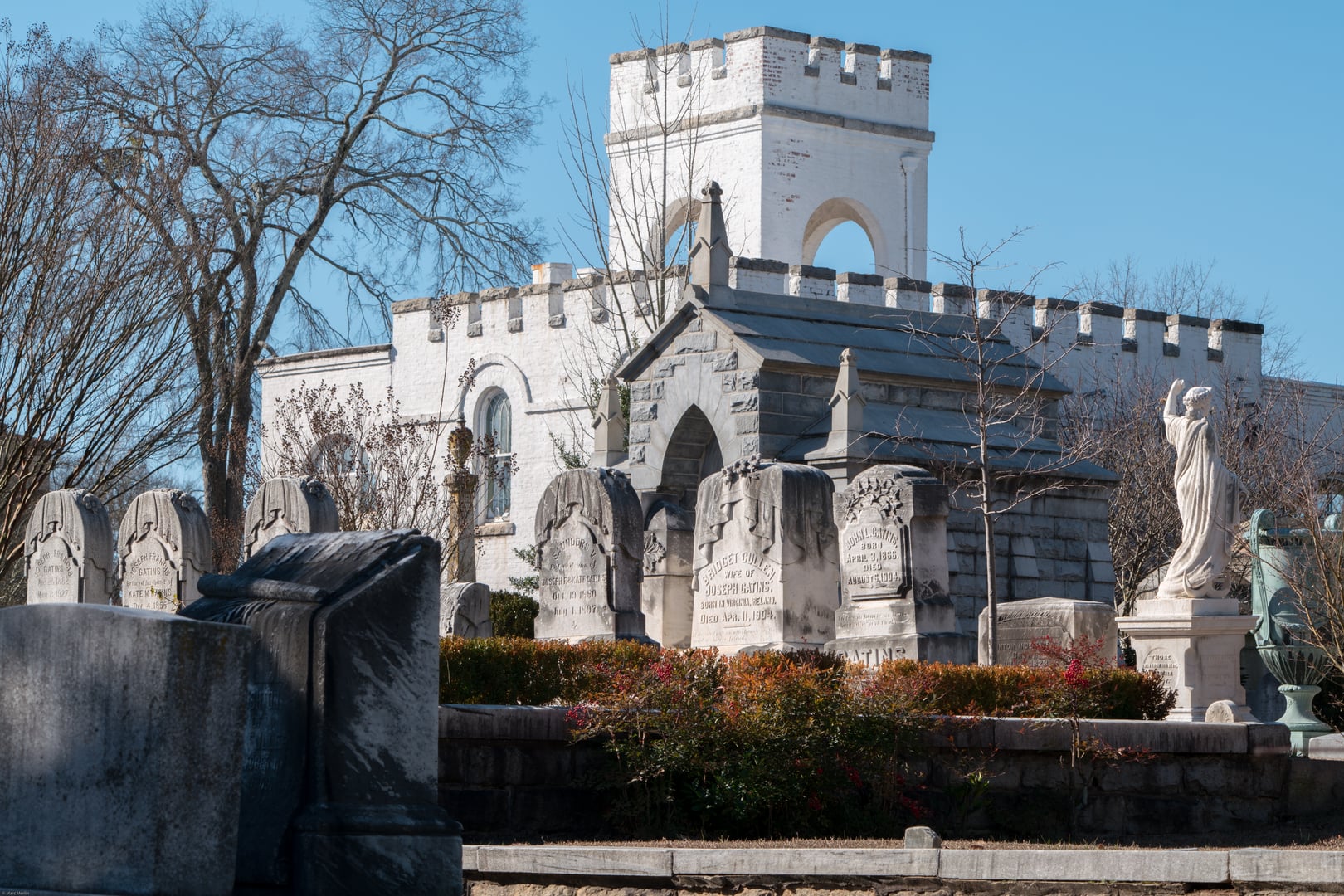
Atlanta, GA
Historic Oakland Cemetery was chartered in 1850 as the six-acre 'Atlanta Cemetery,' renamed Oakland in 1872, and expanded to 48 acres. Approximately 70,000 people are interred, including roughly 6,900 Confederate soldiers (3,000 unidentified), four Confederate generals, six Georgia governors, 27 Atlanta mayors, Margaret Mitchell, golfer Bobby Jones, and Maynard Jackson, Atlanta's first African American mayor. The cemetery was listed on the National Register of Historic Places on April 28, 1976.
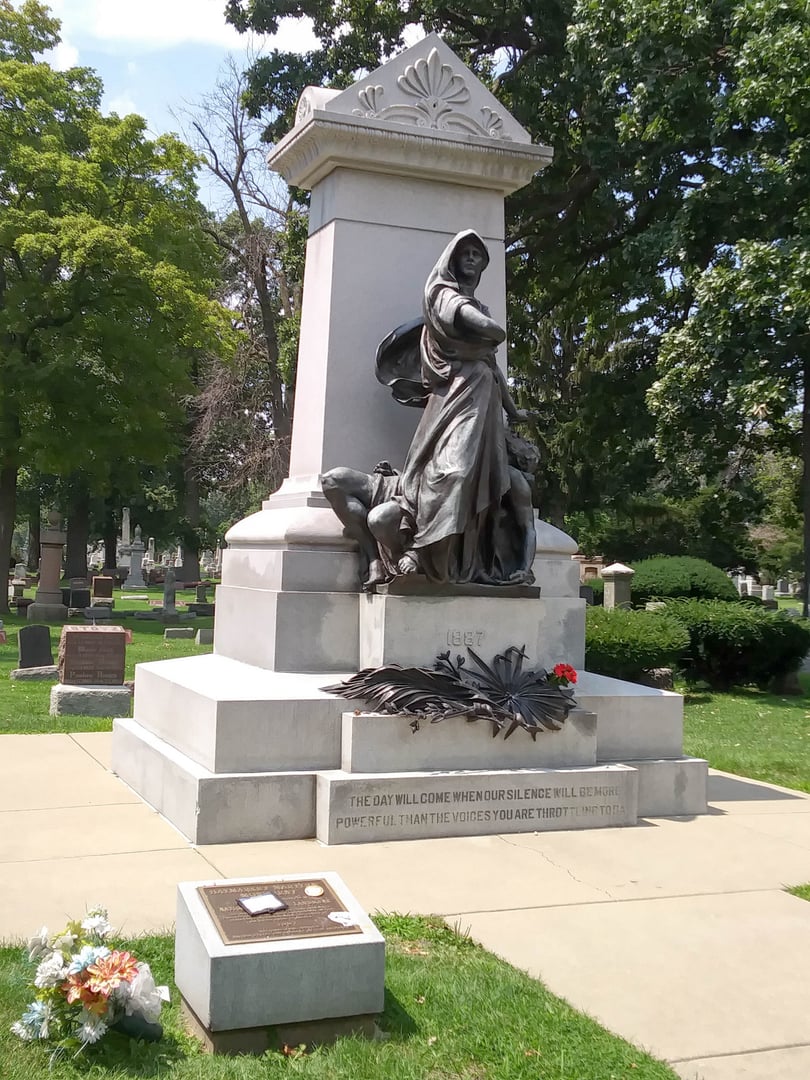
Forest Park, IL
Forest Home Cemetery in Forest Park, Illinois, grew from two adjacent cemeteries — German Waldheim (established 1873) and Forest Home (1876) — which merged in February 1969. The 220-acre site was chosen as a non-denominational burial ground, a policy that made it the only Chicago-area cemetery willing to accept the bodies of the Haymarket defendants in 1887.
Fairbanks, AK
Birch Hill Cemetery began with Serina Zimmerman’s hillside burial in 1938; Tony Zimmerman donated the land to the community in her honor in 1939. Early Fairbanks miner Antone 'Tony' Zimmerman developed and donated the land, in part to fulfill the wish of his first wife, Serina, who was buried there in 1938. The cemetery holds notable pioneers, including Klondike miner Elam Harnish and Territorial Governor Mike Stepovich.