Drive-By
Hilltop Church Drive-By
View the isolated 1860 church and cemetery from the public road on Short Mountain.
- Duration:
- 20 min
 Aerial survey · USDA NAIP · public domain
An 1860 hilltop church on Short Mountain near Spring Mills, on the National Register of Historic Places, infamous for a vivid but thoroughly debunked legend of a minister who poisoned his congregation.
Egg Hill Road, Spring Mills, PA 16875
Research updated September 2026
Age
All Ages
Cost
Free
Free to view from public road. The church and grounds are private property with posted no-trespassing.
Access
Limited Access
Isolated hilltop on Short Mountain; rural gravel access, uneven ground.
Equipment
Photos OK
Est. 1860 · Rural Evangelical Association church organized 1838, current building erected 1860 · Added to the National Register of Historic Places in 1979 · One of central Pennsylvania's most circulated (and debunked) haunted-church legends
Egg Hill Church sits on an isolated hilltop on Short Mountain in Potter Township, Centre County, in central Pennsylvania, near the villages of Spring Mills and Centre Hall. The congregation traces to 1838, when the Evangelical Association organized a church on farmland donated by John Dauberman Sr. and his wife, Mary. The present one-story banked building, roughly 35 by 42 feet, was constructed of pine on a stone foundation in 1860.
The church served its rural congregation into the early twentieth century, but regular services were suspended around 1927. The historic building survived and was added to the National Register of Historic Places in 1979. Its remote setting, small adjoining cemetery, and long disuse made it a focal point for local legend and a recurring stop for thrill-seekers and ghost hunters.
The property is privately held and posted against trespassing. Local accounts and regional coverage note that visitors who ignore the signs have reported being confronted, and the legend's notoriety has been a persistent nuisance for the property and neighbors.
Sources
Egg Hill Church is best known for a dramatic mass-murder legend. In the most common version, a deranged minister in the late nineteenth century held a night service — often Halloween — and poisoned members of the congregation with tainted communion bread; some tellings have him chaining the doors and killing the entire congregation before taking his own life in the bell tower. A popular embellishment claims a knife is lodged in a cemetery tombstone, and that pulling it free leaves a pool of blood.
Researchers and local historians have systematically debunked the story. As documented by HauntinglyPA and the Centre County historical record, there are no newspaper reports of any such killing and no cluster of gravestones sharing a common death date — exactly what a mass poisoning would have produced. The tale appears to be pure folklore that attached itself to an atmospheric, long-disused hilltop church.
What persists are experiential reports from visitors: footsteps around the boarded-up building, fleeting figures, and a strong sense of being unwelcome — sometimes reinforced by very real, living property owners. HauntBound presents the murder narrative as debunked legend and cautions that the site is private and posted.
Notable Entities
View the isolated 1860 church and cemetery from the public road on Short Mountain.
Some links on this page may earn HauntBound a small commission when you book, at no extra cost to you. Our editorial picks are independent. Full disclosure
Every HauntBound history is researched from documented sources. We clearly separate verified historical fact from paranormal folklore.
Free Guide
11 verified stops, rated for families, mapped in order. Free.
One email to confirm, then the guide link. Unsubscribe anytime.
Lancaster, PA
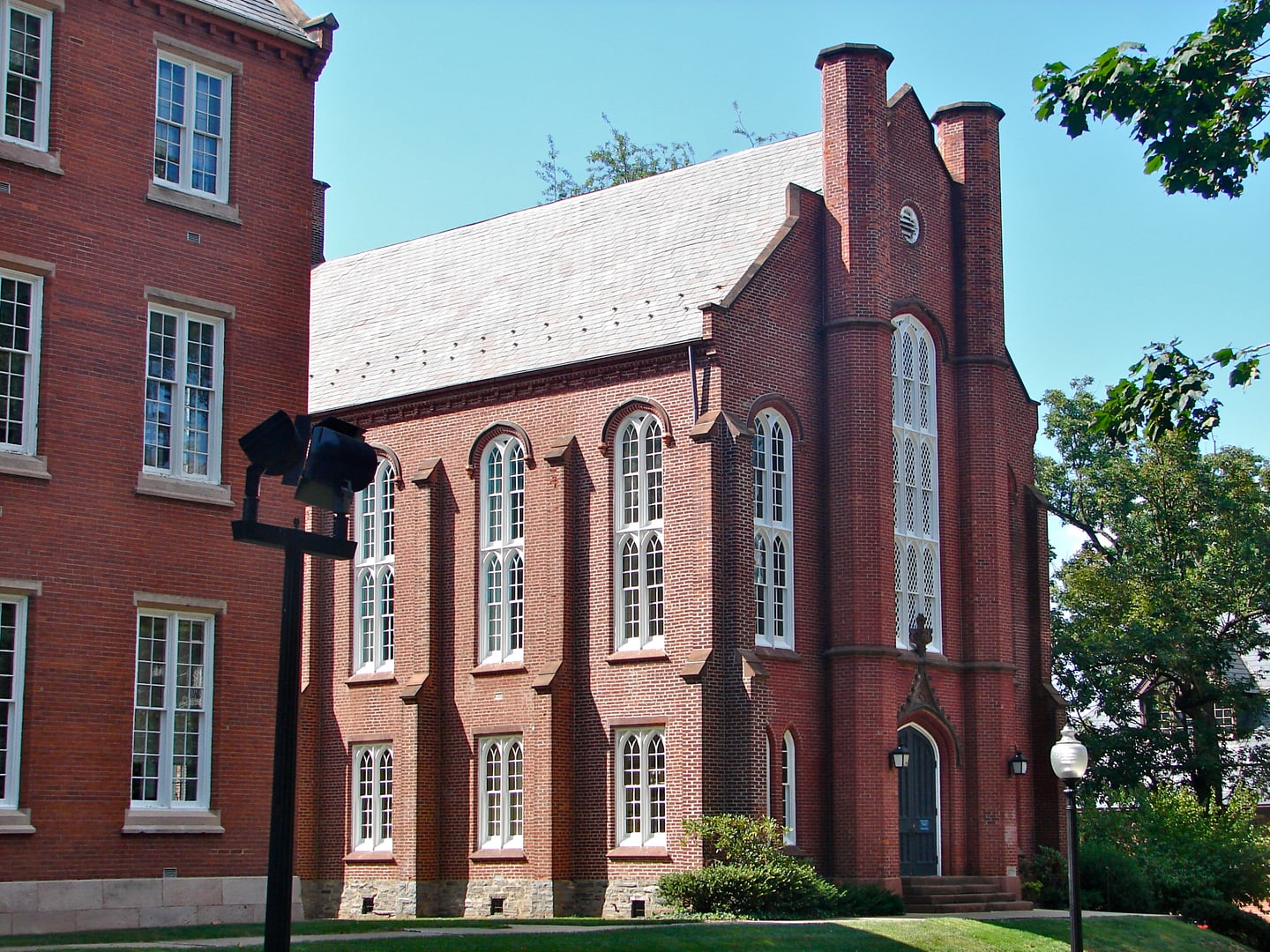
Diagnothian Hall is one of two literary-society halls flanking Old Main on the Franklin & Marshall campus, completed in 1857 by the architectural firm Dixon, Balburnie, & Dixon. Together with Old Main and Goethean Hall, it was added to the National Register of Historic Places on July 30, 1975 (reference 75001645). During the American Civil War, the F&M buildings served as a Union military hospital, particularly receiving wounded after the July 1863 Battle of Gettysburg.
Lancaster, PA
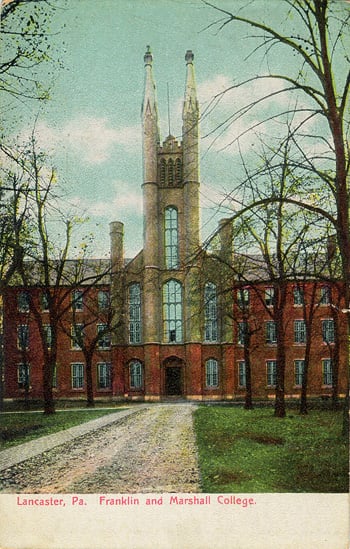
Old Main is the historic central building of Franklin & Marshall College, constructed in 1854-1856 in the Gothic Revival style by the architectural firm Dixon, Balburnie, & Dixon. Together with Goethean Hall and Diagnothian Hall, it was added to the National Register of Historic Places on July 30, 1975 (reference 75001645). The building sits on or immediately adjacent to Lancaster's pre-1834 Gallows Hill, the county's public-execution site, and served as a Civil War-era military hospital alongside its companion halls.
 Aerial survey · USDA NAIP
Buck Hill Falls, PA
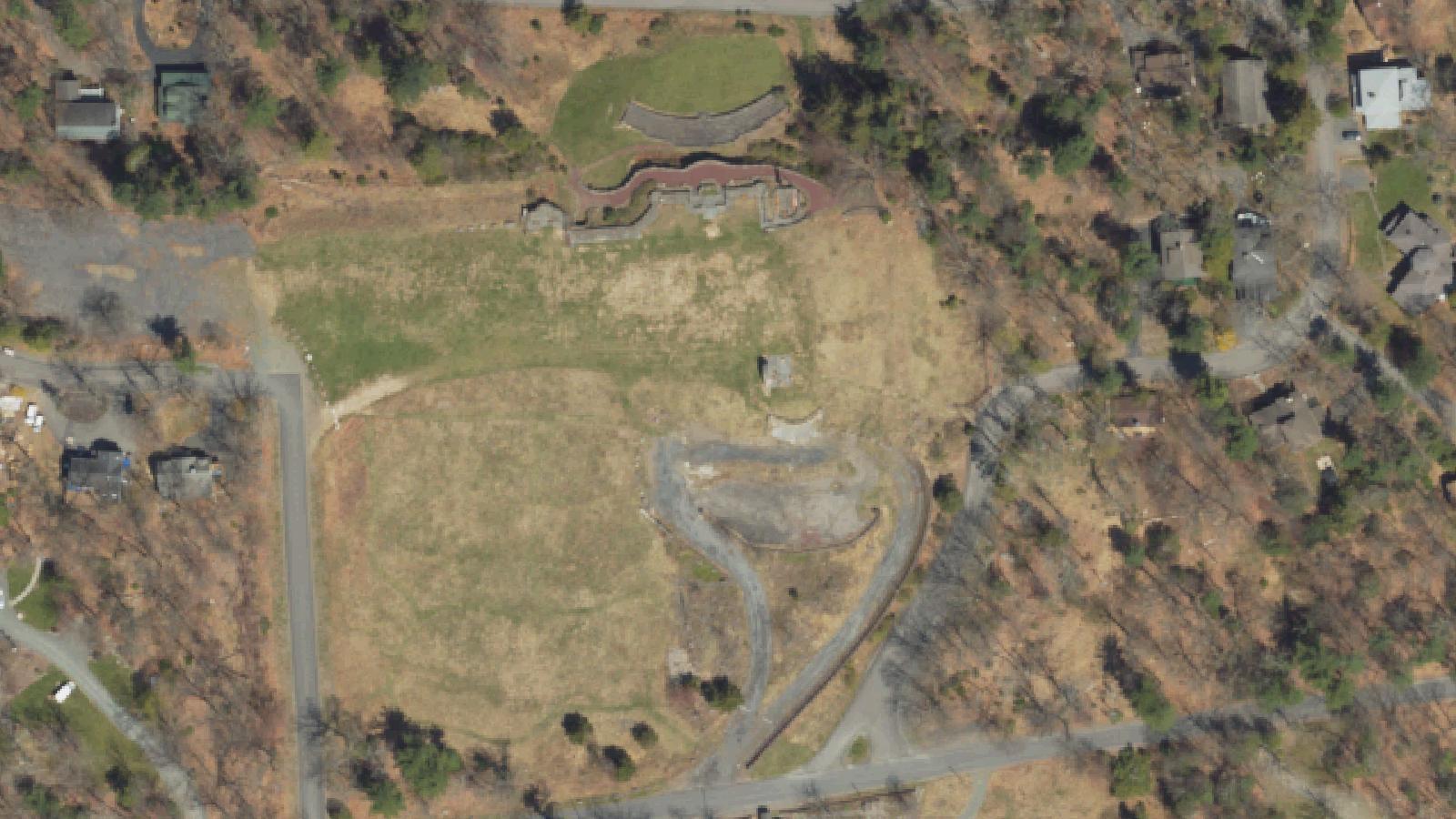
The Inn at Buck Hill Falls was a Pocono resort founded in 1901 by Philadelphia Quakers, beginning as a modest lodge and growing into a 400-room destination sprawling over roughly 1,000 acres with golf, tennis, riding, and a pool. Financial decline and fires led to its closure in October 1990. After 25 years of abandonment and an arson fire in 2003, the deteriorating inn was demolished in 2016-17, leaving only a stone arch.